news
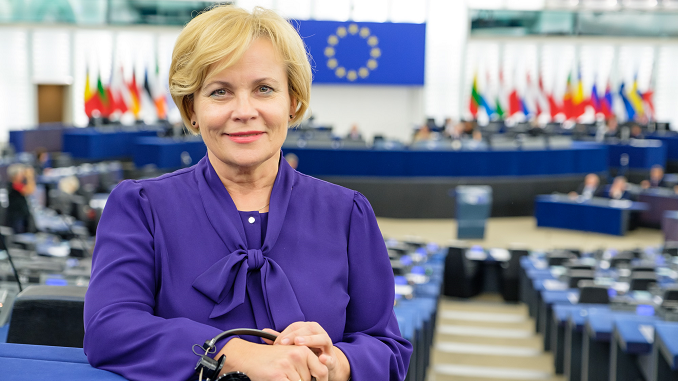
MEP Rasa JUKNEVIČIENĖ - Vice-Chair of the EU-Georgia Parliamentary Association Committee: Georgia’s EU membership is realistic
‘Political agreement is a very important beginning of the new era, new situation in Georgia. It’s possible to find some kind of ways step by step to be part of European Union or even closer partner of European Union as it is now. We do reforms not only to officially become members of EU, it’s not enough to have official stamp that you are a member of EU, you need to be European, you need really to become a part of Europe doing reforms and changing the lives of the people everywhere, in social affairs, in economy, in culture… When political situation will be ready for invitation to become part of European Union, most important is that Georgia would be ready for that moment. It is also very important that a new generation come to the politics and change somehow the old traditions that were not the best. And that’s why I think the country went into this crisis. - In an exclusive interview with Europetime, MEP Rasa Yuknevichyan, Vice-Chair of the EU-Georgia Parliamentary Association Committee, talks about the amnesty negotiations, the EU-brokered political agreement in Georgia, the prospect of Georgia's accession to EU and NATO as well as Russia and the current developments in Ukraine. _We have witnessed the unprecedented engagement of the European Union in resolving the political crisis in Georgia - the two-time visit of the President of the Council of Europe Charles Michel to Georgia, as well as the appointment of his special representative. In your opinion, what did these unprecedented efforts / engagement indicate, and whether this is to some extent related to recent developments in the region, I mean Karabakh, as there were some speculations that the West was rather late in responding there. All Georgia’s friends here in European Parliament really are very happy that Charles Michel decided to mediate or to be part of negotiations in this one of the deepest political crisis after the parliamentary elections and of course it is not related to other crises in the region maybe because the crises are very different; military actions or real war which happened because of Karabakh is one thing, and the European Union of course is not a military organization to prevent or to help in this way. But Georgia with the European Union is part of Association Agreement, important side of that and only two countries - Georgia and Ukraine are under this comprehensive and strong relationship from all six Eastern European partnership countries. So, of course Georgia is very important for European Union and that’s why I think that Georgia matters, but on the other hand we hope that for Georgian politicians EU also matters, and I hope that it will be in the future as well. _After the agreement, the opposition entered parliament for the first time. The agreement was signed by the opposition, with the exception of a few parties. How would you assess the current dynamics and ongoing negotiations on the amnesty bill? First of all I hope that all political opposition parties will be back to the parliament and this problem will be solved. I understand how important it is. All parties will be back. I understand how important the issue of political prisoners is and also European Union will offer its support as well. As I know Nika Melia accepted proposal to pay the payment and that crisis will be solved. _Now that the agreement has been signed, how do you think the relations between the EU and Georgia will develop? As we know, the Government of Georgian has announced its goal to apply for EU membership in 2024. This agreement I think is a very important beginning of the new era, new situation in Georgia. And Georgia needs new drive not to be a hostage of one or another personality but to build a really responsible political system, political parties with responsible leadership. The year 2024 is an ambitious goal to deliver the official document for future membership in European Union in one or another form. So, it is very important for Georgia to be leader on this way, leader of democratic reforms, leader of parliamentarianism, leader on possibilities to give up with the past not the best traditions in politics, I mean haters, hate speeches, how opposition is treated. It is a full understanding that both sides - ruling party and opposition are very important for Georgia to achieve these goals. So it is very important that a new generation come to the politics and change somehow the old traditions that were not the best. And that’s why I think the country went into this crisis. We had very important meetings with the ruling party and opposition and they understand these goals. All of them declared they are very much pro-European and that the Euro-Atlantic path for them is very important, and I hope that this goal will unite political parties. And although they have different understanding on the future of some domestic issues, it’s very important to unite themselves for these global issues for Georgia. _Do you think that Georgia should get the prospect of EU membership? How realistic is it that the EU will grant Georgia candidate status, or can there be another initiative, for example, a kind of special partnership? Of course it is realistic but we have to find together the realistic ways, maybe not membership next day after the application, of course not, but it’s possible to find some kind of ways step by step to be part of European Union or even more close partner of European Union as it is now. All the cards now are in the hands of Georgia. I’m always saying these reforms are not for European Union. You need to do reforms for membership - these reforms first of all are for the people in Georgia and if you will do these reforms despite the fact that you still do not have official invitation, it will be positive for Georgia, for the development of Georgia, for the people, for their lives. So, countries that joined the EU enjoy a lot of benefits. We did reforms not only because officially became members of EU, it’s not enough to have official stamp that you are a member of EU, you need to be European, you need really to become a part of Europe doing reforms and changing the lives of the people everywhere, in social affairs, in economy, in culture… if day x will come when political situation will be ready for invitation to become part of European Union, you will be ready. Most important is that Georgia when the day x will come would be ready for that moment. _As for Ukraine, do you think the tactics “let’s not provoke Russia” does not actually work the time has come for Ukraine and Georgia to join NATO? So, Russia’s military buildup next to Ukraine is not over. By this moment they may have declared that they will decrease the number of troops there but it did not happen and they still are occupying Crimea and they are in Eastern Ukraine. So, I think the story is not over yet. But on the issue when some politicians in European Union still think that ‘don’t provoke Russia and it will help’ I don’t think so. I think it was a mistake then in 2008 when NATO Membership Action Plan was not provided for Georgia and Ukraine in Bucharest and it provoked Russia to act against Georgia because they understood this is weakness of NATO not to be strong enough to provide this Membership Action Plan; so it’s opposite, Putin is acting as an opportunist and he is acting as much as he is allowed sometimes to act. So I think that the biggest provocation for Russia is to leave countries like Georgia, Ukraine, Moldova and other countries in this vacuum of security. So, vacuum of security is the highest provocation for Putin to act.
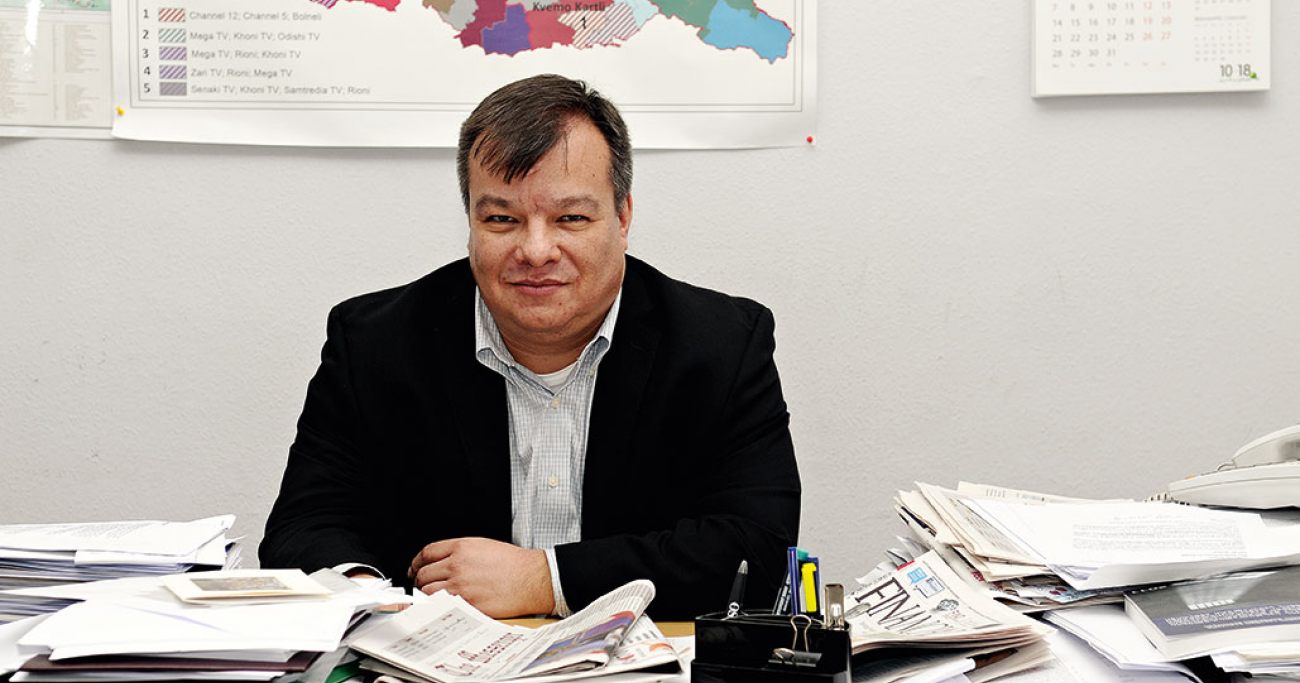
Luis Navarro: The agreement is the only concrete basis for testing the will of the government and opposition
The agreement is the only concrete basis for testing the will of the government and opposition said Eurasian Program Fellow for the Foreign Policy Research Institute, Luis Navarro in a comment with Europe Time while asking a question - Due to this crisis, many statements were made that an international image of Georgia is being severely damaged and that European aspirations of the country would be threatened in case the parties failed to reach an agreement. Do you think that the country was able to avoid this threat and ultimately, more or less maintain its image after reaching the agreement through the mediation of the European Union? „It depends upon whether or not the Georgian Dream govt chooses to release Rurua and Melia, despite the efforts of UNM and European Georgia to set more pre-conditions before signing the EU designed, the US supported the agreement. If the GD govt follows through, regardless of UNM and EG refusal, they will have demonstrated greater will to pursue a European path than either of the two largest opposition parties. If they release Rurua only, as a media figure, while prolonging Melia’s incarceration, as the ostensible UNM leader, there will still be a greater appreciation for their actions in Western capitals than for the resistance of UNM/EG. However, given the personal animus of Bidzina Ivanishvili for UNM, it remains to be seen to what extent the govt chooses to fulfill the spirit and letter of the agreement, which is intended to clear past conflicts and provide a path forward for more representative democracy. Breaking the tradition of exclusive one party rule, which has been the predicate for latent Georgian authoritarianism, is essential if Georgia is to achieve its popular aspirations. The agreement is the only concrete basis for testing the will of the government and opposition as to whether or not they can transcend the toxic effect of the Ivanishvili/Misha Saakashvili axis, which holds the nation hostage to their whims“, - Said Luis navaro.
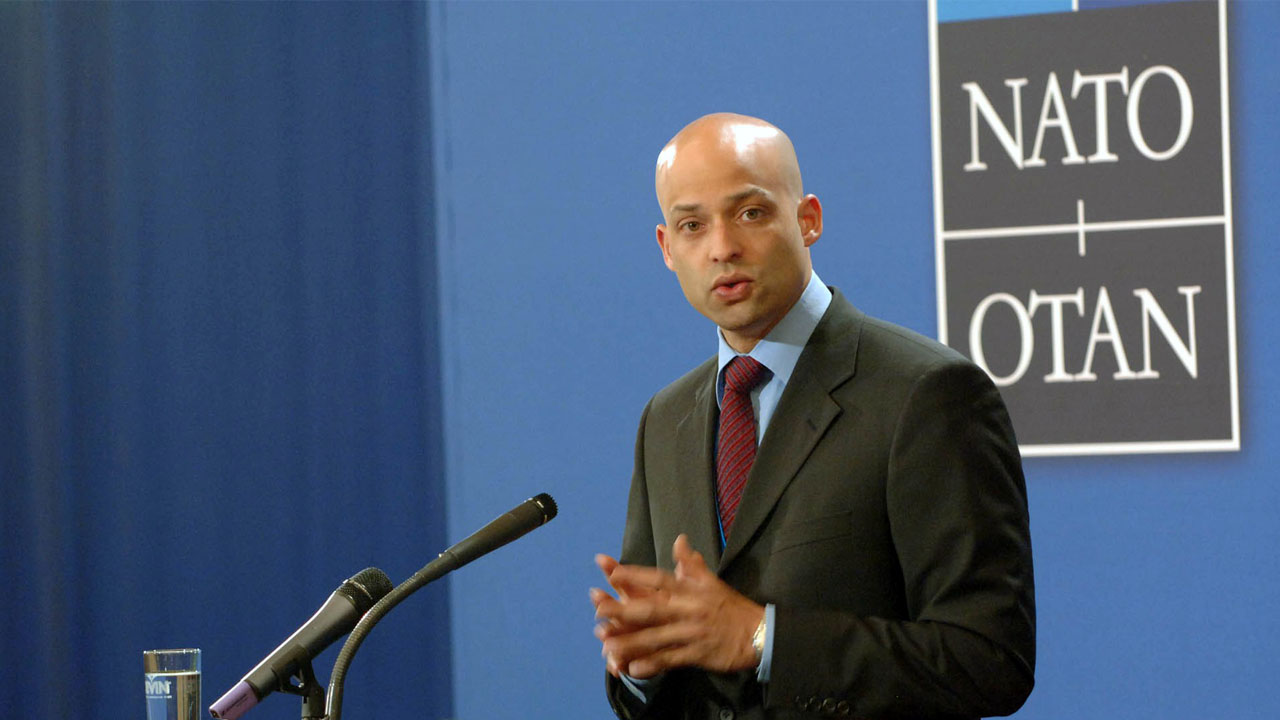
James Appathurai: NATO and Georgia also sharing situational awareness in the Black Sea to ensure that the Black Sea remains a source of stability and security, for NATO Allies and partners
NATO and Georgia also sharing situational awareness in the Black Sea to ensure that the Black Sea remains a source of stability and security, for NATO Allies and partners - Said NATO Deputy Assistant Secretary General for Political Affairs and Security Policy and NATO Secretary General's Special Representative for Caucasus and Central Asia, Mr. James Appathurai in an exlusive interview with Europe Time. He also said that NATO will continue to assist Georgia with practical support through the Substantial NATO-Georgia Package which was recently refreshed: _How does NATO view the agreement reached between the political parties in Georgia? In one of the interviews you mentioned that if the parliament does not function properly, this is a signal of a poor level of democracy in the country. After reaching an agreement and somewhat taking a step towards ending a political crisis, what do you reckon, what does the country indicate now, which is aspiring to join NATO? The political agreement in Georgia is really good news for all concerned. In the first place for the citizens of Georgia, as their elected representatives can get to work and the Government can focus on current challenges such as the Covid crisis and its economic impact, as well as the difficult but necessary reforms of the judiciary. It is also good news for politicians in Georgia, as the agreement provides for a series of mechanisms and safeguards which should allow all politicians from across the political spectrum to engage in dialogue on substantial issues, and to cooperate in a constructive manner. Finally it is also good news for all of us in the international community who want to see Georgia succeed. We hope the agreement will generate a renewed momentum in domestic reforms, and will also bring Georgia closer to its foreign and security policy objectives to integrate with the EU and NATO. Therefore I highly appreciate the efforts by the EU Council President’s Special Envoy Ambassador Danielsson, and the US Ambassador to help make this possible. Looking ahead, NATO will also follow with interest the implementation of the successive steps stipulated by the Agreement. _In your opinion, how did the current processes impact the prospect for NATO membership, and by finally reaching an agreement between the political parties has our country avoided some threats at this stage? Namely, recently international partners have been making implications that the current situation would harm the prospect for NATO membership. In your opinion, to what extent does the end of the crisis pave the way for further progress in the process of NATO integration? First of all, NATO Allies stand by the decision taken at the 2008 Bucharest Summit – and reiterated in following Summits – that Georgia will become a member of the Alliance. Secondly, NATO is an Alliance built on core values, such as the rule of law, democracy and individual liberty. A well-functioning Parliament, elected by the citizens in a process which is, and is perceived to be, free and fair, is at the heart of any democracy. The stand-off between Government and opposition has therefore been a source of concern over the past year. However, now is the time to look ahead. I believe the agreement puts Georgia in an excellent place to focus on a number of overdue reforms. This is automatically also relevant in the context of preparing for future NATO membership. In any event, we will continue to assist Georgia with practical support through the Substantial NATO-Georgia Package which was recently refreshed. The package seeks both to build Georgia’s defence capacities and resilience, and to prepare Georgia for eventual NATO membership. _We are aware of NATO’s position, that the alliance will not tolerate anything that threatens and endangers the territorial integrity and sovereignty of its partners; Is it time to actively take actions that could lead to NATO enlargement, given that Russia is benefiting from all these crises and that recently, we are observing such statements more frequently. As to future NATO enlargement, I have already addressed the issue in response to your previous question. However, let me be clear here on our support to Georgia’s territorial integrity. Allies have been clear and consistent that Russia must reverse its recognition of Abkhazia and South Ossetia; and it must withdraw its forces from these regions of Georgia. We condemn the grave human rights violations taking place in these regions. NATO fully supports the sovereignty and territorial integrity of Georgia within its internationally recognised borders; and we have taken due note of the recent ruling by the European Court of Human Rights, which confirms Russia’s responsibility for human rights violations in Abkhazia and South Ossetia and Russia’s de facto control in these places. Furthermore, NATO has taken a number of steps to help our partners build up their resilience, including in Georgia. Notwithstanding the Covid crisis, we have maintained our political dialogue; and we have strengthened cooperation in defence reform and the management of the defence sector, through the refreshed Substantial NATO-Georgia Package. This includes initiatives relating to the air, land, sea and cyber domains. It aims to further enhance the interaction between Georgia and the different parts of the NATO command structure, strengthen the Package’s maritime component, focus more on resilience, and boost coordination amongst different Georgian agencies. Many Allies have already pledged to support the implementation of this new package, either with personnel or through financial assistance. I see these practical steps also as a demonstration of NATO’s commitment to Georgia, its territorial integrity, and its Euro-Atlantic aspirations. _The issue of Black Sea Security is important for member countries of NATO. How would you estimate the recent tense circumstances in Ukraine and what is the strategy that should be developed by the Western countries to strengthen security? Since Russia’s illegal and illegitimate annexation of Crimea, NATO has increased its presence in the Black Sea. NATO ships routinely patrol and exercise in the Black Sea. Several Allies conduct NATO air policing in the region. We have a Romanian-led multinational brigade based in Craiova. Three NATO members – Bulgaria, Romania, and Turkey – are littoral states, with their own forces in the Black Sea region. At the same time, we are stepping up our cooperation with Georgia on maritime security, including by training Georgia’s Coast Guard. NATO and Georgia are also sharing situational awareness in the Black Sea to ensure that the Black Sea remains a source of stability and security, for NATO Allies and partners. At our last meeting, NATO Foreign and Defence Ministers addressed Russia’s military build-up in and around Ukraine, which we also discussed with the Ukrainian Foreign Minister in a meeting of the NATO-Ukraine Commission. In recent weeks, Russia has moved tens of thousands of combat-ready troops and military equipment to Ukraine’s borders and has announced military readiness checks. It has reinforced its military presence on Ukraine’s Crimean peninsula and in the Black Sea region. This military activity is very unusual in both size and timing and Russia has not been transparent regarding its intentions. This is part of a broader pattern of Russian aggressive actions, which raises very serious concerns. Allies fully support Ukraine’s sovereignty and territorial integrity. We have taken due note of the recent announcement by Russian Defence Minister Sergei Shoigu towards de-escalation by Russia which is important and overdue. NATO remains vigilant and we will continue to monitor closely Russia’s unjustified military build-up in and around Ukraine. NATO stands with Ukraine, and we continue to call on Russia to respect its international commitments and withdraw all its forces from Ukrainian territory. In recent years, we have also helped to strengthen the capabilities of Ukraine’s security and defence sector institutions. We have stepped up our cooperation in the Black Sea region with more exercises and port visits; and we support Ukraine's wide-ranging reform agenda, which will make Ukraine more resilient, and help bring Ukraine closer to NATO. Secretary General Stoltenberg has recently spoken with President Zelensky, and we have held a meeting of the NATO-Ukraine Commission with Foreign Minister Kuleba to discuss the latest developments. NATO’s support for Ukraine's sovereignty and territorial integrity is unwavering. _We are aware that NATO is not a military alliance opposing anyone, it is a unity based on principles and values. However, we also know that the motto "Do not irritate Russia" is not considered to be valid and whenever such compromises are made it brings up frustration every time. In your opinion, would unity of common values, consolidation, and adherence to democratic principles be a peaceful but rigid response for Russia? The question of how NATO Allies, who share principles and values, can best work together in the face of a broad range of threats and challenges will no doubt be at the centre of the discussions ahead of the Summit which will be taking place on 14 June. Let me add that indeed some of these challenges stem from President Putin’s assertive foreign and security policies, such as those close to Ukraine’s borders, but others have different origins. An important part of the response will need to be found in establishing a high level of solidarity and common resolve amongst ourselves, - that is amongst Allies, and also with partners such as Georgia and other like-minded nations.
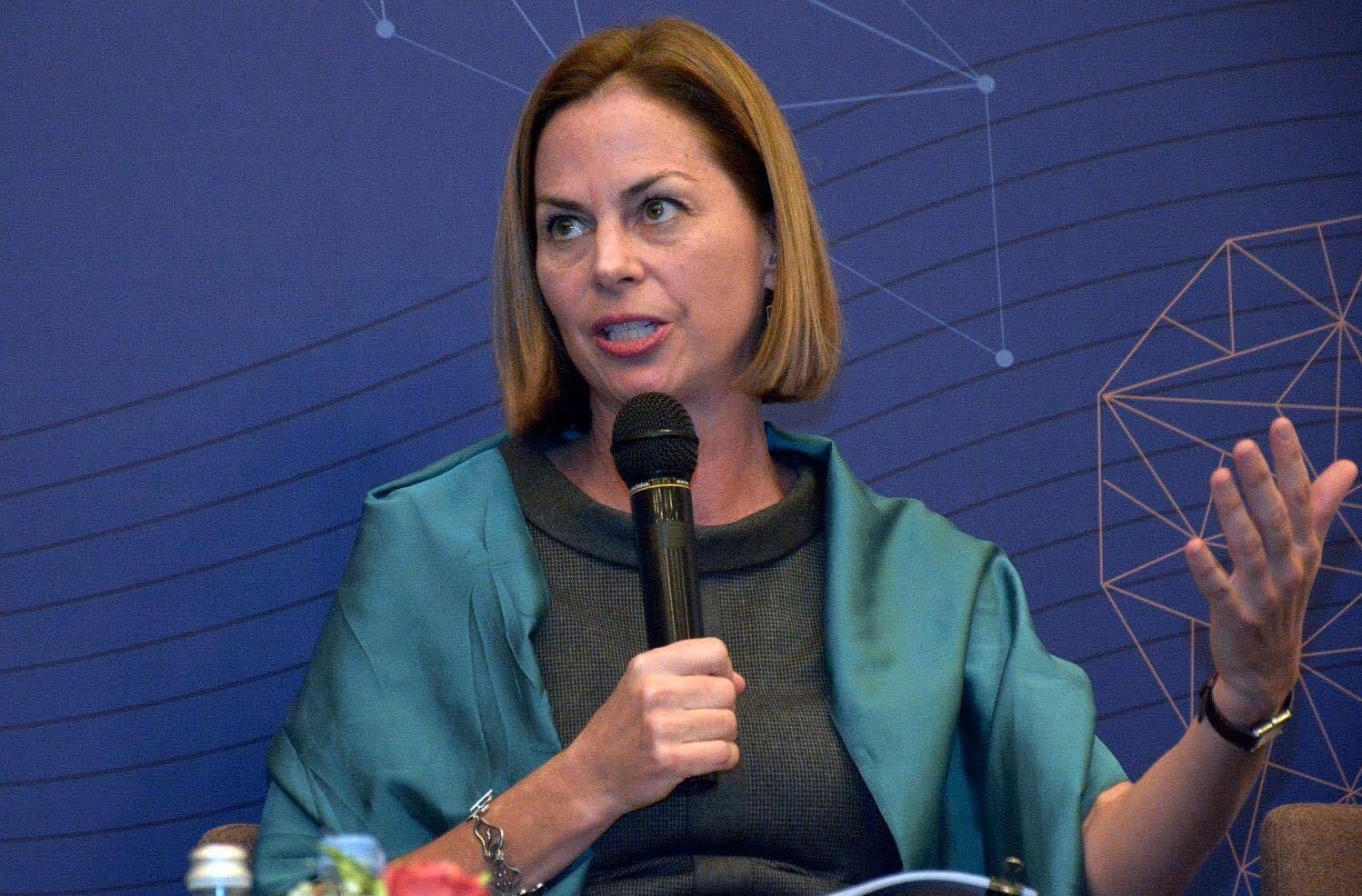
The agreement is certainly welcomed by Georgia’s friends and partners, but it is not a "free pass," Laura Thornton says
Georgia’s greatest asset is its democracy. It is what has earned the country's much-deserved attention and admiration from Western partners. In no small part because of the country’s location in a challenging region. The international community has really looked to Georgia as a beacon of hope. Thus, when democracy is backsliding, it is, of course, disappointing to the country’s partners. I think the agreement is certainly welcomed by Georgia’s friends and partners. But it is not a "free pass". And any backing away from the agreement will be viewed harshly, "said the Director of the Alliance for Securing Democracy at the German Marshall Fund, Laura Thornton, in an interview with Europe Time. In addition to this issue, in an interview with „Europe Time, " Laura Thornton also said that there is still much work to be done to strengthen Georgia’s democratic institutions and processes and ensure that democracy actually delivers for everyday folks. ET: In the interview, you mentioned once that holding early voting in Georgia would be a bad precedent for Europe and that instead efforts should be made to reform the electoral and judicial systems. According to the agreement signed on April 19, early voting in 2022 shall be announced in case the "Georgian Dream" receives less than 43% of the valid and proportional votes during the local elections in 2021. What do you think of such a formulation and, in general, do you think that this document will end the crisis? LT: Thank you so much for this question. What I said in my interview with VOA was that holding new elections when both domestic and international observers found the process credible could indeed set a potentially negative precedent. Reelections must be held only in very rare circumstances where significant disruption and extensive and proven fraud have taken place that would alter the overall outcome, and nonpartisan observers have declared the exercise neither free nor fair. Otherwise, losing parties everywhere could (and do, in fact) make such demands, without merit. (As we have seen, for example, in the U.S. and Myanmar.) That said, the agreement of April 19 indicates that a significant portion of representatives from both the opposition and ruling parties acknowledge the unique circumstances of the political situation in Georgia and the need for a compromise on the matter of early elections. And I welcome this agreement and congratulate all sides. Georgian elections have significant flaws. I would argue that the most damaging flaws do not really involve election day but occur prior. In particular, intimidation, abuse of state resources, and the unlevel playing field (financial support). Adjacent to elections is the longstanding problem of political interference (or perception of it) in the judiciary. These are challenges that are difficult to address through legislation and regulation and have colored Georgian elections for years, spanning different governments. There are some legislative and regulatory fixes that can be implemented, such as the reform of the composition of the EMB, complaints adjudication procedures and interpretation, and the handling of protocols, among others. However, I’m not sure elections – even after such fixes – would yield a different outcome. The deeper problems I’ve described give an extraordinary incumbency advantage. Take, for example, the fact that half of employed Georgians work for the state. And we’ve seen in Georgia, with a change in government, people losing their jobs. Not just political appointees, but bureaucrats and local officials as well. There is, thus, an incentive to keep your head down and vote for the government. Add to that intimidation, or even just "strong encouragement," that countless state employees—teachers, medical workers, etc.—have described. The point is that even with electoral reform and early elections, the playing field is tilted in a way that makes it challenging—not impossible, as we’ve seen in 2012—to see a political transition in Georgia. As to the question of whether the document will end the crisis, I guess it depends on how we define the crisis. It is without a doubt a positive development. It seems to indicate that the majority of elected MPs will take their seats in parliament. I also applaud the language about reconfiguring the balance of power within parliament. I worked with the Georgian parliament for years, and the minority’s rights are very limited. Having opposition chairpersonship, I would suggest more robust oversight provisions (with teeth) on budgetary matters. The Georgian legislative branch, however, is quite weak. I hope with some reforms – more legislative drafting (rather than rubber-stamping executive bills), intensive scrutiny, etc. – this can change and Parliament can serve as a more effective check. As I’ve said in other interviews on Georgia, I think the "crisis" of a political culture that is extremely polarized and views power as a zero-sum game may not be solved so quickly, although the April compromise is a good sign. There is no mentality of pluralism or power-sharing. Rather, the winning party must "destroy" its opponent, and anything short of this is weakness, and the loser must flee or even face prison. It creates incentives for the governing party to cling to power and use all the tools at its disposal to do so – courts, state resources, and state employees. The other "crisis" in Georgia, in my opinion, is that the Georgian people are dissatisfied with their government and, more concerning, with democracy. They dislike all the political parties, do not believe elected representatives serve citizens’ interests, and are not happy with the country’s direction. This indicates a more dangerous and simmering crisis in Georgian politics. ET: As the former head of NDI, considering the polls, you are well aware of the atmosphere in Georgia; according to the latest poll, 60% did not support the boycott, 45% were in favor of early voting, 45% were against it. In your estimation, what does the vote indicate? LT: The results are interesting. I think it is logical that the majority of Georgians would like to see parliament get to work on actually doing something on behalf of the country rather than being embroiled in political bickering. As for the even split between holding early elections or not, I reckon it is probably linked to political preferences. There may be a few who view early elections as a way out of the impasse. ET: Due to this crisis, many statements have been made that the international image of Georgia is being severely damaged and that the country's European aspirations would be threatened in case the parties fail to reach an agreement. Do you think that the country was able to avoid this threat and, ultimately, more or less maintain its image after reaching the agreement through the mediation of the European Union? LT: Georgia’s greatest asset is its democracy. It is what has earned the country's much-deserved attention and admiration from Western partners. In no small part because of the country’s location in a challenging region. The international community has really looked to Georgia as a beacon of hope. Thus, when democracy is backsliding, it is, of course, disappointing to the country’s partners. I think for sure there was a degree of frustration when the parties could not reach an agreement, particularly after all the investment and support were given. I think the agreement is certainly welcomed by Georgia’s friends and partners. But it is not a "free pass." And any backing away from the agreement will be viewed harshly. There is also still much work to be done to strengthen Georgia’s democratic institutions and processes and ensure that democracy actually delivers for everyday folks. ET: International partners have often pointed out that Russia was the only one to take advantage of this situation. In your opinion, how should the Biden Administration act against Russian aggression? For example, in an interview with us, General Ben Hodges mentioned that the Biden Administration should announce a comprehensive strategy for the greater Black Sea region that includes sustained and substantial diplomatic and economic efforts as well as military efforts to ensure security and stability in the region. LT: Indeed, the Kremlin delights in the failures of democracy, whether in Georgia or my country, the U.S. The aim is to sow distrust in democracy and create political chaos, and this task is made easier when the country is doing the damage on its own, even without the help of Russian disinformation and interference. The Biden Administration has taken several admirable steps recently to address Russian interference (in US elections, cyber-attacks, SolarWinds, etc.), but it is only a start. The U.S. needs to act in partnership with its European allies, as a "go it alone" approach will not be effective. Together, they must develop a comprehensive strategy—in addition to Hodges’ points—on cyberattacks, disinformation, malign finance, and economic coercion through more stringent sanctions. There also need to be consequences for developing issues, such as Navalny’s condition and recent actions in Ukraine. ET: Don't you think it's time for the West to take more effective steps, such as NATO expansion, given that Russia benefits from or is thought to be behind the entire crisis? LT: It’s certainly a possibility, and there is support within NATO for this approach. Georgia’s service and sacrifice to NATO in Afghanistan and elsewhere are deeply appreciated and recognized, and must not be forgotten. However, NATO enlargement will not solve Georgia’s internal political and democratic problems. In fact, the demonstration of strong internal democracy and governance is a prerequisite for membership, though some members are indeed falling short. While I have no doubt that the Kremlin benefits from dysfunction in Georgia – and exacerbates such divisions – Georgia itself has to take responsibility. Both challenges and solutions are not always external. I think too often there is a reliance on looking to others to solve the country’s problems. I believe in Georgia’s resilience and ability to strengthen its governance and democratic institutions.
France welcomes the agreement reached between the Georgian political forces
France welcomes the agreement reached between the Georgian political forces: „The signatories to this agreement have chosen the path of compromise in the interests of their country and are putting an end to the political crisis that has plagued the country for several months. France underscores the positive role played by the Georgian president in facilitating this agreement. France pays tribute to the efforts of Charles Michel and his Special Envoy Christian Danielsson. It will closely monitor the implementation of this agreement, which will allow the Georgian people to unite in order to address the current challenges. This agreement should help further strengthen Georgian democracy. A strong democracy will contribute to Georgia’s efforts to strengthen its sovereignty and territorial integrity, to which France attaches great importance“. EU-brokered document signed by Georgian Dream and opposition parties except for National Movement and European Georgia. According to the mediators' document, the persons assessed as political prisoners should be released within a week after the signing of the agreement between the government and the opposition. In addition, according to Charles Michel, early elections in Georgia should be called in 2022 if the Georgian Dream gets less than 43% of votes in the local elections.
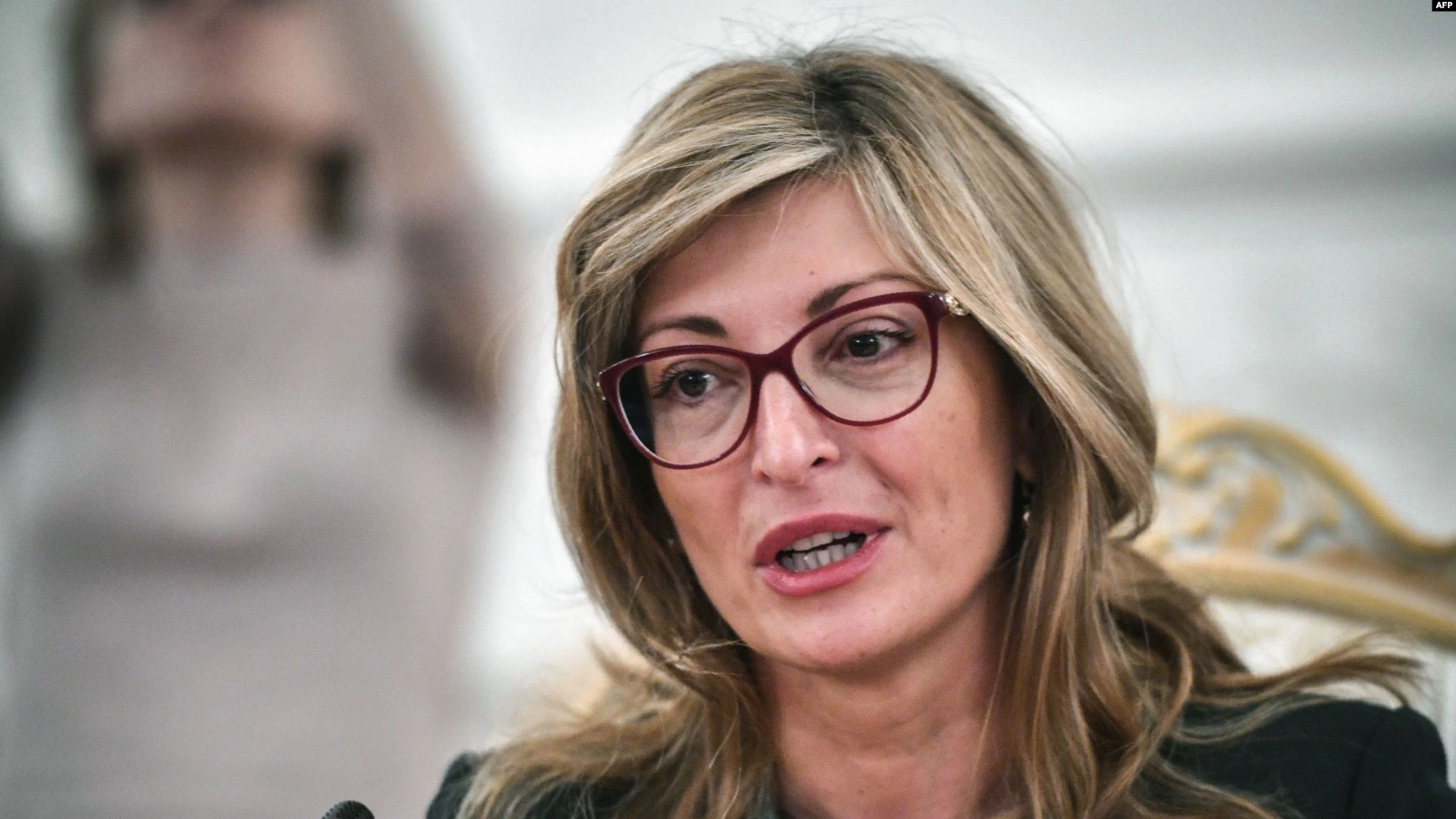
Bulgarian Foreign Minister: The agreement will open the door for further progress in the reforms process
`The agreement will open the door for further progress in the reforms process“, - said Bulgarian Foreign Minister Ekaterina Zaharieva on a Twitter post. `Strong support for the political agreement in Georgia. Its implementation will open the door for further progress in the reforms process and the political association and economic integration with the EU“, - said Ekaterina Zaharieva. EU-brokered document signed by Georgian Dream and opposition parties except for National Movement and European Georgia. According to the mediators' document, the persons assessed as political prisoners should be released within a week after the signing of the agreement between the government and the opposition. In addition, according to Charles Michel, early elections in Georgia should be called in 2022 if the Georgian Dream gets less than 43% of votes in the local elections.
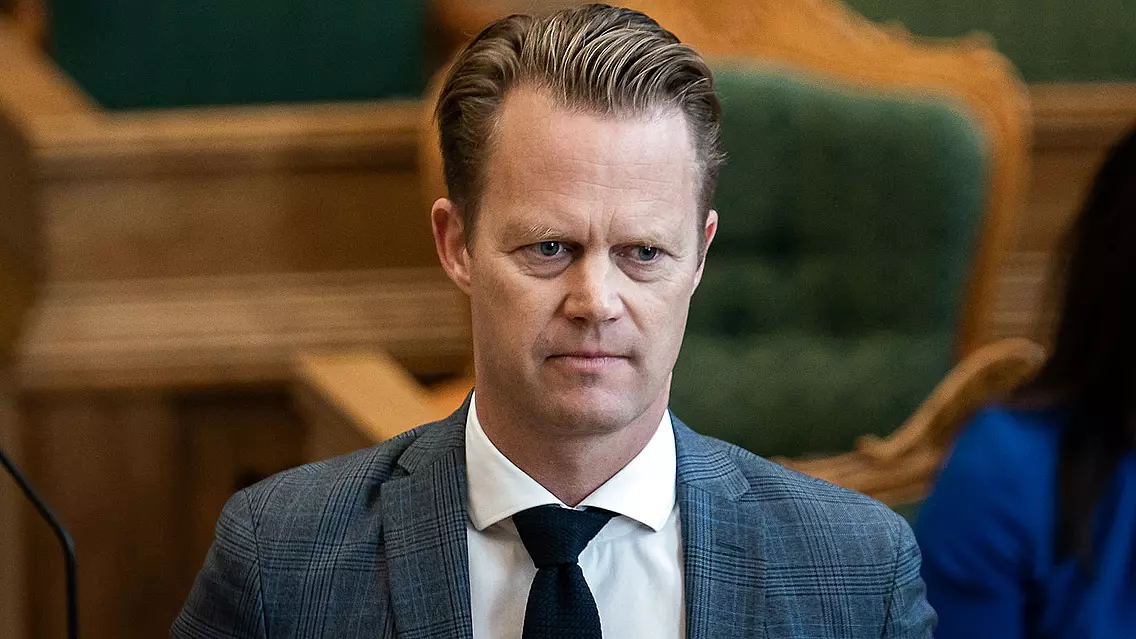
Danish Foreign Minister: Denmark welcomes the agreement on ending the political crisis in Georgia
„Denmark welcomes the agreement on ending the political crisis in Georgia“, - Danish Foreign Minister Jeppe Kofod stated on a Twitter post. „The positive result of tireless joint efforts by Georgia, the EU, and the US. I encourage all parties to sign the agreement. Implementation will bring Georgia closer to fulfilling its Euro-Atlantic aspirations“, - said Jeppe Kofod. EU-brokered document signed by Georgian Dream and opposition parties except for National Movement and European Georgia. According to the mediators' document, the persons assessed as political prisoners should be released within a week after the signing of the agreement between the government and the opposition. In addition, according to Charles Michel, early elections in Georgia should be called in 2022 if the Georgian Dream gets less than 43% of votes in the local elections.
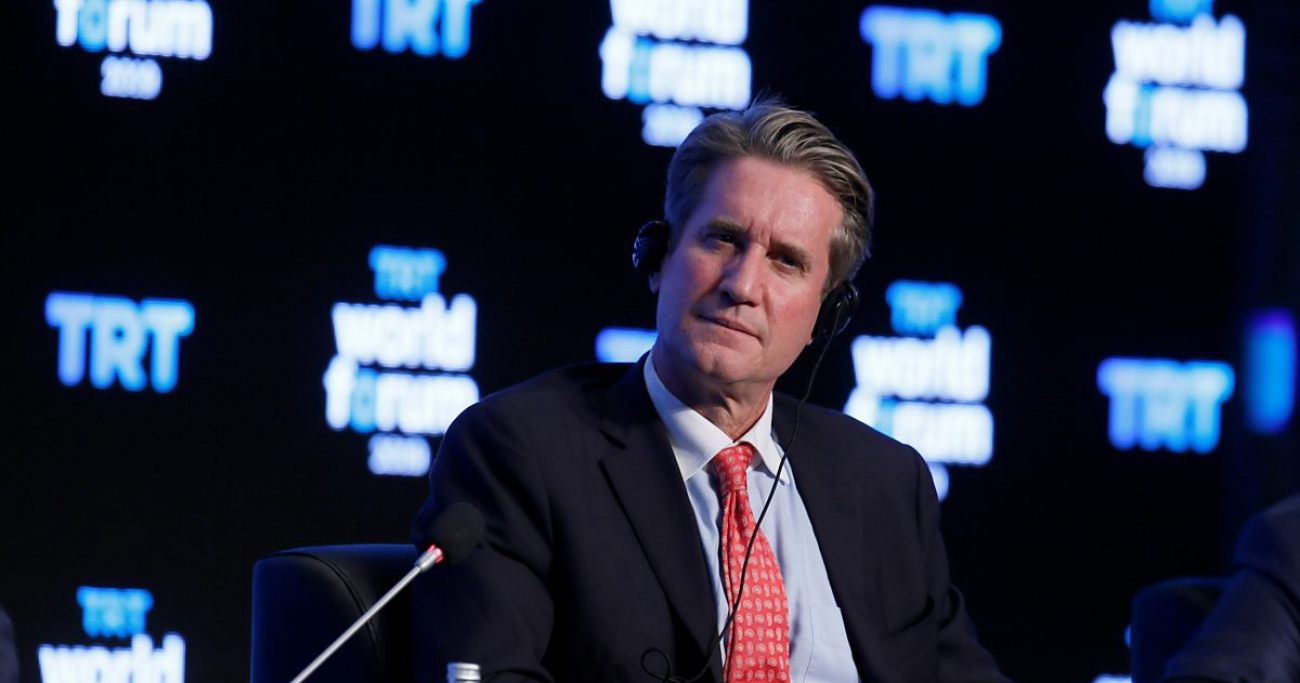
Matthew Bryza believes that the signing of the agreement, which will hopefully end the country's political crisis, is really positive
In an exclusive interview with "Europe Time," Matthew Bryza, a former US Deputy Assistant Secretary of State for Europe and Eurasia, congratulated Georgia's leaders, both in government and opposition, on reaching an agreement yesterday that, if implemented, will hopefully end the country's political crisis. I was worried a few days ago when the EU made it clear in its public statement that they had lost patience with Georgia because Georgian political leaders were unable to resolve an internal dispute and it is not possible, in such circumstances, for Georgia to move any closer to membership in either the European Union or NATO for that matter. As we know, NATO is the alliance of democracy, and if democracy is not functioning, it can never join Nato. I think it is really good that the agreement was reached under the leadership of the European Union because the European Union is skilled at figuring out how to come up with a compromise among 27 member states who have to agree. So everybody has to compromise when there is decision-making in the European Council, for example. Compromise means nobody gets everything at once, but both sides get something, and that is what happened with this agreement. I think that it is great that the agreement calls for substantial electoral and political reforms, and if the government does not implement these issues, then we could return to a crisis. But for now, the commitment the government has made is important. Now the US and the EU will watch carefully. One more important point is that I do not believe that this agreement is a sign that the EU will be more active now or NATO will be more eager to accept Georgia as a member because of the political crisis. So now, some time is needed to fully implement the agreement by both the government and the opposition. Time is needed for the EU and NATO to see that Georgia's democracy is operating normally, "-Matthew Bryza said.
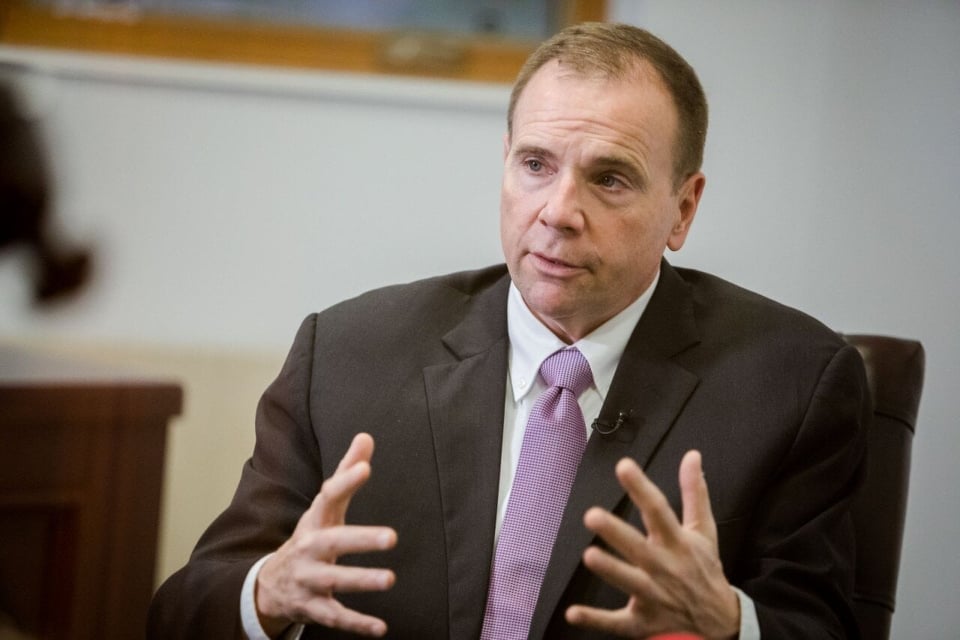
Ben Hodges: Biden Administration should announce a comprehensive strategy for the greater Black Sea region
Biden Administration should announce a comprehensive strategy for the greater Black Sea region that includes sustained and substantial diplomatic and economic efforts as well as military efforts to ensure security and stability in the region and development of prosperity and societal resilience for all Black Sea nations. This would include calling for immediate NATO membership for Georgia and MAP for Ukraine’, - the Pershing Chair in Strategic Studies at the Center for European Policy Analysis (CEPA), Ben Hodges sees the move as a precautionary measure by the West against further Russian provocations. How should Ukraine and the West react to further provocations by Russia? What would be more effective US steps considering the current situation in the region, both in the South Caucasus and around the Black Sea countries? How should Georgia deal with the Russian disinformation campaign and its impact; and would the implementation of the Anaklia project be a concrete message of the Georgian government’s position as well as the position of the country? "Europetime’ spoke to a former commander of the United States Army Europe, the Pershing Chair in Strategic Studies at the Center for European Policy Analysis (CEPA), Ben Hodges. _Dear General, we can see that the situation in Ukraine is deteriorating day by day. What is the response to the next provocations of Russia and how should Ukraine and the West act? I see three things that need to happen now, on top of the Sanctions that have been announced and the on-going military support (training and equipment): #1 Biden Administration, in coordination with our Allies (especially Germany, France, and UK), needs to continue to make it very clear that further Russian attacks are unacceptable and that protection of Ukrainian sovereignty is a priority for all of us. Germany and France have not been strong enough thus far in their condemnation of Kremlin actions so the Biden Administration has much work to do here; #2 Biden Administration should continue to support our Ukrainian partners with economic and military aide and increased intelligence-sharing, but encourage the UKR govt to use this opportunity to clean up any inefficiencies and corruption within Ukraine in order to build trust of the Ukrainian people in their own government and strengthen the societal resilience necessary to resist Kremlin disinformation efforts. I would include in this that the Rada should be give oversight and full transparency of the Defence budget of Ukraine; #3 Biden Administration should announce a comprehensive strategy for the greater Black Sea region that includes sustained and substantial diplomatic and economic efforts as well as military efforts to ensure security and stability in the region and development of prosperity and societal resilience for all Black Sea nations. This would include calling for immediate NATO membership for Georgia and MAP for Ukraine. _We have heard strict assessments and statements by the US administration and even from the first person regarding Russia. What steps would be more effective in the current situation in the region, both in the South Caucasus and around the Black Sea countries? #1 Germany and France have got to do more to put pressure on the Kremlin to live up to its international obligations with respect to the OSCE and transparency for exercises; #2 very publicly hold President Putin personally responsible for the health of Mr. Navalny; #3 Increased intelligence-sharing between USA, UKR, Romania and Georgia; #4 increased priority of the greater Black Sea region which means increased resources...especially sustained presence of US Navy in the Black Sea, within the parameters of the Montreux Convention; and #5 announce an annual exercise program that combines air, land, sea, and special forces exercises in the region each year. _In your previous interviews with our news agency, you have repeatedly stated that Russia recognizes only force and the slogan “don’t irritate Russia”, even at the expense of Georgia and Ukraine’s non-accession to NATO, etc. will only be a counterproductive action. We also know that Russia encourages internal strife and political crises in these countries. The majority of the citizens of Georgia, according to all polls, want Euro-Atlantic integration and strive for it. But taking into consideration the disinformation and anti-Western campaign carried out by Russia, as well as recent developments in Karabakh and the ongoing processes in Ukraine, don’t you think it’s time to move beyond the statements of the West and take more effective steps, like NATO enlargement? I think it is time for the people of Georgia and the government of Georgia to decide for themselves what they really want. Building a strong, resilient society that trusts its media and its government and its legal institutions and having a strong economy that unleashes the talent and potential of the amazing young people of Georgia is how Georgia can best resist Russian disinformation and corrupting influences. For sure, the United States can and will continue to look for ways to invest in the development of Georgia’s economy and infrastructure. But Georgians should ask whether or not their government is doing all it can to make that possible. At this point, I don’t think that is the case. Large businesses will be reluctant to invest in infrastructure projects if they don’t have confidence in the transparency of the transactions and the prevention of interference due to Kremlin influence or perhaps internal malign influence. _Turkey supported the issue of Ukraine's integration into NATO, making a similar statement regarding Georgia earlier. It is important for the West to ally with Turkey in the region, for Turkey - to increase its role as an independent player. The question is whether it is possible to align the interests and deepen cooperation in this case? We have got to fix the relationship between Turkey and the USA, rebuild trust, don’t let our relationship be defined by the S400 decision. It was a mistake for Turkey to buy S400 and I don’t excuse that. But Turkey is a long-time reliable Ally that understandably feels it is not appreciated or respected by the West or by the United States. Turkey is so important to NATO as well as to the USA. A Biden Administration strategy for the greater Black Sea region must include fixing this strategic relationship. It’s time for TUR-USA 2.0. But Turkey has to want it too. _ America is trying to pursue a coordinated policy with Europe in the region. At the meeting of the US Senate Committee on Foreign Relations, the efforts of Europe under the leadership of Charles Michel to resolve the crisis in Georgia were assessed and supported. Dear General, is defusing crises the only way to solve the crisis or do we need more substantial settlement mechanisms given that Russia has always been viewed as the inciter of all internal conflicts which has always seized the opportunity to do so? Western Europeans consistently fail to hold the Kremlin accountable for its routine violations of international law, refusal to be transparent in its exercises, and refusal to allow the OSCE Special Monitoring Mission to do its job in Ukraine. The Kremlin is frequently exposed for murder and espionage in Western European capitals. Yet it seems that business interests drive foreign policy in Berlin and Paris more than holding the Kremlin accountable. Until this stops, and President Putin is betting it won’t, then the Kremlin will exploit these gaps and weaknesses in the response of the West, especially since he believes that the USA can’t do it alone and that successive Administrations are more focused on China than Russia. _Do you think the implementation of the Anaklia project should to be on the agenda again? Will it be a concrete message of Georgia’s position and as well as its positioning? This is a good example of where the Georgian government said one thing about wanting western development and investment but in fact did little to make it a reality. The Anaklia project would be a game changer for the entire region, by opening up the east-west economic corridor between Europe and Eurasia. I hope the Biden Administration will put this on the agenda, as part of a broader strategy for the greater Black Sea region. But I hope that the Georgian government will put it on the agenda as well. So far, I think Kremlin influence has slowed the project - they don’t want to see Georgia become prosperous or for there to be a route between Eurasia and Europe that doesn’t go thru Russia. I also believe that forces inside Georgia, with significant political and business influence, also don’t want to see this project happen to be a competitor to Poti or Batumi. I think this is very narrow-minded. Georgia needs to think big about the entire nation becoming the portal between Europe and Eurasia and invite investment in infrastructure (ports, rail, pipelines, telecommunications, storage, and roads) to make it possible. _It was reported that the UK and on 11 September the US military contingent will completely leave Afghanistan. How do you assess this decision? I am relieved with this decision, although it causes me to feel melancholic, when I think of the lost lives and effort that have been invested there and the thousands of Afghans who have died there. I’m proud of what we have all done in Afghanistan over the past 20 years. I am proud of my own service as part of RC South in Kandahar 2009-2010. We, the coalition, including Georgia, accomplished the mission, for two decades, of making sure that Afghanistan could not be the launching pad for terrorist attacks on the United States or our Allies and Partners. We improved life for thousands of women and children in Afghanistan. We gave the Afghans the best possible chance, at huge expenditure of lives and treasure, to create a better life and government for themselves. But no US Administration (Bush, Obama, Trump, Biden) was willing to do all that was necessary to force Pakistan to deny safe haven to the Taliban or AQ. So long as that remained the situation, then we would never “win”. I don’t think we should continue to send our young Women and Men to Afghanistan in such a situation. We do need to maintain a presence there for counter-terrorism and to provide normal type support to the Afghan government and people as we do in many other trouble spots around the World. And we should offer immediate immigration from Afghanistan to a country of choice for any Afghans who supported the Coalition as interpreters or employees or who will be particularly threatened by a resurgent Taliban in the coming years. But I agree with President Biden...it is time for this mission to end.
US Department of State: The United States is working closely with the EU to urge the ruling and opposition parties to resolve their conflict
„The United States is working closely with the EU to urge the ruling and opposition parties to resolve their conflict“, - said State Department Spokesperson in a comment with The EuropeTime. „The United States wants Georgia to succeed as a secure, prosperous democracy and continue to advance its Euro-Atlantic integration. For that to happen, Georgia’s political leaders must reach a compromise that ends the current political crisis. The United States is working closely with the EU to urge the ruling and opposition parties to resolve their conflict. We have publicly and privately called on all sides to deescalate the situation, engage in constructive dialogue, and make compromises to allow Georgia to move forward. We are disappointed that both the ruling party and opposition have not yet shown a willingness to prioritize the Georgian people’s interests over their own political interests. While the ruling and opposition parties must all work toward a compromise, we have stressed the ruling party bears special responsibility in ensuring a compromise can be reached. It is critical the parties act in a manner consistent with vital democratic norms that form the foundation of values of the European and Euro-Atlantic community. We have conveyed our longstanding position to the Georgian leadership at the highest levels“, - said State Department Spokesperson.
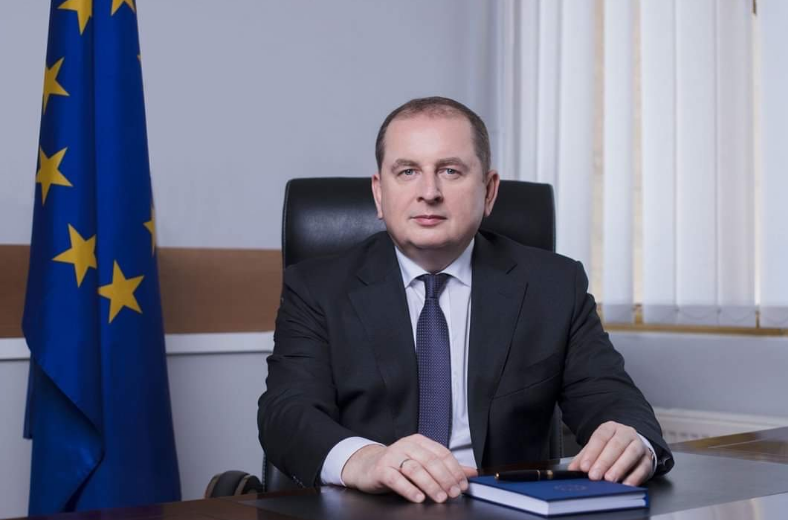
Ambassador Marek Szczygieł: Russian Federation fails to fulfil its international obligations
The Mission started its monitoring activities on 1 October 2008, beginning with oversight of the withdrawal of Russian armed forces from the areas adjacent to South Ossetia and Abkhazia. The Mission’s mandate consists of stabilisation, normalisation and confidence building, as well as reporting to the EU in order to inform European policy-making and thus contribute to the future EU engagement in the region. What difficulties does the mission experience in carrying out their daily activities and what are the challenges imposed by the COVID pandemic, on these and other pressing issues Europetime talked to Marek Szczygiel, Head of the European Union Monitoring Mission (EUMM) in Georgia. _what is the key issue you are focusing on when submitting your reports? The role of the EU Monitoring Mission in Georgia is indeed to observe the security developments along the Administrative Boundary Lines (ABL) with South Ossetia and Abkhazia, which our monitors do through daily patrols in the areas. On such patrols, EUMM monitors also engage with local communities and stakeholders to get their perspective on the current situation and how it affects their lives. They also observe the activities of security actors in the areas and ‘borderisation’ features. All these observations are then analyzed, compiled and sent as reports to EU policy-makers and Member States. Our Mandate is valid within the internationally recognized borders of Georgia. However, the Russian Federation fails to fulfil its international obligations including under the EU-mediated 12 August 2008 Ceasefire Agreement, notably to withdraw its military forces from the territory of Georgia. We continue to be denied access to Abkhazia and South Ossetia and this constitutes our greatest challenge in fully implementing our Mandate. We have to rely on alternative ways to collect information, including information that is available online in open sources, but a presence on the ground and direct engagement with local actors would without doubt allow us to monitor and report more accurately on the security, humanitarian and human rights situation in Abkhazia and South Ossetia. _The Incident Prevention and Response Mechanism meetings have resumed, after 5 month break. Parties discuss events and incidents, raise issues of concern on the general security situation and the conditions for the civilian population. During the last meeting the Georgian side raised the issue of illegally detained citizens. As a conflict prevention specialist, how do you view the effectiveness of this mechanism and the prospects for resolving existing issues? As one of the two co-facilitators of the Incident Prevention and Response Mechanism (IPRM) meetings in Ergneti, I believe that these meetings are essential in maintaining stability on the ground, defusing tensions, and building trust between the participants. The format allows direct discussions on very concrete issues faced by conflict-affected communities on both sides of the ABLs, such as specific detentions cases or freedom of movement restrictions. In fact, the IPRM is currently the only format that focuses specifically on local needs, and all participants often stress publicly the importance of this mechanism. Past IPRM meetings contributed to the release of detained persons for instance and to solving other practical issues, like irrigation. I look forward to continuing our work with the OSCE to co-facilitate such discussions and to contributing to confidence building. I would also like to highlight the EUMM-operated Hotline here, as another effective tool that has been used successfully over the years to facilitate humanitarian action, manage incidents, and build confidence. In 2020 for instance, the Hotline was activated over 2,820 times mainly to discuss crossings motivated by medical reasons, followed by exchange of information related to detentions, agricultural issues and “borderisation” activities. _You are Head of the European Union Monitoring Mission (EUMM) in Georgia, starting from March, 2020. Unlike your predecessors, you had to work during coronavirus pandemic. How would you assess the year in view of challenges and achievements? Yes, on 15 March, I celebrated my first anniversary as the Head of EUMM Georgia. This past year has been unusual and challenging in many ways for everyone, but I think that we all demonstrated resilience and ability to swiftly adopt to new circumstances. At EUMM, we had to quickly adapt our work, switching to teleworking arrangements whenever possible but always maintaining a visible presence and our core activities on the ground, including at both segments of ABLs. Of course, I wish I had been able to meet more often, and in person, with my team and our interlocutors but video calls helped, and I am looking forward to resuming more regular physical meetings and face-to-face contacts as soon as the situation permits. I am also grateful for my colleagues’ commitment in implementing our Mandate during such difficult times. At the political and strategic level, travel bans, and other precautionary measures have meant only one round of Geneva International Discussions in 2020 instead of four usually, but the Co-chairs managed to meet in December and will meet again on 25-26 March. IPRM meetings in Ergneti could not be regularly held during the winter, but they have resumed in March and we are already planning for the next one in April. At the local level, communities affected by the conflict have been hit harshly by the pandemic itself and its spilled-over consequences. The prolonged closure of so-called Controlled Crossing Points with Abkhazia and South Ossetia has further impeded their freedom of movement for instance and worsened their personal socio-economic or health situations. The Mission is acutely aware of these challenges, and together with other stakeholders, we will seek to address them through our available formats, including at the IPRM meetings and through our reports to EU Institutions and Member States. _EUMM is mandated to cover the whole territory of Georgia, within the country’s internationally recognised borders, but the de facto authorities in Abkhazia and South Ossetia have so far denied access to the territories under their control. What do you think should be done to bring this issue forward and what could be the possible solutions to the current challenges? As mentioned in a previous question, this lack of access to Abkhazia and South Ossetia constitutes the greatest challenge in implementing our Mandate. This is why EUMM, EU Institutions and EU Member States, continue to call on Russian Federation to allow an unrestricted access to those two regions.
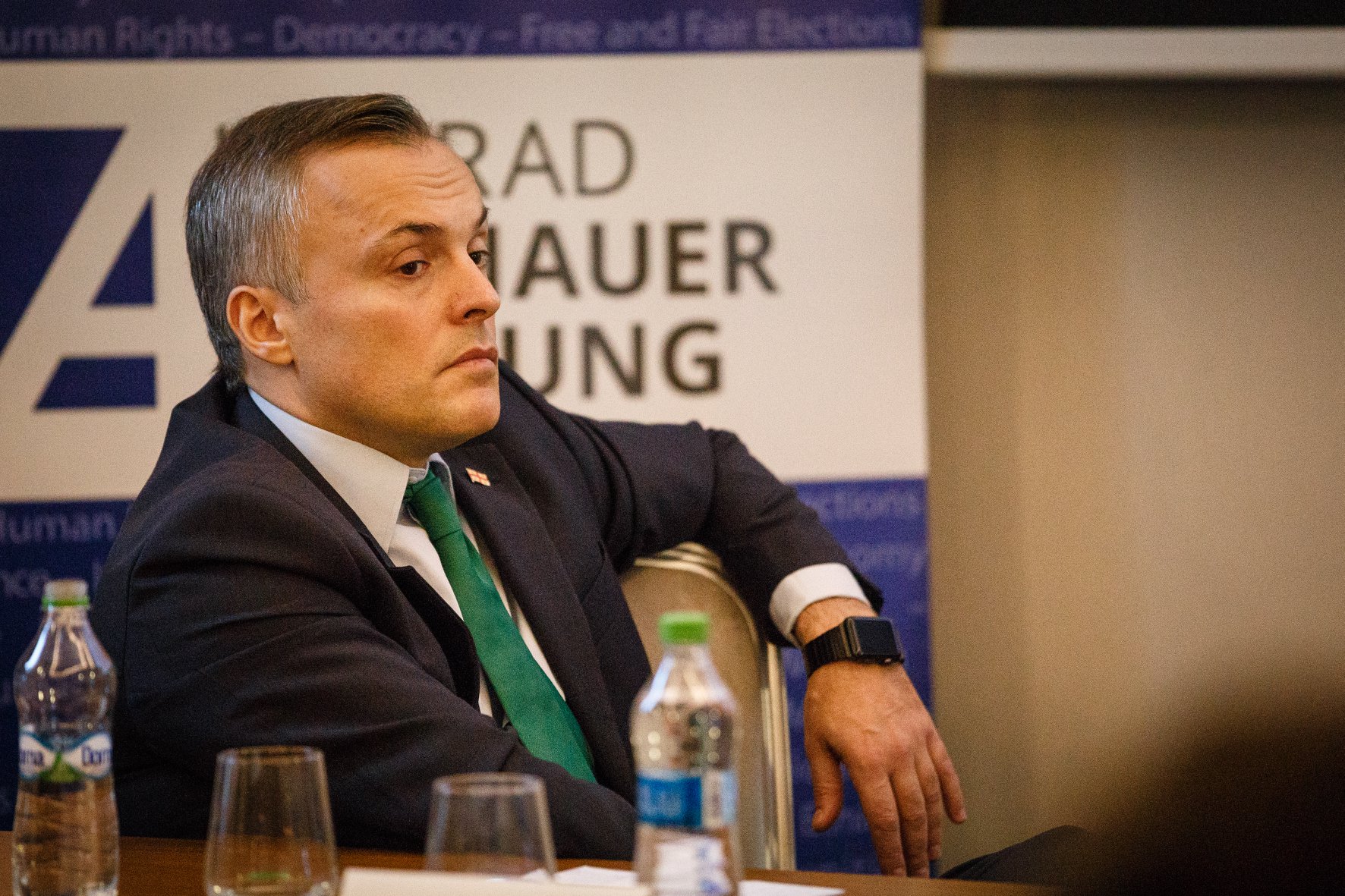
We need Anaklia project not only as a port project but also as a geopolitical corridor - Batu Kutelia
The first steps and statements of the new US administration on Russia have raised expectations that America will be stricter and more uncompromising in relation to democratic principles and autocratic regimes. This may be a new opportunity for Georgia to consolidate its aspirations on the path to the Euro-Atlantic alliance, but more and more criticism is heard from friendly and strategic partner countries towards country immersed in the internal political crisis. Georgia's current geopolitical position and relationship with the new US administration, as well as its interests in the so-called regional alliance initiatives were a topic of an exclusive interview of a former Ambassador Extraordinary and Plenipotentiary of Georgia to the United States, former Deputy Secretary of the National Security Council of Georgia, Vice President of the Atlantic Council of Georgia, Batu Kutelia with Europetime. - According to US President Joe Biden, the US is working to hold Russia accountable for the aggression in Crimea. We would like to know if there has been a similar message from American leaders in recent years that they do not only condemn the annexation and recognize the territorial integrity of Ukraine, but the United States seeks to hold Russia accountable. The Biden administration has also made a number of important statements regarding Georgia, though not as specific. In your opinion, what do these messages of the American President mean? First of all, these messages from the new US administration are very important. It is often said that the main test of the Biden administration will be Russia and its policy towards Russia. With regard to Russia, the test of Biden's policy lies in what position the United States will take on what Russia has done over the past 12 years. The reality given as a result of abuse of Obama’s reset policy by Kremlin is also part of that period. Including what happened in Georgia and Ukraine. Biden's policy is entirely in response to the aggressive revisionism of Russia, which Putin openly and explicitly began in 2008 with his military aggression in Georgia. The new US administration policy is not only to contain Russia, but also to drive it away, which Joe Biden, Anthony Blinken and other members of their team have repeatedly mentioned in various contexts. The issue of Ukraine is fundamentally important for the United States, because in addition to the fact that the annexation of Crimea violates the principles of international norms, this territory is also very important from a geostrategic point of view for the United States. The purpose of the annexation of Crimea by Russia was to make this area a zone of exclusive rights and influence of Russia. This is a challenge to the Biden administration. He will continue the distribution of these areas of influence if he has a foreign policy based on values, where it will be important to adhere to international norms and free choice of countries. That is why the United States needs Georgia as a strategic partner in this foreign policy equation. So far, every single step taken by the new US administration has been correct. It will be interesting to see how this translates into a concrete policy in terms of foreign policy, and when the foreign policy team is fully approved, then we will see more specific steps in this regard. -As for the US attitude towards Georgia, what are the concrete results, actions and steps to increase the level of US support? In addition, how can Georgia benefit from the example of specific projects? There are already two specific issues here. When we talk about supporting Georgia, we are talking about what direction Georgia will take. Will Georgia be a country worthy of US support, as Biden’s declared foreign policy priority is a democratic agenda and support for democracies? The idea of a Democracy Summit serves just that. If Georgia remains a democratic country and does not move to informal governance and authoritarianism, then, of course, it will have a different degree of support from the United States. - In the context that you are talking about, will the recent developments in Georgia affect the quality of US support? Is the fact that the United States has imposed sanctions on several individuals in Saudi Arabia, its biggest ally in the Muslim world, a clear message that the Biden administration treats values and national interests equally, unlike the Trump administration? And does this reassure us that no one will turn a blind eye to Georgia if democracy is weakened? The given situation is not static. In a very short period of time, it will become clear whether we will remain on the positive agenda of America or become an authoritarian state like Belarus. Therefore, theoretically, if we continue the path which is the open will of the Georgian people - to be a Western European democracy, then naturally, now is the best moment for Georgia, because supporting democracies is an openly declared task of the Biden administration. There are ongoing debates on several issues in American foreign policy, that is, whether pragmatic interests are more important than value components and how we can find the right balance between the two. Biden's stated policy is that democratic values are paramount and that US needs partners to ensure them. Biden said in Munich that now is a historic moment. In this new historical moment will Georgia become America's strategic democratic partner in the region? There are few such countries around. This determines the US policy towards Georgia. Will all its political resources and agenda be spent on stopping Bidzina Ivanishvili and Russian-style kleptocracy, or, conversely, on Georgia's integration into NATO? That’s exactly what choice we are facing now. What will happen depends on how the processes will develop within the country; on the other hand, on the failure of Georgian government to actually formulate Russian-type authoritarianism and ruin its strategic partnership with the West, as can be seen in the statements and open criticism we hear from international partners today. In your opinion, does the government team have such a human resource that can firmly maintain and develop the process of European integration? I mean people who can have any leverage to turn the data created today into positive one, both in making decisions within the team and gaining the support of international partners? Lately, my American friends and partners have been asking me the same thing extensively. I wish I had a positive answer to that. Unfortunately, the anatomy of the formal governance of this government and the levers seized by the state almost rules out the existence of such independent political actors. We can see this on the example of previous prime ministers. As soon as either of them tries to acquire a slightly more independent and pro-Western profile, they automatically and instantly end their careers in an uncertain situation based on Bidzina Ivanishvili's pro-Russian vision. However, there is a reverse logic here as well. I think that such actors may appear in the ‘Georgian Dream’ team. Not because they believe in ideology, but because of pure pragmatic views, if the United States and the European Union will have a proactive policy in Georgia. If we recall, this was the case during Shevardnadze's time, when the United States already had a declared policy in Georgia and the region, in terms of security, including energy security (Baku-Ceyhan project, assistance in resolving the situation in Pankisi Gorge). After the emergence of open American interests, pro-Western sentiments in Shevardnadze's government team automatically increased. There were very few pro-Western, idealistic politicians and actors then. These openly expressed and fixed interests prompted many actors to act pragmatically according to motivation. Therefore, if there is an active American policy, then such politicians will emerge as well. Leaving Georgia on the NATO integration agenda will be a very strong lever to stop Ivanishvili's kleptocratic system prone to informal rule and strengthen democratic interests in the political spectrum and society as well. -The President of Azerbaijan, Ilham Aliyev, has said that if Georgia wants, it can join the common platform for the reconstruction of Nagorno-Karabakh. Earlier, the creation of a six-nation platform in the region was also discussed by the President of Turkey and the Minister of Foreign Affairs of Iran. The creation of a new transport corridor in Karabakh connects these five countries. Is it in Georgia's interest to be involved in a common platform for the reconstruction of Nagorno-Karabakh, and what is the West's position on this platform? It’s better to be involved in any negotiations when there are favorable positions. If not, it is better not to get involved at all. If there is an authoritarian government in Georgia under the informal rule of Bidzina Ivanishvili, the rest of the world will criticize us and say that we are no longer a democratic country and we have no European future. In such conditions, entering any type of format means that we will not be able to protect the state interests. The only strength of Georgia is that we should be a beacon of democracy in the region and therefore have the support of the West and the United States. We can participate in such a tandem in any format, but when we are criticized for our democratic backdown, our position will be weak; naturally, this format is absolutely unprofitable for Georgia and will not bring us any benefits. What I say at all international forums is that Georgia should not be identified as a South Caucasus country. We should not even be part of the distribution of some regional balance of power, but a country of the European type in the Eastern Black Sea region. The South Caucasus is not a single geopolitical region for many reasons. The Black Sea is a more geopolitical entity. Therefore, our task should be for Georgia to identify itself as a European country in the Black Sea region. This South Caucasus identification contributes to the Russian logic that this is the sphere of influence of Russia and powerful states, and they will shift the balance according to their interests. Being a European Black Sea country is the strategic vision we need to have. But today in Georgia's foreign policy there is no similar vision, and moreover, the country and the country's interests are led against it. -As for the Karabakh platform, should Georgia be involved or not and why? Due to many specific factors, we need to maintain good relations with both neighbors - historical, economic, political. It is important that Georgia positions active neutrality on the Karabakh issue, not passive. Active neutrality means that we must be the mainstay of Western interests in the region. We often say that Georgia should be more than just Georgia with its democratic European, Euro-Atlantic integration. It must shift the balance in its favor with respect to neighboring states. We can not position ourselves with money, economy or armed forces alone to achieve national goals if it is not part of the unified strategic vision I talked about above. This active neutrality means that our moral superiority in the region should increase so much by democracy and good relations with the West, that in the same six-format, something is not distributed in the region at the expense of our interests. _Does the creation of the Six Platform mean a direct strengthening of Russia's influence in our region? Not six, but five already. We are lucky our Foreign Ministry stated that Georgia would not get involved, although in the context of an institutionally broken foreign and security policy this statement does not guarantee that the opposite will not happen. - However, in December 2020, the President Salome Zurabishvili had a different position on this format and spoke about the initiative in a positive context? What Salome Zurabishvili said in December was disadvantageous. I think she said this not on her own initiative. It was simply an attempt by the government to test the reaction - the international and domestic response was very acute. By the way, this was also a case of enjoying the moment. Before the new US administration could formulate a new foreign policy, there was an attempt to ‘push’ the idea. This is not a new idea - in 2008, (Ahmet Davutoglu, Turkish Foreign Minister) the war was just over, when this idea was first voiced by Turkey. Russia has always tried to micro-regionalize its foreign policy. This type of regionalization is disadvantageous for Georgia, the only thing that is most important for us at this stage is the European democratic identification and not the status of an authoritarian South Caucasus state or any other hybrid regime. When we say that we want to identify ourselves as a geopolitically European type of country, this is not a declaration alone. This should be accompanied by specific actions and relevant projects. For example, if we look at specific projects, this is one of the most important moments - in addition to energy security and the southern corridor, there is also the issue of the logistics corridor. In order for this logistics corridor to be effective, it needs a ‘grand strategy’, which must include Anaklia. Anaklia not only as a port project but as a geopolitical corridor. ‘Strategic Connectivity’ should be the main idea by which we acquire a geopolitical function.
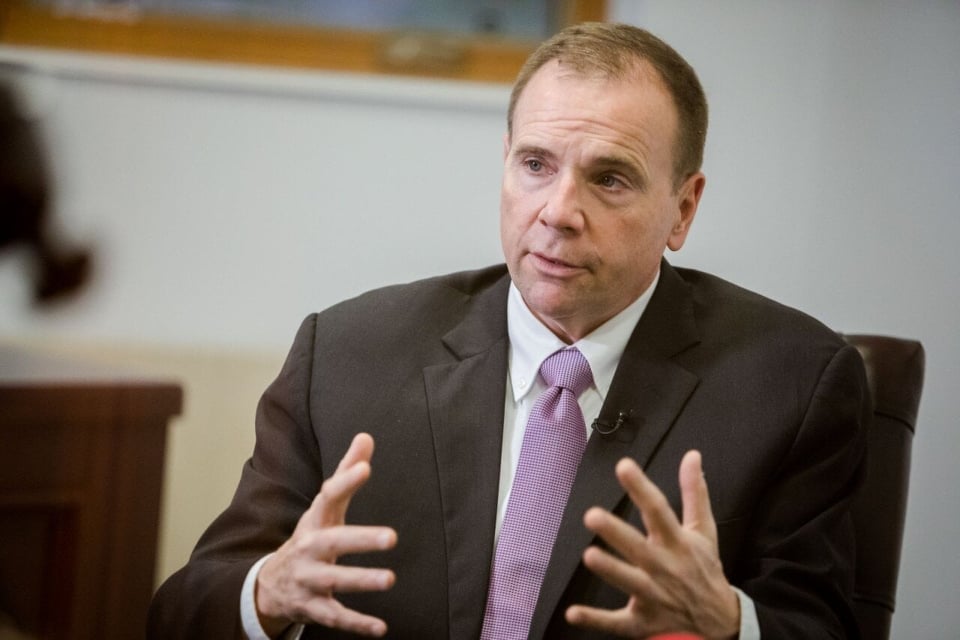
Ben Hodges: I have no doubt that the Kremlin is supporting these actions in a variety of means
‘I have no doubt that the Kremlin is supporting these actions in a variety of means…’ EuropeTime spoke to Former commander of the United States Army Europe, Lieutenant General and the Pershing Chair in Strategic Studies at the Center for European Policy Analysis (CEPA), Ben Hodges. According to him today’s actions were, unfortunately, a huge step backward for Georgia. ‘Today’s actions represent, unfortunately, a huge step backward for Georgia. I am very concerned with how the Govt is using such force and violence to attack the headquarters of an opposition party and to arrest the leader of the opposition party. This is not what I’d expect from a liberal democracy that seeks stronger ties with the West and membership in NATO. I do hope that anyone who has been injured today is able to recover quickly. I have no doubt that the Kremlin is supporting these actions in a variety of means...it’s their normal approach, to destabilize and create distrust and prevent the emergence of free, prosperous civil society on their borders...because they don’t want their own citizens to see how much better life can be when young people are allowed to make choices and when freedoms are protected through a free media, fair elections, and a multi-party Parliament. This is why transparency is so important...to prevent individuals from being able to have outsize illegal or inappropriate control over what should be governmental processes. I hope that the Biden Administration, and others, will speak out quickly, loudly, and clearly to say that we expect our Friends in the region who aspire for strong ties to the West, to avoid the use of force and to ensure transparency in any cases resulting from today’s actions. I also hope that the Biden Administration will work hard to develop a long-term strategy for the greater Black Sea region that encompasses diplomatic and information and economic assistance and cooperation with all of our friends and Allies in the region...that will help develop the institutions of liberal democracy there as well as help improve the economic prosperity of all people there. This is key for the young people of Georgia and other nations in the region...to help them fulfil their potential’. - Said General Hodges.
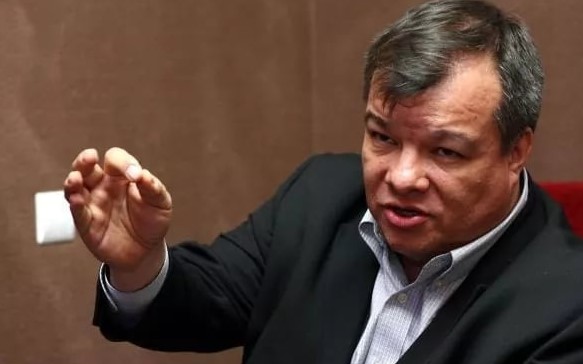
Luis Navarro: The US is putting Russia on notice that it will be more assertive and supportive of Georgia’s Western aspirations
"I think that, that the US is putting Russia on notice that it will be more assertive and supportive of Georgia’s Western aspirations",- said Eurasian Program Fellow for the Foreign Policy Research Institute, Luis Navarro in an interview with EuropeTime. Navarro thinks, US will be more assertive and supportive of Georgia’s Western aspirations. "In combination with Pres Biden’s conversation with Putin, that the US is putting Russia on notice that the it will be more assertive and supportive of Georgia’s Western aspirations. But the Administration is likely to be more vigilant about backsliding on Georgian democracy as well",- Navarro told Europetime.
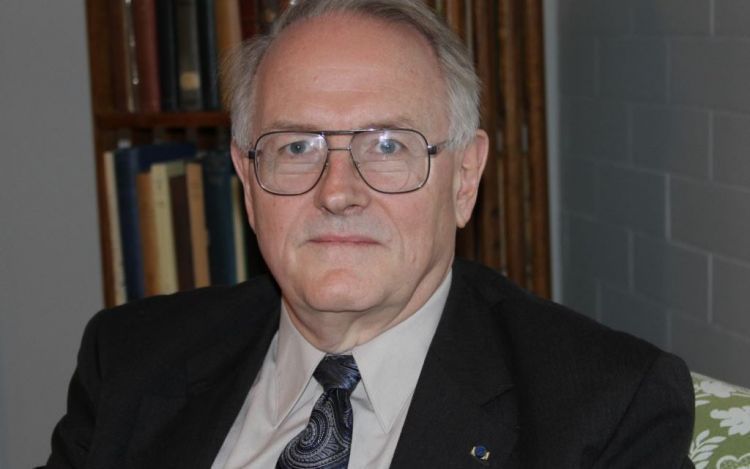
Paul Goble: The Biden administration is a big improvement on its predecessor for the US and for Georgia
"The Biden administration is a big improvement on its predecessor for the US and for Georgia",- former adviser to the Secretary of State told EuropeTime.A former Baker administration official assessed the messages sent to Russia by US President, Joe Biden and Secretary of State Anthony Blinken. Paul Goble thinks Biden will be tougher on Russia. "The Biden administration is a big improvement on its predecessor for the US and for Georgia. I believe it will speak out forcefully and act jointly with allies to hold Moscow accountable. That is something everyone except Putin benefits from, and Georgia should work hard to justify even more Western support",- said Paul Goble.
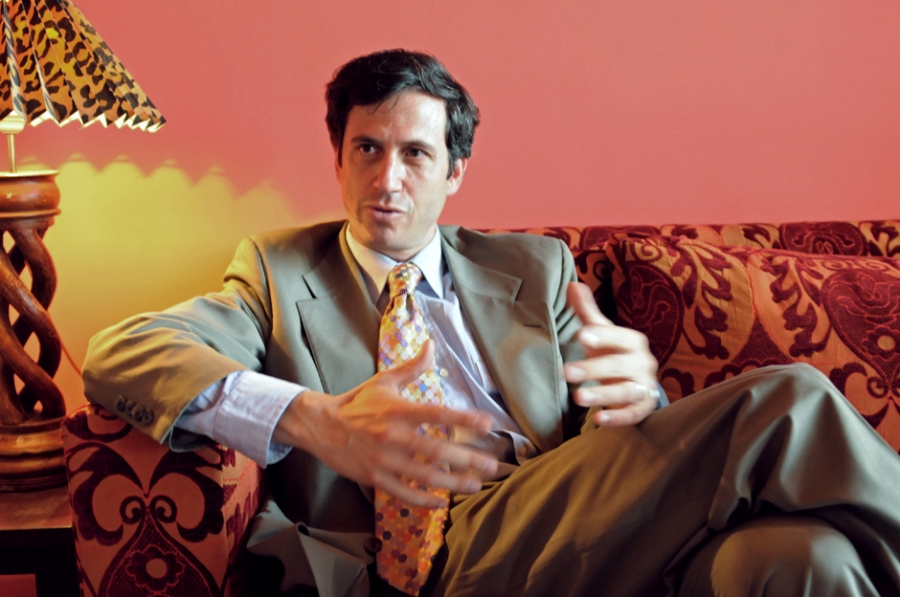
Lincoln Mitchell: President Biden and Secretary Blinken’s comments regarding Georgia are best understood as an indication that the US will return to its previous polices regarding Georgia
"President Biden and Secretary Blinken’s comments regarding Georgia are best understood as an indication that the US will return to its previous polices regarding Georgia",- American analyst Lincol Mitchell mentioned in an interview with EuropeTime. “President Biden and Secretary Blinken’s comments regarding Georgia are best understood as an indication that the US will return to its previous polices regarding Georgia. That includes rhetorical defenses of its territorial integrity. While this is a break with the Trump administration as the former president was always afraid of confronting, or even disagreeing with, Vladimir Putin, I do not anticipate US-Georgia relations being much different than they were during the Obama years”,- said Mitchell to EuropeTime.
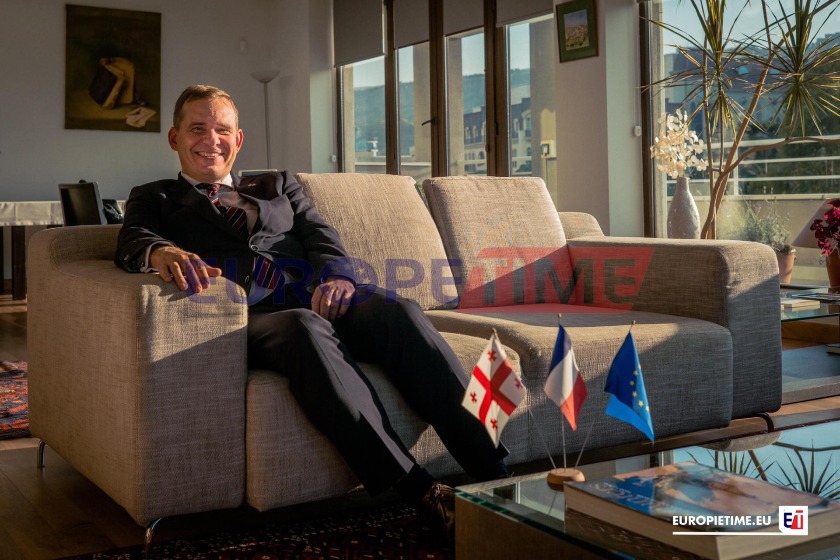
French Ambassador: If you ask me about the necessity of a strong Western presence in South Caucasus, I emphatically reply yes
Relations between France and Georgia, ‘Amilakhvari Dialogue’, the Georgian-French military cooperation, ongoing processes in the region, including the Nagorno-Karabakh conflict, Georgia’s EU prospects, Russian factor and ‘Georgia vs Russia’ case, a landmark judgement of the Strasbourg Court in favor of Georgia were the topics of the Europetime interview with the Ambassador Extraordinary and Plenipotentiary of the French Republic to Georgia Diego Colas. _Mr. Ambassador, thank you for the interview. First of all, how would you assess the relations between France and Georgia? Could you also briefly tell us what the format of the Dimitri Amilakhvari dialogue is intended for and what specific steps have been taken within this format in the relations between the two countries? I believe that the relations between our two countries are as close as they have ever been. As we are about to celebrate the 100th anniversary of the day when the French government welcomed the government of the first Republic of Georgia and offered it refuge after the Soviet invasion, this is only fitting. As you point out, our bilateral strategic dialogue bears the heroic name of Dimitri Amilakhvari, a famous Georgian prince but also one of the greatest heroes of the French Foreign Legion. This special format of dialogue has been created by Presidents Macron and Zurabichvili in February 2019 and was formally opened by Ministers Le Drian and Zalkaliani in Paris in December 2019. It covers political dialogue, defence and security, migration and internal security, economy and investment, as well as education and culture. Much of what we planned to do at that last meeting has been implemented. We now need to plan a new meeting to decide on future projects as well as on the further development of the existing co-operations. _What does the existing Georgian-French military cooperation include and how does France help Georgia to enhance its defense capability? We think that it is very important that French and Georgian soldiers train together, operate together and are in capacity to fight together. This strengthens Georgian capacities as well as the security of both countries, as we are thereby better able to stand shoulder to shoulder to face any threat that the future may bring. For this reason, we are proud to welcome Georgian soldiers in our best military schools and to organise French language classes for armed forces personnel in Georgia. Also, our soldiers are operating together in the Central African Republic, the Georgian armed forces being deployed to ensure the protection of European military instructors. This is a unique opportunity to deploy troops together and to gain valuable experience of difficult conditions as well as of inter-operability. There are many other areas of close co-operation. An example is mountain infantry training. Since 2006 and the creation of the Sachkere Mountain Training School, we have been special partners. Last September, in a joint exercise, French and Georgian instructors trained French and Georgian troops jointly, including by going to the very top of Mount Kazbeg, taking me along too! This was a great success and we are looking forward to future joint activities. Another example is air defence, where we are in charge of NATO’s cooperation. It is to cover the air defence segment that we proudly take part in NATO’s exercises in Georgia. The recent conflict in South Caucasus has highlighted the importance of a solid and sovereign air defence. _How would you assess the current developments in the region, the Nagorno-Karabakh peace agreement and the role of Turkey and Russia in these processes? Generally, I do not believe that it is in the interest of Georgia that the South Caucasus region become an area of strategic competition. It risks derailing the important efforts undertaken by all Georgians to become more European. And therefore, the conflict in Nagorno-Karabakh, in addition to being a horrible war, is also a matter of worry for those who care about the fate of Georgia. It would be much better for the principles of reform and co-operation to be allowed to guide Georgia’s relations with the outside world. This is what Georgia’s friends want for Georgia and also what we understand to be Georgia’s wishes. Such principles are key to the success of Georgia’s orientation towards Europe. I have great respect and admiration for the determined, strongly held, tenacious strategy followed by successive governments of Georgia with a view to bringing this country closer to Europe and the West, ever closer to liberal democracy resting on solid law-abiding institutions. I believe that this is the logical development of a deep cultural and historical proximity. To succeed, this strategy needs to concentrate on reforms and cooperation, and outside strategic competition can only be an unhelpful distraction in this regard. Such a strategy will be successful if it translates into a fundamental transformation of the country, its laws but also the practical implementation of these laws, its business culture, more generally its approach to an inclusive society. France, the EU, other member states of the EU, the US also, we are all keen to do our part to help this strategy be successful. _Given the developments in the Caucasus region, do you think it would be desirable for the West to be more present and more active in the region and have a clear position, particularly with regard to Russia? I emphatically reply yes to the necessity of a strong Western presence in South Caucasus. And I add that this is for South Caucasus, and not for or against anybody else. I believe that a country has the right to decide what path of development it wants to take, and that no one should prevent Georgia and us from building a very intense partnership if we both want to. We should also acknowledge that the degree of engagement of the European Union, the EU member states, and the US in Georgia is already quite unique in the world. This translates in very strong political support, in the deployment of the EU monitoring mission, in considerable financial and technical assistance, in visa-free travel to the EU as well as a comprehensive free trade agreement and in a great number of co-operations. Many countries also deploy naval forces at regular intervals in the Black sea to strengthen the security of the region. This includes France as we frequently take part in this effort. So, no one can doubt the strength of our commitment to the region. Regarding Russia, I want to add that, in general, I believe that EU member states are stronger in foreign policy when they manage to agree on clear messages. This is, in my view, largely the case when it comes to relations with Russia. We all regularly make clear our support for democracy in the region and in particular for respect for the rule of law in Russia itself. We have repeatedly underlined our strong support for Georgia’s territorial integrity and sovereignty in its internationally recognized borders, for Ukraine’s territorial integrity, for progress towards democracy in Belarus. We have expressed our expectations in no uncertain terms regarding the situation of Mr Navalny. The question is also, once we have a position, to decide what precise objectives we set for ourselves and how we set about to meet them. In my view, it is not a policy to simply refuse any sort of contact as a way to make our displeasure known, and then to deplore that nothing changes. _Does France, as the leader of the European Union, support the issue of EU enlargement? As you know, Georgia is going to apply for EU membership by 2024, will the economic crisis caused by the pandemic or any other factor affect the decision? The EU does not have a single leader, it is one of its many beauties. But indeed, we in France are keen to be a voice helping shape its decisions and its path towards the future. Regarding the possibility of future enlargements beyond the Western Balkans, this is a discussion that remains to be had within the EU. However, whatever the outcome of such a discussion, a country can always aim to transform itself, its State and society into a truly European polity and count of our help to achieve this. The ultimate price is not to be member of this or that Union, it is to be really, at heart, a European nation. Helping Georgia achieve this objective, which we know is dearly held by a great majority of the country, is the essence of everything we do in Georgia. _On 21 January, the European Court of Human Rights Grand Chamber issued a landmark judgement in the inter-State case concerning the armed conflict between Georgia and the Russian Federation in August 2008 and its consequences. The ruling clearly concludes that after 12 August 2008 the Russian Federation, exercising effective control over South Ossetia and Abkhazia, violated several provisions of the European Convention of Human Rights. How would you assess this decision? I believe that this judgment is a great success for Georgia and, as a former French agent to European courts, I congratulate the legal teams that helped the Court investigate this question in full as I measure the extent of the work done to reach this result. I have read the entire judgment and I think that it is even better for Georgia than the first impressions I had when reading the press summary and the operative part. The main Georgian submissions were nearly always accepted. There remains the issue of equitable satisfaction to be decided, for which the Court has set a delay. It is important for facts to be established and for the extent of violations of the ECHR to be determined by the Court that is competent to do so. The implementation of the judgment also offers an opportunity to start addressing the many issues that are still outstanding. I hope that this process will help the Geneva International Discussions find a new dynamism towards full implementation of the 2008 cease fire agreement by all parties concerned, including Russia. Only then could we be in a position to conclude that this conflict is at last finding a path to resolution and that this important obstacle to better relations with Russia is lifted.

What is the purpose of the Iranian Foreign Minister's visit to Georgia?
As part of a regional tour, Iranian Foreign Minister Javad Zarif is visiting Tbilisi. Prior to that, he paid a visit to Azerbaijan, Moscow and Armenia. At a meeting in Moscow, the foreign ministers discussed issues of bilateral Russian-Iranian cooperation, as well as issues on the international agenda, including the situation in the Persian Gulf, the resumption of negotiations on the JCPOA nuclear deal and the situation around Nagorno-Karabakh. Relations between Moscow and Tehran will not depend on the ‘whims of the United States, which is trying to harm the partnership between the two countries by imposing illegal sanctions. Our relations are developing based on the interests of the two countries and two peoples, and we build our plans without looking back to any third party," Lavrov said during a joint conference with his Iranian counterpart, Mohammad Javad Zarif. It should be noted as well that during his visit to Moscow, the Iranian Foreign Minister expressed his desire to start negotiations with the new US President on the renewal of the nuclear agreement. Javad Zarif urged the United States to lift sanctions against Iran and resume talks. Lavrov said at the meeting that the rescue of the nuclear deal is one of the most pressing issues, and Russia and Iran are interested in its full implementation. According to Iran’s top diplomat, the Nagorno-Karabakh conflict is Tehran and Moscow's concern. We thank Russia for a Russian-brokered ceasefire deal, which ‘led to a ceasefire and a cessation of hostilities in Nagorno Karabakh, and hope that this agreement will lead to the establishment of lasting peace and friendship in the Caucasus region’, Zarif said During a visit to Baku on January 25, the Iranian Foreign Minister told Azerbaijani media that under his regional tour he was going to discuss the initiative to create a 3 + 3 format platform for six countries for regional peace and development cooperation. The six-nation initiative includes Iran, Russia, Turkey, Azerbaijan, Georgia and Armenia. „I held extensive and very fruitful conversations in Baku on bilateral ties and regional cooperation’. The key to sustainable peace’ lies in ‘inclusive regional arrangement, which include ‘transit corridors benefiting all’, Zarif wrote on Twitter. The initiative to create a ‘Six Platform’ in the Caucasus Region was put forward by the President of Turkey in December 2020 after a meeting with the President of Azerbaijan. „We talked with Azerbaijan about the possibility of creating a platform with the participation of six countries - Azerbaijan, Turkey, Russia, Iran, Georgia and Armenia. This will be a good cooperation for the development of the region“, - Turkish President Recep Tayyip Erdogan told a news conference in Baku. Before arriving in Georgia on January 27, after a visit to Yerevan, the Iranian diplomat tweeted that they had ‘agreed on further strengthening bilateral ties and regional cooperation’ with Armenia ‘turning old rivalries into newer synergies’. However, Zarif did not specify whether he meant ‘a six-country platform“. What does a six-country regional cooperation platform mean, and whether it is in the interests of Georgia to create any kind of alliance with Iran, Russia and Turkey? Europetime spoke to Zurab Batiashvili, Research Fellow at Georgian Foundation for Strategy and International Studies about this issue. According to the analyst, after a new war in Karabakh, Iran would like to take part in a new security structure, which, in their view, can be formed around the Caucasus. However, there are several problems here. As for the 3 + 3 alliance plan, the first problem is that these countries, in many cases, do not have diplomatic relations with each other. For example, Georgia does not have diplomatic relations with Russia due to the occupation of our territories. Armenia also does not have diplomatic relations with Turkey and Azerbaijan. In this respect, Iran is the only country that maintains diplomatic relations with every country in the region. This is due to the fact that, unlike Russia, Iran is relatively less involved in the Caucasus. That’s why Iran is now trying to take advantage of the situation and talks about economic relations. However, there are serious problems in terms of the economic union as well, as the US has imposed very tough sanctions against Iran’, Zurab Batiashvili told Europetime. According to the analyst, it is hard to imagine Iran economically cooperating with the three Caucasian states, when sanctions do not even allow it to transfer funds, in fact, the sanctions do not allow to develop trade relations with Iran. According to Zurab Batiashvili, this is a problematic issue that can really be resolved only if Iran-United States relations are settled. „Therefore, I think that the creation of a 3 + 3 union of these 6 countries is more at the level of Iran's desire, and it won’t actually be able to do anything. As for the visit of the Iranian Foreign Minister to Georgia, I do not think that the very fact of the visit will displease the American side. Such visits are not sanctioned. Meetings and negotiations with all the neighbors are necessary, because they are in your region, and besides, there are many issues related to transit that need to be discussed’, - Zurab Batiashvili said. In December 2020, Georgian President Salome Zurabishvili mentioned the Caucasus Platform while speaking about the Karabakh conflict and regional security at the opening ceremony of the annual meeting of the heads of Georgian diplomatic missions abroad – ‘Ambassadors’ Conference 2020’. „The prosperity and development of the whole region depend on peace and stability. At the same time, we know that everyone was involved in achieving this goal in resolving Nagorno-Karabakh conflict, all the facilitators, except for us. It is very sad. The historical role of Georgia in the Caucasus has always been and still is an opportunity to bring everyone together. That is why I am deeply convinced that Georgia can be neither passive nor secondary to the initiative of the Caucasus Platform,’ - Salome Zourabichvili said on December 21, 2020. The President of Turkey announced the ‘Caucasian Platform’ initiative on December 10, 2020. The statement of the President of Georgia was followed by a critical assessment by former US Ambassador to Georgia Ian Kelly. „How can a Georgian President congratulate an agreement that locks in another Russian occupation in the Caucasus and locks out the West?’ - Ian Kelly posed on his Twitter account. When asked by Europetime, whether Iran's proposal to create a union of six countries is in the interests of Georgia and its Western partners, Zurab Batiashvili, Fellow Researcher at the Georgian Foundation for Strategic and International Studies answered that it is in the interests of neither Western partners, nor of Georgia. „Any format of the union, where our western partners are not represented, is not favorable for Georgia first of all. Because we have so many times witnessed what it means to stay face-to-face with Russia. In my opinion, this alliance is not in Russia's interests either, because Russia does not want to share its privileged status, that every state in the Caucasus is trying to achieve. Consequently, it is not in Russia's interests to increase the influence of Iran and Turkey in the Caucasus region. As for the other states, cooperation with Iran will be problematic for them as well. Sanctions do not allow any deeper cooperation with Iran. ‘Therefore, the creation of any union in the Caucasus region with the involvement of Iran is problematic and less feasible“, - Zurab Batiashvili said. Ben Hodges, Former Commanding General of US Army Europe, Pershing Chair in Strategic Studies, at Center for European Policy Analysis spoke to Europetime about Mohamed Javad Zarif's visit a few days ago. I am convinced of one thing – ‘the United States needs a strategy for how it looks at the entire greater Black Sea region, which demonstrates US commitment to stability there, including in the South…Personally, I do not see any good news coming from increased attention and presence by the Kremlin and Iran in the area.’ The Iranian diplomat will leave Georgia on January 28.
Ambassador Hubert Knirsch: The verdict of the European Court confirms that Russia is responsible before the law for human rights abuses in the torn-away regions that occurred after the 2008 war
In an interview with Europetime, Germany's ambassador to Georgia- Hubert Knirsch commented on the European Court of Human Rights verdict. "The verdict of the European Court of Human Rights confirms that Russia is responsible before the law for human rights abuses in the torn-away regions that occurred after the 2008 war. Our political ambition must be not only to effectively include these regions in the international mechanisms for the protection of human rights but also to transform and ultimately to solve the conflicts that have cast their shadows over them for such a long time already. All participants should make full use of the Geneva International Discussions to move forward on this road",- Hubert Knirsch said.
Ben Hodges: The US needs a strategy for how it looks at the entire Black Sea Region and which demonstrates US commitment to stability there
Former commander of the United States Army Europe, Lieutenant General and the Pershing Chair in Strategic Studies at the Center for European Policy Analysis (CEPA), Ben Hodges sees the 5G-Security Memorandum of Understanding between the US and Georgia as an important step in strengthening coordination and building trust. What will this bring to Georgia and will it guarantee investments and closer ties with NATO? In addition to this issue, in an interview with „Europetime“ Ben Hodges also assessed the messages of Anthony Blinken, that "Russia is particularly aggressive towards countries that are not united under a single security umbrella. Can we think that the new US administration will facilitate and accelerate Georgia’s accession into NATO? Will Georgia be able to respond with dignity to the big challenges and stakes that its partner countries may be placing on it? ‘Europetime’ also spoke to Ben Hodges about the Iranian Foreign Minister's planned visit to Georgia and other issues. _General Hodges, a Memorandum of Understanding was signed between the United States and Georgia on the development of fifth-generation wireless communication networks - 5G security. It was said that this will make Georgia “part of a clean network”. What will this bring to Georgia and will it guarantee investments and closer ties with NATO? Having a secure network in which we are confident is important to planning and coordination, and building trust. _The US Deputy Secretary of State stated that the United States plans to open DFC - "Development Finance Corporation" in Georgia. An initiative was also expressed to draw up a business plan for the United States and Georgia. Does this also mean the launch of a US-Georgia free trade agreement, and can this be seen as a message that the US is entering a new phase in its relationship with its strategic partners under the new administration? DFC is e recent improvement in how the US Government brings us investment sources to nations where we believe investment helps improve stability and security as well as prosperity. This would be a very good step by the USA for Georgia. _The new US Secretary of State Antony Blinken said at the Senate hearings what you have repeatedly stated in an interview with us that ‘Russia is particularly aggressive towards non-NATO countries that is to those that are not united under a single security umbrella. This can be seen from why Russia does not attack NATO members’; so, can we regard this statement as a signal the new US administration will facilitate and accelerate the process of Georgia's integration into NATO? That is certainly my hope. It is a good sign that President Biden’s nominee to be our next Secretary of State has spoken so clearly about this. And I hope that the Biden Administration will push hard for Georgia’s accession into NATO. But we’ll need to get strong support from Germany, France and the UK as well. Good that Turkey is already a strong advocate. _The vision and plan of the new US administration for the Middle East - Iran, Syria and Afghanistan are important. Will the United States support the reduction or complete withdrawal of NATO peacekeeping missions from Afghanistan? I don’t know, but I do believe three things: #1 we should not pull out in such a way that the Afghan Government is left too exposed. #2 the US should withdraw in a measured and careful way that has been closely coordinated with all of our allies and partners in Afghanistan – in together, out together. And #3 we should not stay in Afghanistan if we are not serious about dealing with Pakistan and its tolerance of a safe haven for the Taliban there within sovereign Pakistan territory. _It has recently been reported that the Iranian Foreign Minister will pay a visit to Georgia as part of his regional tour. Before that, he will hold meetings in Moscow. What do you think might be the reason or issue of a sudden visit of a high-ranking Iranian official to Georgia? I don’t know, but the US needs a strategy for how it looks at the entire greater Black Sea region and which demonstrates US commitment to stability there, including in the South Caucasus. I don’t see any good news coming from increased attention or presence by the Kremlin or Iran in the area. _Readiness for NATO membership means, first of all, a high degree of democracy and the rule of law. Taking into account all the above, if the pro-Western forces in Georgia are not consolidated and young qualified people are not raised, will the country be able to adequately respond to the big challenges and stakes that its partner countries may be placing on it? This is for the people and government of Georgia to decide. I’m concerned that the government seems to be ‘backsliding’ a bit in its commitment to democracy, transparency, and desire to join NATO. I can see the influence of the Kremlin here. But nothing good for the young people of Georgia will happen if the Government of Georgia chooses a path away from further western integration.