news

The Romanian Ambassador to Georgia welcomes a new ferry service between Romania and Georgia: It strengthens the connection between our countries and the two shores of the Black Sea
The Romanian Ambassador to Georgia, Razvan Rotundu, welcomes a new ferry service between Romania and Georgia. „It strengthens the connection between these countries and the two shores of the Black Sea“, ambassador Rotundu told Europetime. „We are really happy with the launch of the ferry line between Constanta and Poti. It strengthens the connection between our countries and the two shores of the Black Sea. The potential of this corridor is high, as it may connect the wider regions the EU as well as the South Caucasus and Central Asia.Constanta port offers a direct connection with the Danube, allowing the cargo to be transported to Central and Western Europe. We are also satisfied that the ferry offers service for both cargo and passengers", - ambassador Razvan Rotundu told Europetime. Some background There is now a brand-new ferry service running between Georgia and Romania. On June 27, 2023, the first voyage was place, leaving from the port of Constanta and arriving at the port of Poti after two nights at sea. The ferry service, which transports both people and goods, is run by the Georgian business E60 Shipping. A document establishing the Black Sea-Caspian Sea Freight Transport Corridor was signed in March 2019 by Georgia, Romania, Azerbaijan, and Turkmenistan, creating new opportunities for connectivity and regional development in the area. They stated that this new corridor will be the shortest, most profitable way to connect Central Asia to Europe through the two seas. Read more: State Department: We recognize the opportunities for Georgia to play an important role in connecting Central Asia to Europe through the middle corridor

6 Western nations demand Russia return two regions it took from neighboring Georgia 15 years ago
UNITED NATIONS (AP) — Six Western nations marked the 15th anniversary of Russia’s takeover of 20% of Georgia’s territory by demanding on Thursday that Moscow return the South Ossetia and Abkhazia regions. A joint statement by the six members of the U.N. Security Council — the United States, United Kingdom, France, Albania, Japan and Malta — said Russia’s invasion of Georgia in 2008 “marked a more aggressive trend” in its policy toward its neighbors, something being witnessed today in Ukraine. The statement, following closed council consultations on Georgia, said the six countries “are resolute” in reaffirming the country’s independence, sovereignty and territorial integrity “within its internationally recognized borders.” In August 2008, Russia fought a brief war with Georgia, which had made a botched attempt to regain control over the breakaway province of South Ossetia. Moscow then recognized the independence of South Ossetia and another breakaway Georgian province, Abkhazia, and set up military bases there. The statement, read by Albanian Ambassador Ferit Hoxha outside the Security Council surrounded by diplomats from the five other countries, condemned Russia’s “brutal invasion” and continued occupation of South Ossetia and Abkhazia and its “steps toward annexation of these Georgian regions.” The Western nations also reiterated their condemnation of Moscow for “continuous provocations which go in parallel with the Russian Federation’s unprovoked and unjustified aggression against Ukraine.” They pointed to Russia’s continued military drills in Georgia’s territory, sea and airspace as well as its erection of barbed wire fences and other barriers, its unlawful detentions and abductions of local people, discrimination against ethnic Georgians, and deliberate damage to Georgian cultural heritage. The six countries said the Russia-Georgia conflict should be resolved peacefully based on international law, including the U.N. Charter, which requires every country’s territorial integrity be recognized, “also noting the context of Russia’s ongoing aggression against Ukraine.”
The State Department has submitted a report to Congress describing its strategy for the Black Sea region
Congress received a report from the State Department outlining their approach to the Black Sea region. A spokesperson at the State Department informed Europetime. “We can confirm the report has been submitted to Congress, but as a general matter, we do not discuss the details of our communications with Congress. The Black Sea Strategy is a vision for a Black Sea that is secure, prosperous, interconnected, and free from threats to territorial integrity, economic coercion, and malign influence. It encourages agencies across the United States Government to work with partners bilaterally and multilaterally to ensure regional security, boost regional economic cooperation, provide clean and secure energy, strengthen rule of law, promote respect for human rights, combat corruption, and counter disinformation. Through this Strategy, the United States will strengthen our partnerships to promote peace and prosperity for all. The Strategy also outlines our approach to addressing the immediate and long-term repercussions brought upon the region by Russia’s brutal full-scale invasion of Ukraine,“ - A spokesperson at the State Department told Europetime. The US State Department will produce a Black Sea strategy by a deadline set in June that will provide a more comprehensive approach to the region, Secretary of State Antony Blinken said in March. "We will produce that strategy. I think there's actually a deadline in the legislation of June and we will produce it by then," Blinken told a US Senate hearing."It requires that we're focused on a much more comprehensive approach to the Black Sea region."The strategy will focus not just on the security aspects, but on promoting political engagement, on promoting economic cooperation, including strengthened energy security, which is critical to all of the countries in the region in a variety of ways, Blinken said.Several US partners in the region, including Romania, have already shared their views and proposals, which will be reflected in the new Black Sea strategy, Blinken added.
NATO-Ukraine Council addresses serious security situation in the Black Sea
The NATO-Ukraine Council met on Wednesday (26 July 2023) to address the serious security situation in the Black Sea region following Russia’s unilateral termination of the Black Sea Grain Initiative brokered by the United Nations and Türkiye. NATO Secretary General Jens Stoltenberg convened the meeting following a request for crisis consultation from President Volodymyr Zelenskyy. Deputy Secretary General Mircea Geoană chaired the Council. Allies and Ukraine strongly condemned Russia’s decision to withdraw from the Black Sea grain deal and its deliberate attempts to stop Ukraine’s agricultural exports on which hundreds of millions of people worldwide depend. They also condemned Russia’s recent missile attacks on Odesa, Mykolaiv, and other port cities, including Moscow’s cynical drone attack on the Ukrainian grain storage facility in the Danube port city of Reni, very close to the Romanian border. Allies noted that Russia’s new warning area in the Black Sea, within Bulgaria’s exclusive economic zone, has created new risks for miscalculation and escalation, as well as serious impediments to freedom of navigation. Deputy Secretary General Mircea Geoană said: “Russia continues to show utter disrespect for international law and for the people worldwide who depend on Ukrainian grain. Russia is threatening civilian ships, terrorising peaceful cities, and destroying parts of the world’s cultural heritage with its brutal strikes. NATO is united. We stand in solidarity with our Black Sea Allies, we will continue to protect one another, and we will continue to support Ukraine for as long as it takes.” Secretary General Jens Stoltenberg said: “Russia bears full responsibility for its dangerous and escalatory actions in the Black Sea region. Russia must stop weaponising hunger, and threatening the world’s most vulnerable people with food instability. Russia’s actions also pose substantial risks to the stability of the Black Sea region, which is of strategic importance to NATO. Allies are stepping up support to Ukraine and increasing our vigilance. We remain ready to defend every inch of Allied territory from any aggression.” Allies welcomed the continued efforts of Türkiye to revitalise the grain deal, and the efforts of other Allies – including Bulgaria and Romania – as well as the European Union and the United Nations to enable the continued export of Ukrainian grain by land and sea. Allies also made clear that they would continue to provide Ukraine with major military, economic, and humanitarian assistance. NATO and Allies are stepping up surveillance and reconnaissance in the Black Sea region, including with maritime patrol aircraft and drones. Since last year, in response to Russia’s war of aggression against Ukraine, NATO has significantly increased its presence in the region, including with two new multinational battlegroups in Bulgaria and Romania. Today marked the second meeting of the NATO-Ukraine Council, following its inaugural meeting at the Vilnius Summit earlier in July. NATO ambassadors and invitee Sweden were joined by videoconference by Oleksandr Kubrakov, Ukrainian Deputy Prime Minister and Minister for Communities, Territories, and Infrastructure; and Brigadier General Oleksii Hromov, Deputy Chief of Main Operational Directorate (J3) of General Staff of the Armed Forces.

People’s Republic of China and Georgia publish joint statement on establishing strategic partnership
The Administration of the Georgian Government published a joint statement on the establishment of a strategic partnership between Georgia and China. As mentioned in the document, the partnership includes the following four dimensions: political; economic; people-to-people and cultural relations; international. “From July 26 to August 1, 2023, Irakli Garibashvili, Prime Minister of Georgia, attended the opening ceremony of the 31st Chengdu FISU World University Games in China. During the visit, President Xi Jinping met with Prime Minister Irakli Garibashvili in Chengdu and Premier Li Qiang met with Prime Minister Irakli Garibashvili in Beijing. The two sides had in-depth exchange of views on bilateral relations and international and regional issues of mutual interest and reached broad consensus. The two sides decided to elevate bilateral relations to a strategic partnership. Both sides share the view that since the establishment of diplomatic relations between the two countries on June 9, 1992, bilateral cooperation has witnessed fruitful results in various fields. In the context of profound and complex evolution of the international and regional situation, both sides share the commitment to expanding cooperation in the political, economic and cultural fields, strengthening collaboration in international affairs, deepening bilateral relations, and safeguarding regional and world peace, stability and development together. 1. Political domain 1.1 The two sides reaffirm their respect for sovereignty, independence and territorial integrity of all countries. Georgia firmly adheres to the one-China principle. 1.2 The two sides highlighted that given the current international order and economic globalization, the bilateral ties between China and Georgia have gained considerable importance. Both sides regard each other as an important strategic partner and thus regard the deepening of bilateral relations as a priority of their respective foreign policies. 1.3 Georgia believes that Chinese modernization offers a new path and a new option for mankind to achieve modernization. Both sides expressed their readiness to exchange experience in governance to achieve common development and prosperity. 1.4 The two sides are ready to strengthen high-level political consultations on issues of mutual interest and to enhance strategic mutual trust. 1.5 Both sides emphasized the necessity of expanding ties between central and local governments and political groups and parties to exchange experiences and strengthen interactions in various fields. 1.6 Considering the important role of cooperation between legislative bodies of both countries in the expansion and development of the bilateral ties, both sides emphasized the enhancement of exchanges and cooperation between the two countries’ legislative bodies in various fields and levels and communication and consultation in relevant regional and international organizations. 2. Economic domain 2.1 Both sides welcomed steady growth of bilateral trade in recent years and expressed readiness to further increase bilateral trade, optimize its structure, expand types of products and increase the export of Georgian goods and services to China. 2.2 Georgia welcomes the Belt and Road Initiative proposed by China. The two sides have signed documents including the Bilateral Cooperation Plan between the Government of the People’s Republic of China and the Government of Georgia under the Framework of the Belt and Road Initiative, to gain greater strengths and opportunities of cooperation. The two sides will strengthen policy coordination and synergy of development planning under the Belt and Road Initiative, deepen exchanges and cooperation in various fields, uphold the principle of consultation and cooperation for shared benefits, and promote open, green and clean cooperation to realize goals of Belt and Road cooperation and promote sustainable development of both sides. 2.3 Both sides expressed readiness to facilitate mutual investment and trade and promote cooperation in the areas of transportation, communications, infrastructure modernization, development and strengthening of the Middle Corridor, digital technologies, manufacturing, upgrading and expansion of railway networks, agriculture and food safety, water resources, environment protection, fighting desertification, water desalination, conformity assessment, usage of Georgia’s transit infrastructure for smooth export of Chinese products to Western markets, the exchange of know-how and technology as well as human resource training. 2.4 The People’s Republic of China and Georgia have enjoyed a Free Trade Agreement since 2018, which played an important role in promoting economic and trade relations between the two countries. The two countries will continue to enhance their cooperation in the framework of the Agreement, support economic and commercial exchanges between the two countries’ institutions and companies based on mutual benefit, and actively explore the possibility of enriching the Agreement. 2.5 Both sides expressed their readiness for the next session of the China-Georgia Economic and Trade Cooperation Commission to enhance information sharing in trade, investment, infrastructure and other topics of cooperation within the scope of the Commission, so as to enhance the quality and efficiency of bilateral exchanges. 2.6 China welcomes Georgia’s active participation in the China International Import Expo. China supports Georgian enterprises in promoting their products via Chinese e-commerce channels. 2.7 Both sides expressed their readiness to intensify cooperation in tourism to promote common development of the sector. China welcomes Georgia to participate in travel exhibitions such as the annual China International Travel Mart. 2.8 China highlights the importance and supports the 4th Tbilisi Silk Road Forum themed “Connecting Today, Resilient Tomorrow”,which will take place in Tbilisi on October 26-27, 2023. 2.9 Georgia views cooperation between China and Central and Eastern European countries as a pragmatic, open and beneficial cross-regional cooperation platform. China welcomes Georgia’s interest in engaging in activities under the framework of this cooperative mechanism as an observer. 2.10 China will study the provisions of preferential loans for Georgia’s implementation of social and infrastructure projects. 3. People-to-People and Cultural domain 3.1 Given the need to deepen bilateral relations under the new conditions, both sides expressed readiness to actively conduct scientific and technological cooperation and renew the agreement on cooperation in the field of science and technology signed between the People’s Republic of China and Georgia in 1993. 3.2 In view of their friendly relations and huge potential of cooperation in the people-to-people and cultural fields, the two sides agreed to enhance their cultural cooperation. They will encourage citizens to visit each other’s countries and strengthen cooperation in tourism, health, youth, and sports. In addition, they will also enhance their exchanges in the areas of film, press and public diplomacy. 3.3 The two sides will study the possibility of mutually designating cultural years, and continue their consultations regarding mutual establishment of cultural center and provide necessary facilitation. 3.4 The two sides will enhance their cooperation in science and higher education. They will promote exchange of teachers and students, strengthen cooperation in science and commercialization of new technologies and implement joint projects. 3.5 The two sides support universities in both countries in carrying out practical cooperation such as joint training programs, and encourage universities to make full use of high-quality digital education resources and combine online and offline channels for cooperation. The two sides will promote student exchange and joint cultivation by making good use of government scholarships and other channels. 3.6 Both sides attach importance to language exchange and cooperation, encourage schools of both countries to carry out Chinese and Georgian languages teaching, stand ready to strengthen exchanges and training of language teachers and support the building of Confucius Institutes (Classrooms). 4. International domain 4.1 The two sides will strengthen coordination and collaboration in regional and international affairs, jointly uphold true multilateralism, firmly uphold the UN-centered international system, the international order based on international law, and the basic norms governing international relations underpinned by the purposes and principles of the UN Charter, and promote the establishment of a new type of international relations. 4.2 The two sides support the promotion of humanity’s common values of peace, development, equity, justice, democracy and freedom, respect all people’s independent choice of development path suited to their national conditions, and promote the building of a community with a shared future for mankind. 4.3 Georgia supports the Global Development Initiative proposed by China and is ready to actively participate in cooperation under the Initiative to accelerate implementation of the UN 2030 Agenda for Sustainable Development. 4.4 Georgia supports the Global Security Initiative proposed by China. The two sides would like to strengthen exchanges and cooperation under the Initiative’s framework, make joint effort for a peaceful and stable international security environment, and promote and protect common development of countries in the region. 4.5 Georgia supports the Global Civilization Initiative proposed by China. The two sides will cooperate actively to implement this Initiative”, reads the statement.
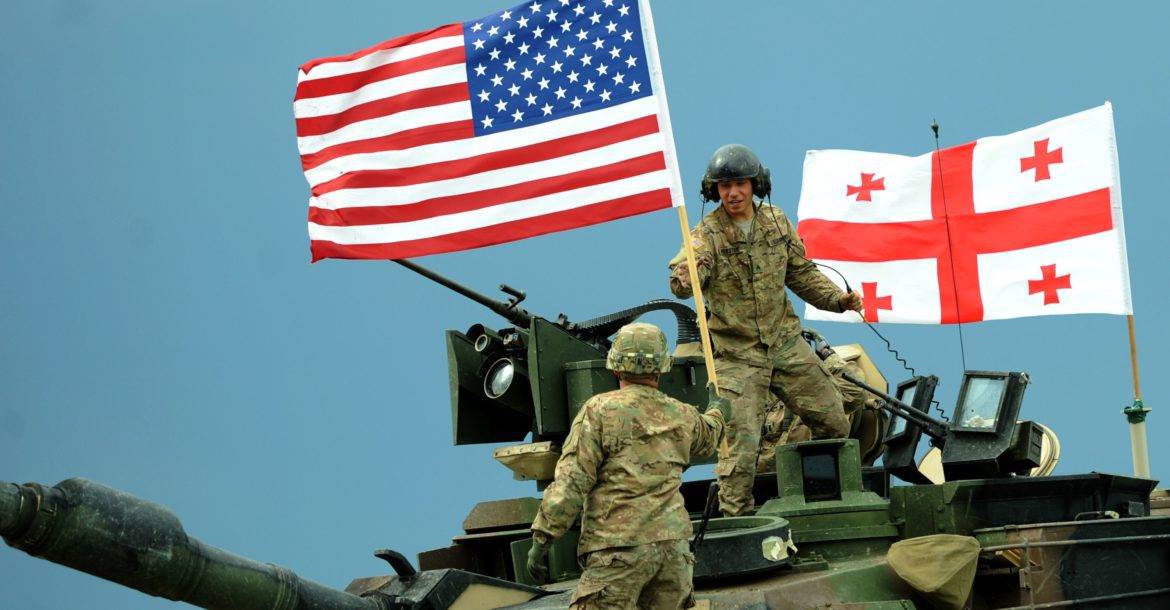
Georgia takes part in the Combined Resolve Exercise that the U.S. Army Europe and Africa holds with its allies and partners in Germany
The U.S. Army, along with Allies and Partners, will conduct Combined Resolve 18 from April 21 to May 23, 2023, at the Joint Multinational Readiness Center near Hohenfels, Germany. Combined Resolve is a recurring exercise designed to prepare a U.S. Armored Brigade Combat Team in support of NATO deterrence initiatives such as bolstering readiness, responsiveness, and reinforcement. More than 4,000 participants from the U.S. and Allied and Partner nations are scheduled to participate in the exercise. To support this exercise, military vehicles will also use public roads to convoy as part of the exercise during both daylight and evening hours. Due to their size and weight, these vehicles will move slowly and have limited visibility. Drivers are advised to use caution when driving near military convoys. „The Georgia Defense Force (GDF) has 43 soldiers participating in Combined Resolve 18. The infantry platoon from the GDF is attached to the U.S. Army's 1st Battalion, 4th Infantry Regiment (1-4 IN). 1-4 IN also has soldiers from Kosovo, Lithuania, Moldova, North Macedonia, Romania, Slovenia and the United Kingdom in the exercise. The GDF platoon, as a part of 1-4 IN, will train against 2nd Armored Brigade, 1st Cavalry Division (2/1 CD) in the exercise. 2/1 CD is a U.S. Army unit out of Fort Hood, Texas and is deployed to Europe as part of a regular rotation of forces to support the United States’ commitment to Atlantic Resolve. During the exercise 2/1 CD has units from Albania, Azerbaijan, Belgium, Italy, Kosovo, Romania and Slovakia attached to it. Both 2/1 CD and 1-4 IN will conduct on offense and defensive operations against each other during the training. Combined Resolve 18 allows the GDF soldiers an opportunity to train alongside partner nations in a dynamic and realistic training environment provided by U.S. Army at the Joint Multinational Readiness Center, near Hohenfels, Germany. All participants will train on their tactical skills, but the exercise also provides a unique ability for them to integrate with other nations, experiencing the challenges associated with interoperability. Interoperability is the ability of soldiers and systems from other countries to operate in conjunction with each other. Combined Resolve 18 tests the GDF and all countries to overcome challenges based differences in logistics, mission command, communications, equipment, tactics, military culture, and language. All participants evaluate their personnel, training, and equipment to ensure they meet any mission their country requires of them. As one of NATO's closest allies, the U.S. is committed to strengthening Georgia’s security and ability to contribute to international security operations. The U.S. Army's multinational exercises, like Combined Resolve 18, strengthen our countries' capabilities, interoperability, and fosters trust between all participating nations and their militaries“, - Major John Ambelang, the U.S. Army’s media representative for Combined Resolve 18, told Europetime.
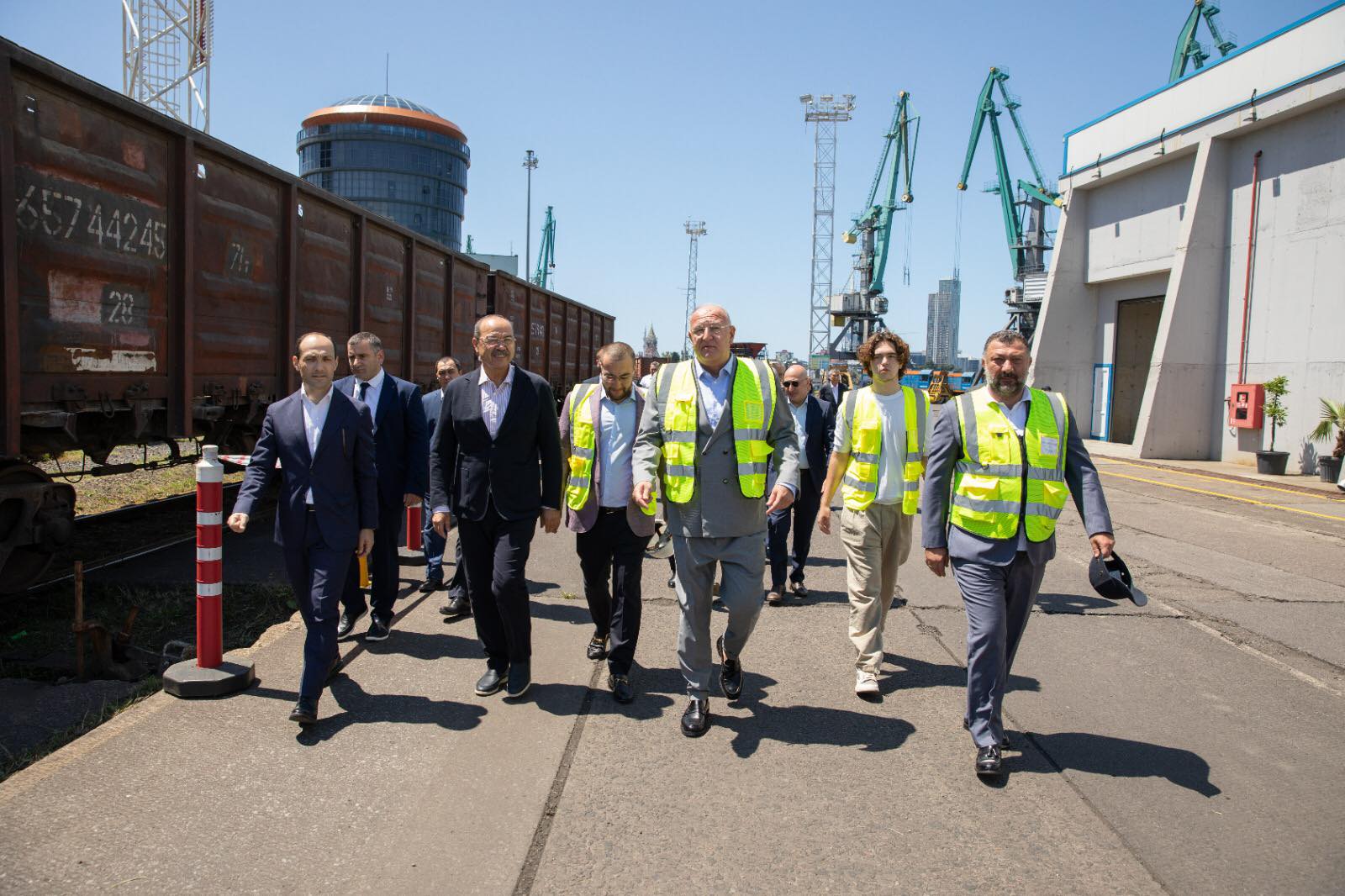
Wondernet Express Investment Group has hosted the Prime Minister of the Republic of Uzbekistan, Abdulla Aripov
Wondernet Express Investment Group had the honor of hosting the Prime Minister of the Republic of Uzbekistan – Mr. Abdulla Aripov and the Vice-Prime Minister, Minister of Economy and Sustainable Development of Georgia - Mr. Levan Davitashvili on July 18, 2023. The founder of the company – Mr. Dimitri Abduselishvili and the General Director & CEO – Mr. Mamuka Murjikneli introduced the Batumi Fertilizer Terminal and its working process to the guests of honor. Also, they discussed the importance of the logistics corridor and ways of its further development.
The United States supports Georgia’s NATO aspirations and urges Georgian officials to advance the vital democratic reforms that are essential for NATO accession
The United States supports Georgia’s NATO aspirations. The United States continues to work with Georgia on building its interoperability with NATO and to urge Georgian officials to advance the vital democratic reforms that are essential for NATO accession. A State Department spokesperson told Europetime. "Since taking office, the Biden Administration has prioritized restoring American leadership on the world stage and revitalizing our alliances, including by strengthening NATO. Thanks in part to his leadership, NATO is stronger and more united than it has been in decades. He looks forward to showcasing that unity in July at the Vilnius Summit. Georgia is a steadfast NATO Enhanced Opportunities Partner, a category reserved for NATO’s closest partners, and has served alongside American and other NATO troops. The United States supports Georgia’s NATO aspirations. The United States continues to work with Georgia on building its interoperability with NATO and to urge Georgian officials to advance the vital democratic reforms that are essential for NATO accession, " a State Department spokesperson told Europetime. In July, NATO Leaders will meet to address the most pressing challenges for the Alliance, further strengthen NATO's deterrence and defence and bring Ukraine closer to the Alliance. Previewing the Vilnius Summit at NATO Headquarters on Friday (7 July 2023), Secretary General Jens Stoltenberg said that the meeting of Allied leaders “will send a clear message: NATO stands united, and Russia’s aggression will not pay.” “I expect Allied leaders will agree a package with three elements, to bring Ukraine closer to NATO,” said Mr Stoltenberg. The package will include a multi-year programme of assistance to ensure interoperability; upgraded political ties – with President Zelenskyy attending the inaugural meeting of a new NATO-Ukraine Council; and a reaffirmation that Ukraine will become a member of NATO, with unity on how to bring Ukraine closer to its goal. Allies will also take major steps to strengthen deterrence and defence, with the adoption of three new regional defence plans to counter the two main threats to NATO: Russia and terrorism. The plans will be supported by 300,000 troops on higher readiness, including substantial air and naval combat power. Allies are also expected to endorse a Defence Production Action Plan to “aggregate demand, boost capacity, and increase interoperability” and a more ambitious defence investment pledge to invest a minimum of 2% of Gross Domestic Product annually on defence. The Secretary General welcomed that NATO’s new defence spending estimates, released today, show a real increase of 8.3% for European Allies and Canada in 2023. "This is the biggest increase in decades, and the ninth consecutive year of increases in our defence spending," said the Secretary General. "So European Allies and Canada will have invested over 450 billion extra US dollars since we agreed our defence investment pledge in 2014." The leaders of Australia, New Zealand, Japan and South Korea, as well as the European Union, will also take part in the Vilnius Summit. This will be Finland’s first Summit as a NATO Ally, the Secretary General noted, adding: “we look forward to Sweden joining as soon as possible.” Following a constructive meeting of senior officials from Türkiye, Sweden and Finland on Thursday, Mr Stoltenberg will meet with President Erdogan and Prime Minister Kristersson in Vilnius on 10 July, as the next step. At the Vilnius Summit, the allies will reiterate support for Georgia’s territorial integrity and sovereignty within its internationally recognized borders, said NATO Secretary General Jens Stoltenberg at the press conference in Brussels. „Well, our message has been for a long time – and was reiterated at a previous Summit – that we need to strengthen our partnership with partners that are vulnerable for Russian interference and under pressure. At the Summit, Allies will reiterate our support to the territorial integrity and sovereignty of Georgia within its internationally recognised borders. Allies will also, I expect, reaffirm Georgia’s right to decide its own future and foreign policy, free from outside intervention.Therefore, we call on Russia to withdraw its forces it has in Georgia – without any consent from the Georgian government – and to end its recognition and militarisation, of course, and South Ossetia. And I think, also, we have to recognise, once again, the importance that Georgia plays in also strengthening the partnership between NATO and Georgia, and the commitment to Euro-Atlantic security. So we will address also other partners than Ukraine. Of course, Ukraine will be at the top of the agenda, because there’s a full-fledged war taking place in Ukraine, but we will also address the importance of strengthening our partnership with a country like Georgia.“

U.S. Mission on the 58th round of GID: The United States called upon the Russian Federation, to withdraw its forces to pre-conflict positions
The United States notes the conclusion of the 58th round of the Geneva International Discussions (GID) on the Conflict in Georgia, which took place in Geneva on July 11–12th. The United States delegation, led by Advisor for Caucasus Negotiations Louis Bono, welcomed dialogue with participants seeking a peaceful resolution to the conflict in Georgia. The United States called upon the Russian Federation, as a party to the conflict, to fulfill immediately its clear obligation under the EU-mediated August 12, 2008, ceasefire agreement to withdraw its forces to pre-conflict positions, as well as to uphold its commitments to allow unfettered access for the delivery of humanitarian assistance and not to impede the creation of international security arrangements on the ground. According to the statement, the occupation of 20 percent of Georgia’s territory by Russia’s forces undermines Georgia’s sovereignty and territorial integrity, as does Russia’s ongoing borderization. The United States applauds Georgia’s long-held commitment not to use force to resolve the conflict. "The United States condemns, in the strongest possible terms, Russia’s unprovoked war against Ukraine, even as Russia continues to violate Georgia’s sovereignty and territorial integrity. Russia is the only party to the conflict in Georgia that currently stations its forces on the territory of another sovereign state, in flagrant violation of international law and its obligations under the 2008 ceasefire agreement. The United States regrets that, due to a walk-out by participants from Russia and the de facto authorities, the issues of Internally Displaced Persons and refugees, water, and gas could not be fully discussed. The United States welcomes the ongoing Ergneti Incident Prevention and Response Mechanism (IPRM), which defuses tensions and improves living conditions at the local level, and the United States hopes to see the resumption of the Gali IPRM. The United States notes the partial reopening of two crossing points on the administrative boundary line with the South Ossetia region of Georgia, and we continue the call for their full reopening, which would have a positive impact for communities in conflict-affected areas", - the statement reads.

German ambassador: We will deepen our co-operation with friendly countries like Georgia so that they can protect their security and sovereignty
Peter Fischer, the German ambassador to Georgia, commented with Europetime about the importance of the Vilnius Summit for Georgia and other close allies. „The summit will demonstrate NATO's strong unity to defend our territory and support the resilience of countries like Georgia. We welcome new members like Finland and, very soon, Sweden. We will establish an enhanced support structure for Ukraine. And we will deepen our co-operation with friendly countries like Georgia so that they can protect their security and sovereignty," the German ambassador told Europetime. On July 11–12, NATO Leaders will meet to address the most pressing challenges for the Alliance, further strengthen NATO's deterrence and defence and bring Ukraine closer to the Alliance. Previewing the Vilnius Summit at NATO Headquarters on Friday (7 July 2023), Secretary General Jens Stoltenberg said that the meeting of Allied leaders “will send a clear message: NATO stands united, and Russia’s aggression will not pay.” “I expect Allied leaders will agree a package with three elements, to bring Ukraine closer to NATO,” said Mr Stoltenberg. The package will include a multi-year programme of assistance to ensure interoperability; upgraded political ties – with President Zelenskyy attending the inaugural meeting of a new NATO-Ukraine Council; and a reaffirmation that Ukraine will become a member of NATO, with unity on how to bring Ukraine closer to its goal. Allies will also take major steps to strengthen deterrence and defence, with the adoption of three new regional defence plans to counter the two main threats to NATO: Russia and terrorism. The plans will be supported by 300,000 troops on higher readiness, including substantial air and naval combat power. Allies are also expected to endorse a Defence Production Action Plan to “aggregate demand, boost capacity, and increase interoperability” and a more ambitious defence investment pledge to invest a minimum of 2% of Gross Domestic Product annually on defence. The Secretary General welcomed that NATO’s new defence spending estimates, released today, show a real increase of 8.3% for European Allies and Canada in 2023. "This is the biggest increase in decades, and the ninth consecutive year of increases in our defence spending," said the Secretary General. "So European Allies and Canada will have invested over 450 billion extra US dollars since we agreed our defence investment pledge in 2014." The leaders of Australia, New Zealand, Japan and South Korea, as well as the European Union, will also take part in the Vilnius Summit. This will be Finland’s first Summit as a NATO Ally, the Secretary General noted, adding: “we look forward to Sweden joining as soon as possible.” Following a constructive meeting of senior officials from Türkiye, Sweden and Finland on Thursday, Mr Stoltenberg will meet with President Erdogan and Prime Minister Kristersson in Vilnius on 10 July, as the next step. At the Vilnius Summit, the allies will reiterate support for Georgia’s territorial integrity and sovereignty within its internationally recognized borders, said NATO Secretary General Jens Stoltenberg at the press conference in Brussels. „Well, our message has been for a long time – and was reiterated at a previous Summit – that we need to strengthen our partnership with partners that are vulnerable for Russian interference and under pressure. At the Summit, Allies will reiterate our support to the territorial integrity and sovereignty of Georgia within its internationally recognised borders. Allies will also, I expect, reaffirm Georgia’s right to decide its own future and foreign policy, free from outside intervention.Therefore, we call on Russia to withdraw its forces it has in Georgia – without any consent from the Georgian government – and to end its recognition and militarisation, of course, and South Ossetia. And I think, also, we have to recognise, once again, the importance that Georgia plays in also strengthening the partnership between NATO and Georgia, and the commitment to Euro-Atlantic security. So we will address also other partners than Ukraine. Of course, Ukraine will be at the top of the agenda, because there’s a full-fledged war taking place in Ukraine, but we will also address the importance of strengthening our partnership with a country like Georgia.“
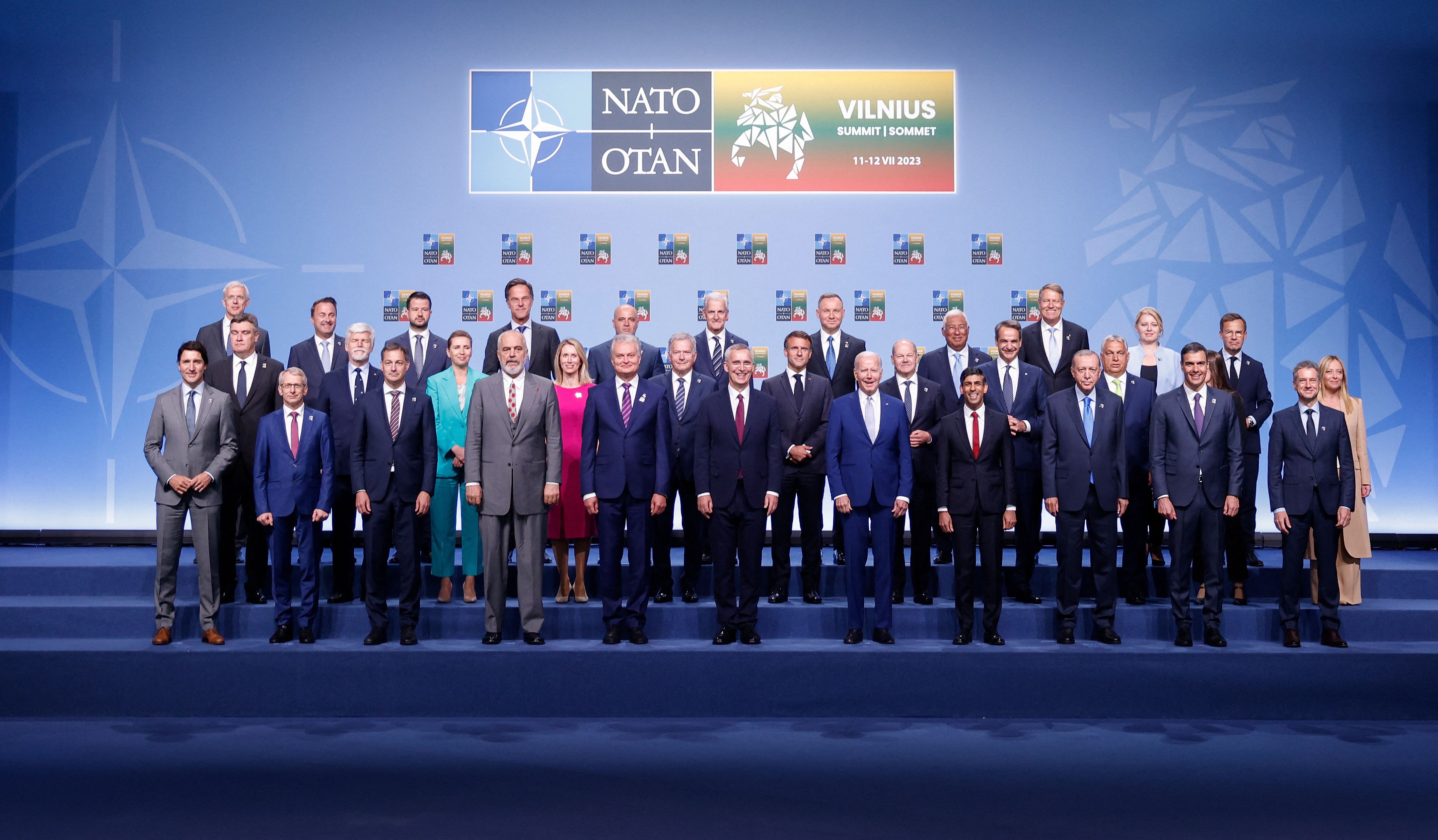
Vilnius Summit Communiqué
NATO Heads of State and Government participating in the meeting of the North Atlantic Council in Vilnius have published Vilnius Summit Communiqué, reiterating the 2008 Bucharest Summit decision that “Georgia will become a member of the Alliance with the Membership Action Plan (MAP) as an integral part of the process; we reaffirm all elements of that decision, as well as subsequent decisions.” According to the Communiqué, “to advance its Euro-Atlantic aspirations, Georgia must make progress on reforms, including key democratic reforms, and make best use of the ANP.““We reiterate our support to the territorial integrity and sovereignty of Georgia within its internationally recognised borders. “We stand firm in our support for Georgia’s right to decide its own future and foreign policy course free from outside interference. We call on Russia to withdraw the forces it has stationed in Georgia without its consent. We further call on Russia to reverse its recognition of the Abkhazia and South Ossetia regions of Georgia; to end the militarisation of these regions and continued attempts to forcibly separate them from the rest of Georgia through the construction of border-like obstacles; and to cease the human rights violations and abuses, including arbitrary detentions, and harassments of Georgian citizens. We highly appreciate Georgia’s substantial contributions to NATO operations, which demonstrate its commitment and capability to contribute to Euro-Atlantic security. We remain committed to making full use of the NATO-Georgia Commission and the Annual National Programme (ANP) in deepening political dialogue and practical cooperation with Georgia. We reiterate the decision made at the 2008 Bucharest Summit that Georgia will become a member of the Alliance with the Membership Action Plan (MAP) as an integral part of the process; we reaffirm all elements of that decision, as well as subsequent decisions. We welcome the progress made in implementing the enhanced Substantial NATO-Georgia Package, including Crisis Management, Cyber Security, Military Engineering, and Secure Communications, as well as new initiatives in the areas of Chemical, Biological, Radiological, and Nuclear (CBRN) Defence and Training Facilities. To advance its Euro-Atlantic aspirations, Georgia must make progress on reforms, including key democratic reforms, and make best use of the ANP.” According to the Vilnius Summit Communique, Russia bears full responsibility for its unjustified and unprovoked war of aggression against Ukraine, which is a blatant violation of international law and the basic principles of the UN Charter. "Russia bears full responsibility for its illegal, unjustifiable, and unprovoked war of aggression against Ukraine, which has gravely undermined Euro-Atlantic and global security and for which it must be held fully accountable. We continue to condemn in the strongest terms Russia's blatant violations of international law, the Charter of the United Nations, and OSCE commitments and principles. We do not and will never recognize Russia's illegal and illegitimate annexations, including Crimea," the document reads. NATO leaders stressed that there can be no impunity for Russian war crimes and other atrocities, such as attacks against civilians and the destruction of civilian infrastructure that deprives millions of Ukrainians of basic human services. All those responsible must be held accountable for violations and abuses of human rights and international humanitarian law, particularly against Ukraine’s civilian population, including the forced deportation of children and conflict-related sexual violence. "The destruction of the Kakhovka dam highlights the brutal consequences of the war started by Russia. Russia's war has had a profound impact on the environment, nuclear safety, energy and food security, the global economy, and the welfare of billions of people around the world. Allies are working to enable exports of Ukrainian grain and actively support international efforts to alleviate the global food crisis," the communique reads. A two-day NATO summit began in Vilnius on Tuesday, July 11. The main topics on the agenda are the strengthening of the Alliance's deterrence and defense system, continued assistance to Ukraine, as well as the issue of bringing Ukraine closer to NATO membership.
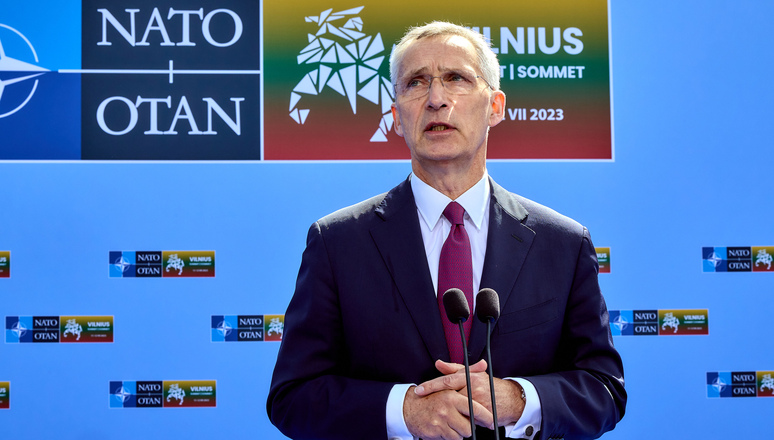
Ukraine will be invited to NATO when allies agree and conditions are met - Stoltenberg
The heads of state and government of NATO member countries have agreed to remove the requirement for a Membership Action Plan (MAP) for Ukraine and said they would issue an invitation for Ukraine to join the military alliance when allies agree and conditions are met. NATO Secretary General Jens Stoltenberg said this at a press conference in Vilnius on Tuesday, July 11, after the meeting of the North Atlantic Council at the level of heads of state and government. "We reaffirmed that Ukraine will become a member of NATO and agreed to remove the requirement for a Membership Action Plan. This would change Ukraine's membership path from a two-step process to a one-step process. We also made clear that we will issue an invitation for Ukraine to join NATO when allies agree and conditions are met," Stoltenberg said. According to him, this decision is part of a package of three elements agreed by Allies "to bring Ukraine closer to NATO." Stoltenberg said that another element is "a new multi-year assistance program for Ukraine to enable the transition from Soviet-era to NATO standards, training and doctrines, to help rebuild Ukraine's security and defense sector and to cover critical needs like fuel, de-mining equipment and medical supplies." According to him, this decision is part of a package of three elements agreed by Allies "to bring Ukraine closer to NATO." Stoltenberg said that another element is "a new multi-year assistance program for Ukraine to enable the transition from Soviet-era to NATO standards, training and doctrines, to help rebuild Ukraine's security and defense sector and to cover critical needs like fuel, de-mining equipment and medical supplies." Vilnius Summit Communiqué
Secretary General: Vilnius Summit will make Ukraine stronger, reinforce NATO’s deterrence and defence
Previewing the Vilnius Summit at NATO Headquarters on Friday (7 July 2023), Secretary General Jens Stoltenberg said that the meeting of Allied leaders “will send a clear message: NATO stands united, and Russia’s aggression will not pay.” “I expect Allied leaders will agree a package with three elements, to bring Ukraine closer to NATO,” said Mr Stoltenberg. The package will include a multi-year programme of assistance to ensure interoperability; upgraded political ties – with President Zelenskyy attending the inaugural meeting of a new NATO-Ukraine Council; and a reaffirmation that Ukraine will become a member of NATO, with unity on how to bring Ukraine closer to its goal. Allies will also take major steps to strengthen deterrence and defence, with the adoption of three new regional defence plans to counter the two main threats to NATO: Russia and terrorism. The plans will be supported by 300,000 troops on higher readiness, including substantial air and naval combat power. Allies are also expected to endorse a Defence Production Action Plan to “aggregate demand, boost capacity, and increase interoperability” and a more ambitious defence investment pledge to invest a minimum of 2% of Gross Domestic Product annually on defence. The Secretary General welcomed that NATO’s new defence spending estimates, released today, show a real increase of 8.3% for European Allies and Canada in 2023. "This is the biggest increase in decades, and the ninth consecutive year of increases in our defence spending," said the Secretary General. "So European Allies and Canada will have invested over 450 billion extra US dollars since we agreed our defence investment pledge in 2014." The leaders of Australia, New Zealand, Japan and South Korea, as well as the European Union, will also take part in the Vilnius Summit. This will be Finland’s first Summit as a NATO Ally, the Secretary General noted, adding: “we look forward to Sweden joining as soon as possible.” Following a constructive meeting of senior officials from Türkiye, Sweden and Finland on Thursday, Mr Stoltenberg will meet with President Erdogan and Prime Minister Kristersson in Vilnius on 10 July, as the next step.
State Department: We recognize the opportunities for Georgia to play an important role in connecting Central Asia to Europe through the middle corridor
The United States welcomes a new ferry service between Romania and Georgia. „We recognize the opportunities that these ferry routes create and the opportunities for Georgia to play an important role in connecting Central Asia to Europe through the middle corridor" a State Department spokesperson told Europetime. „The United States has long supported Georgia’s economic development, along with other countries in the Caucasus, Central Asia, and Europe. We recognize the opportunities that these ferry routes create, and the opportunities for Georgia to play an important role in connecting Central Asia to Europe through the middle corridor“, a State Department spokesperson told Europetime. Some background There is now a brand-new ferry service running between Georgia and Romania. On June 27, 2023, the first voyage was place, leaving from the port of Constanta and arriving at the port of Poti after two nights at sea. The ferry service, which transports both people and goods, is run by the Georgian business E60 Shipping. A document establishing the Black Sea-Caspian Sea Freight Transport Corridor was signed in March 2019 by Georgia, Romania, Azerbaijan, and Turkmenistan, creating new opportunities for connectivity and regional development in the area. They stated that this new corridor will be the shortest, most profitable way to connect Central Asia to Europe through the two seas. Read more: The Romanian Ambassador to Georgia welcomes a new ferry service between Romania and Georgia: It strengthens the connection between our countries and the two shores of the Black Sea
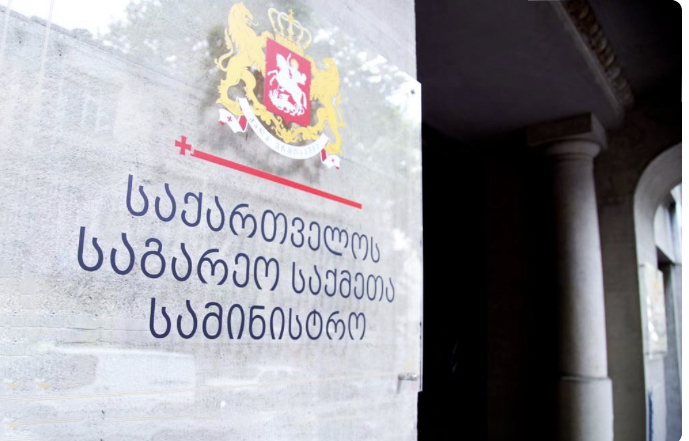
Georgian MFA expresses "deep concern" over Zelenskyy’s decision
The Georgian Foreign Ministry expresses “deep concern” at the Ukrainian authorities’ decision to demand that the Georgian ambassador leave within 48 hours for consultations in the capital. The Ministry of Foreign Affairs of Georgia reacted to the earlier statement of Ukrainian President Volodymyr Zelensky, in which he asked the Georgian authorities to transfer Mikheil Saakashvili to Ukraine and ordered the summoning of the Georgian Ambassador to Ukraine. The MFA says: “This action represents an extreme form of escalation of diplomatic relations” and says it is “regrettable” that official Kyiv is taking this step “against a friendly state and people”. The Foreign Ministry’s statement reads reads that “the reasons given by the Ukrainian authorities make this decision particularly incomprehensible”, citing the Strasbourg court ruling which “put an end to speculation about the health of the convicted Mikheil Saakashvili” and “confirmed the highest standards of protection of Mikheil Saakashvili’s rights by the state”. “Against the background of such developments, the decision of the Ukrainian authorities significantly harms the strategic relations of the two countries and constitutes a direct interference in the internal affairs of a sovereign state,” the statement says, expressing the hope that official Kyiv “will reconsider its decision and make efforts to further develop the historically friendly relations between the two countries”. Recalling Georgia’s support for the territorial integrity and sovereignty of Ukraine and its people, both bilaterally and in the international arena, the MFA notes that Georgia’s diplomatic mission in Ukraine has continued to function even in the most difficult moments, during the ongoing war. The Foreign Ministry says that the Georgian Ambassador Extraordinary and Plenipotentiary to Ukraine has already conveyed Tbilisi’s official position to the Ukrainian side during the meeting held today in Kyiv at the Ministry of Foreign Affairs of Ukraine. The statement reads that “Georgia at this stage refrains from any additional reaction in response to the steps taken by Ukraine”. Ukrainian President Volodymyr Zelenskyy on Monday called on the Georgian authorities to hand over Saakashvili to Ukraine for the “necessary treatment and care” and instructed the Ukrainian foreign office to summon the Georgian Ambassador to Ukraine, to “express our strong protest” and to ask him to leave Ukraine within 48 hours to hold consultations with his capital.

North Atlantic Council extends mandate of the NATO Secretary General
NATO Allies agreed on Tuesday (4 July 2023) to extend the mandate of Secretary General Jens Stoltenberg by a further year, until 1 October 2024. The decision will be endorsed by NATO Heads of State and Government at the Vilnius Summit. Allies thanked the Secretary General for his leadership and commitment, which has been critical to preserving transatlantic unity in the face of unprecedented security challenges. Mr Stoltenberg said: “I am honoured by the decision of NATO Allies to extend my term as Secretary General. The transatlantic bond between Europe and North America has ensured our freedom and security for nearly seventy-five years, and in a more dangerous world, our great Alliance is more important than ever.”
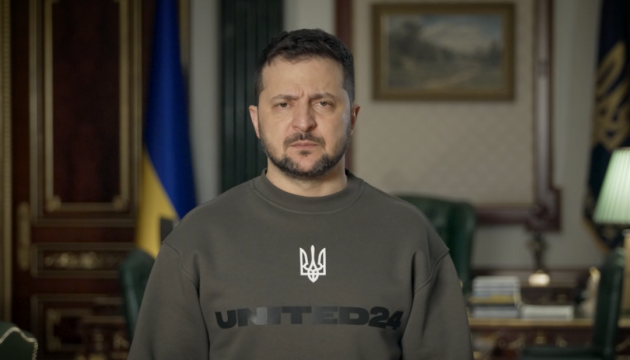
Zelensky asks Georgian envoy to leave Kyiv over jailed ex-president
Ukrainian President Volodymyr Zelensky on Monday asked the Georgian ambassador to Kyiv to leave Ukraine within 48 hours and return to Tbilisi for consultations relating to Mikheil Saakashvili. The court appearance led Ukrainian President Volodymyr Zelenskiy to call for the immediate release of Saakashvili, who is also a Ukrainian citizen. "Right now, Russia is killing Ukrainian citizen Mykhailo Saakashvili at the hands of the Georgian authorities," writes Zelensky on Twitter. "We have repeatedly called on the official Tbilisi to stop this abuse and agree on Saakashvili's return to Ukraine. Our partners, in coordination with Ukraine, have also offered various rescue options. Today, I have instructed the Ministry of Foreign Affairs to summon the Georgian Ambassador to Ukraine, to express our strong protest and to ask him to leave Ukraine within 48 hours to hold consultations with his capital. Once again, I call on the Georgian authorities to hand over Ukrainian citizen Mykhailo Saakashvili to Ukraine for the necessary treatment and care. And I urge our partners to address this situation and not ignore it and save this man. No government in Europe has the right to execute people, life is a basic European value," Volodymyr Zelensky tweeted. “You should apologize to the MEPs, to my family, to me, to the state of Ukraine, whose citizen you brought to this condition, and to all Georgians, for putting the founder of the Georgian state in this state, Papuashvili, look at me carefully!“ - the former president of Georgia, Mikheil Saakashvili, said during his remote participation in the court session.While making the said statement, he stood up and demonstrated his physical condition. According to him, all those who betrayed Georgia and Ukraine should be subjected to the strictest sanctions. Saakashvili, who was Georgia’s president from 2004 to 2013, is serving a six-year sentence for abuse of power, a charge that he and his supporters say was politically motivated. He is currently on trial on separate charges of violently dispersing an antigovernment rally in November 2007 and illegal border crossing.

Australia legalises psychedelics for mental health
Australia has become the first country in the world to legalise the use of psychedelics to treat some mental health conditions. According to the BBC Approved psychiatrists can now prescribe MDMA to those suffering post-traumatic stress disorder and magic mushrooms for some types of depression. The controversial move has been hailed as a game-changer by many scientists and mental health experts. However, others say the move has been too hasty and should not be over-hyped. Experts say there is still the risk of a "bad trip", which is when the user has an unpleasant experience while under the influence of drugs. And the therapy comes at a cost, with Australian media reporting one course could cost tens of thousands of dollars. MDMA - also known as the party drug ecstasy - is a synthetic drug that acts as a hallucinogen. It increases the user's energy levels, sensory experiences and distorts their sense of time. Magic mushrooms, which grow naturally, also have hallucinogenic effects due to the active compound psilocybin. While Australia is the first country in the world to regulate the drugs as medications, clinical trials are also underway in the US, Canada and Israel. Under the new regulations which became official in Australia on 1 July, approved psychiatrists can prescribe MDMA for post-traumatic stress disorder (PTSD) and psilocybin for depression that has resisted other treatments. Use of the psychedelics would be carefully monitored and not a case of "take a pill and go away", said Dr Mike Musker, a mental health researcher at the University of South Australia. Describing the move as a "game-changer", he told AFP news agency that, in the case of MDMA for example, the patient would likely have three treatments over five to eight weeks. Each treatment would last about eight hours, with the therapist staying with the patient the whole time. Patients should not expect a miracle cure, however. "I have read about stories where people have had what you call bad trips, or actually they've re-experienced their trauma, and so we've got to take great caution," Dr Musker said. Professor Susan Rossell, a cognitive neuropsychologist at Melbourne's Swinburne University said that while psychedelics certainly had the potential for therapeutic use, the move had come about too quickly. "When you look at interventions... for any other kind of disease, whether it's cardiovascular disease or cancer, you cannot get a drug to market as quickly as this has been done," she told AFP. Prof Rossell, who is leading Australia's biggest trial on the effects of psilocybin on depression, added that more research was needed to determine the long-term outcomes of the therapy. Australia's Therapeutic Goods Administration (TGA) shocked many in the medical and science world in February when it reclassified MDMA and psilocybin so they could be used for therapeutic purposes. It declared the drugs "relatively safe" when used in a "medically-controlled environment" for patients "with serious mental health conditions". Otherwise, both MDMA and psilocybin are illegal in Australia. The TGA acknowledges that there are unknowns and inconclusive evidence, but says "there are promising signs" that controlled therapeutic use of the drugs may improve mental health for some people and that the "benefits for some patients... will outweigh the risks". The regulator says there are currently no approved products that contain MDMA or psilocybin. However the reclassification means psychiatrists will be able to access and legally supply certain medicines that contain them, even if they have not been evaluated for safety or effectiveness.
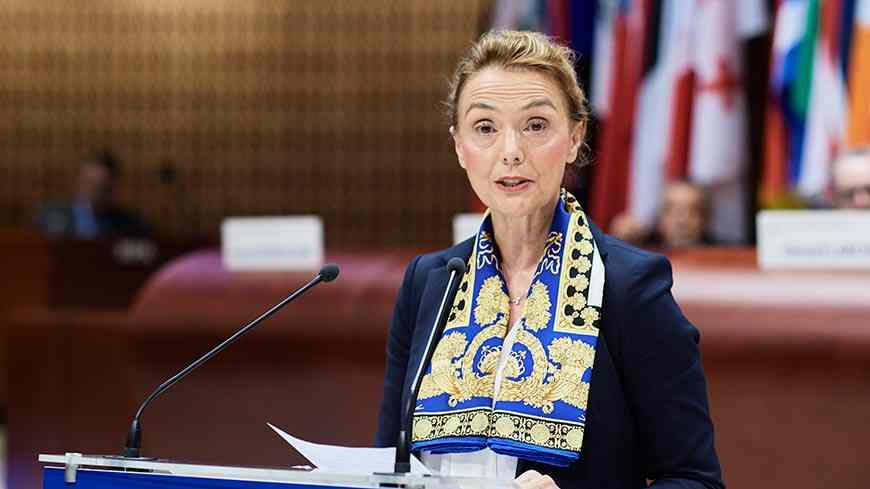
The Secretary General of the Council of Europe says Russia must abide by the rulings rendered by the European Court of Human Rights in the case of "Georgia v. Russia
The Secretary General of the Council of Europe has stated that Russia must abide by the rulings rendered in the "Georgia v. Russia" case by the European Court of Human Rights. She also spoke about the Russia-Ukraine war and noted that Russia's illegal aggression against Ukraine is the result of its separation from the values of the Council of Europe. "It is because of this that Russia was expelled from the Council of Europe, and it is because of this that we are doing everything we can to support Ukraine," said Marija Pejčinović Burić. „Allow me to speak a few words about the important issue of the implementation of the decision of the European Court of Human Rights in the interstate case of "Georgia v. Russia". These decisions will continue to be discussed in the Committee of Ministers, and the Russian Federation remains obliged to implementing them. Due to non-payment of the amount imposed by the court in connection with the lawsuit against Russia, the fine continues to increase and currently exceeds 10 million euros. There is also a second judgment that begins with an execution, Georgia v. Russia. I can assure you that we will continue to work diligently. According to the international law, Russia is obliged to implement the decisions, we will insist on this at every meeting where this case is discussed," Marija Pejčinović Burić. According to her, the cooperation between the Council of Europe and Georgia is strong. "Our current action plan, which ends at the end of this year, has supported your government in making progress on many reforms, such as the fight against corruption, the reform of the judiciary, media legislation, the fight against violence against women and the sexual exploitation of children. A new action plan for the next period 2024-2027 is being developed and I hope it will be finished soon, so I can assure you that the Council of Europe will faithfully advise you to continue supporting these reforms, which are also an instrument in your pursuit of the EU. The Council of Europe also remains unwavering towards the sovereignty and territorial integrity of Georgia. We will continue to promote the restoration of trust. We will continue to promote confidence-building measures aimed at building bridges between population groups and strengthening human rights protection in conflict-affected regions. We will also continue to fight for access to the Georgian region, Abkhazia and South Ossetia. According to her, the Council of Europe supports Georgia on its reform path. She expressed hope that the future action plan will be stronger than the current one, because "the need is greater, the ambitions are greater". "We are here to work with you on this," noted Marija Pejčinović Burić. „This is my second visit to Georgia. I'm looking forward to having a very rich program during my visit, including visiting the occupation line, because it's very important to visit those people, because given the diligent work of the report on Georgia every year, I think it's important to visit the people who directly experience it. Let me start by expressing my gratitude to the Government of Georgia for inviting me to the country," said Marija Peičinović Burić. Some background According to Council of Europe Secretary General Marija Pejčinović Burić has met the President and key ministers during an official visit to Georgia. Meeting Georgian President Salomé Zourabichvili, the Secretary General reaffirmed the Council of Europe’s full support to the ongoing reform process, highlighting the strategic value of co-operation to defend values of democracy, rule of law, and human rights in a period in which we witness democratic backsliding across Europe. The exchange also focused on the Secretary General consolidated report on the conflict in Georgia and support the broader reconciliation process through the Confidence-Building Measures (CBMs). Marija Pejčinović Burić will discuss the implementation of the conclusions of the Fourth Summit of the Heads of State and Government with the Prime Minister, the Minister for Foreign Affairs, key Ministers, and the Parliament Chairman. The elaboration of the new Action Plan 2024-2027, which contributes to the country’s aspirations for EU integration, will also been raised. “The co-operation between Georgia and the Council of Europe is strong. Our current Action Plan which ends in 2023 has supported Georgia in advancing many reforms in key areas, such as the fight against corruption, the reform of the judiciary, media legislation, the fight against violence against women and sexual exploitation of children”, emphasised the Secretary General, during a press briefing with the Foreign Minister. According to the Council of Europe the Secretary General will visit the “administrative line“ and participate in the Second Annual Tbilisi Women’s International conference.
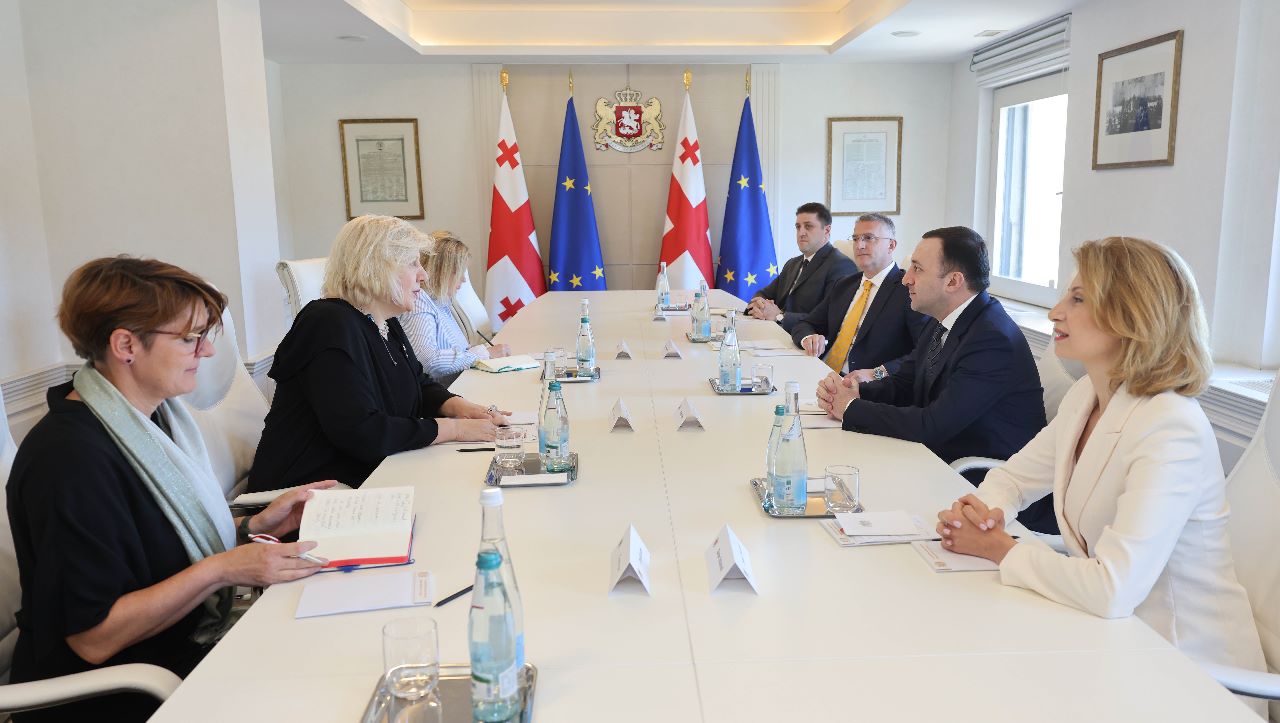
The CoE Commissioner for Human Rights visits Georgia
Dunja Mijatović, Council of Europe Commissioner for Human Rights, is on a working visit to Georgia. She has already met Prime Minister Irakli Garibashvili. Mijatovi took part in the Tbilisi Women's International Conference as one of the invited speakers. Additionally, she is anticipated to open Tbilisi Pride Week, which runs from July 1 to July 8. Irakli Garibashvili, the prime minister, and Dunja Mijatovi met on July 1. According to a news release from the government's administration, they talked about the actions done by the Georgian government to improve national structures for defending human rights. During the meeting, PM Garibashvili highlighted Georgia’s commitment to fundamental human rights and freedoms, as guaranteed by the Constitution. The official release mentioned that the Parliament of Georgia recently adopted the 2022-2030 National Strategy for the Protection of Human Rights in Georgia, which addresses national needs and challenges while incorporating international human rights standards and the UN Sustainable Development Goals. According to the release, the PM told the guest that said the Government’s main priority is to ensure a healthy environment for all citizens, and spoke about significant reforms implemented to this end. He highlighted the progress made in human rights protection since 2012, and the effectiveness of the Human Rights Council’s work was also emphasized. The head of government also addressed the challenging humanitarian and human rights situation in the occupied regions of Georgia. The PM expressed gratitude to Mijatović for supporting Georgia’s territorial integrity and sovereignty, reaffirming the Government’s commitment to a peaceful policy for conflict resolution.