news
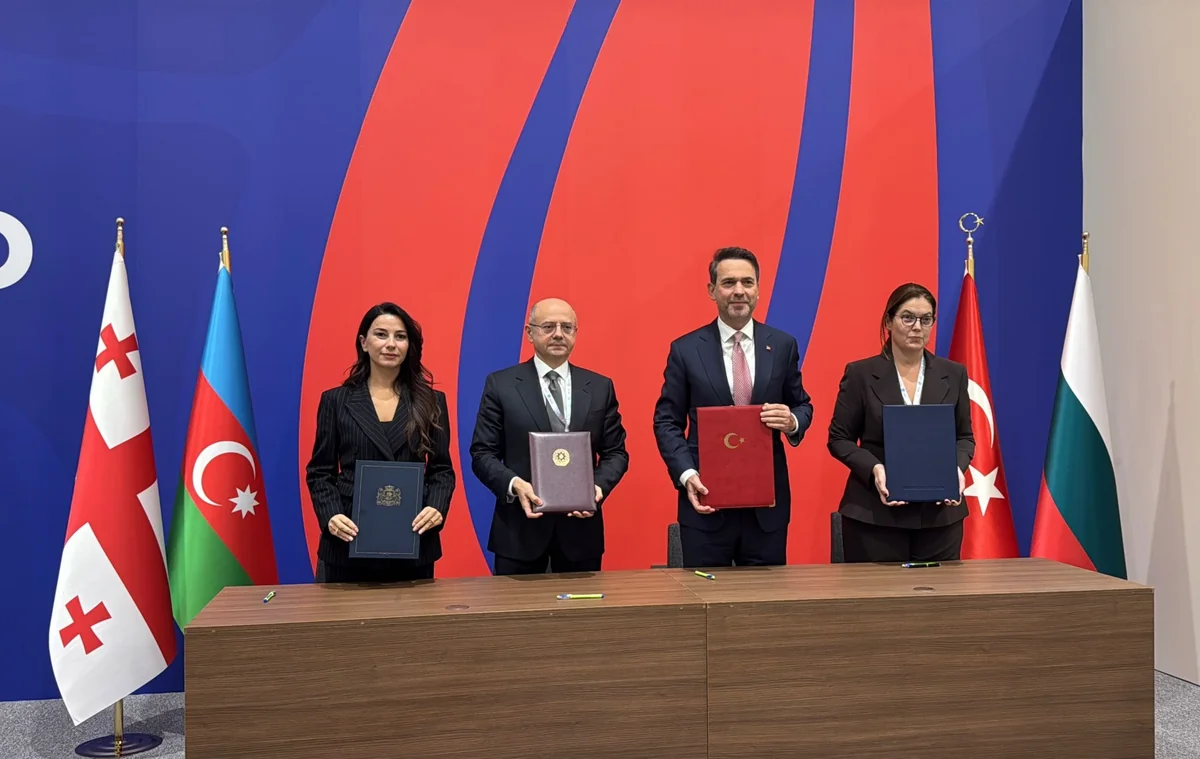
Azerbaijan, Georgia, Bulgaria, Türkiye ink deal on clean energy
A Strategic Partnership Agreement in the field of Clean Energy between the Governments of the Republic of Azerbaijan, the Republic of Bulgaria, Georgia, and the Republic of Türkiye has been signed at COP31 in Antalya, the report informs. Azerbaijan's Minister of Energy Parviz Shahbazov, Türkiye's Minister of Energy and Natural Resources Alparslan Bayraktar, Georgia's Deputy Prime Minister and Minister of Economy and Sustainable Development Mariam Kvrivishvili, and Bulgaria's Minister of Energy Iva Petrova signed the document. The agreement aims to develop the Azerbaijan–Georgia–Türkiye–Bulgaria green energy corridor, strengthen regional energy ties, and diversify transmission routes. The document provides for cooperation in the transmission and supply of clean electricity, sets the necessary conditions for safe and uninterrupted transmission, and improves fiber-optic communication within the project.
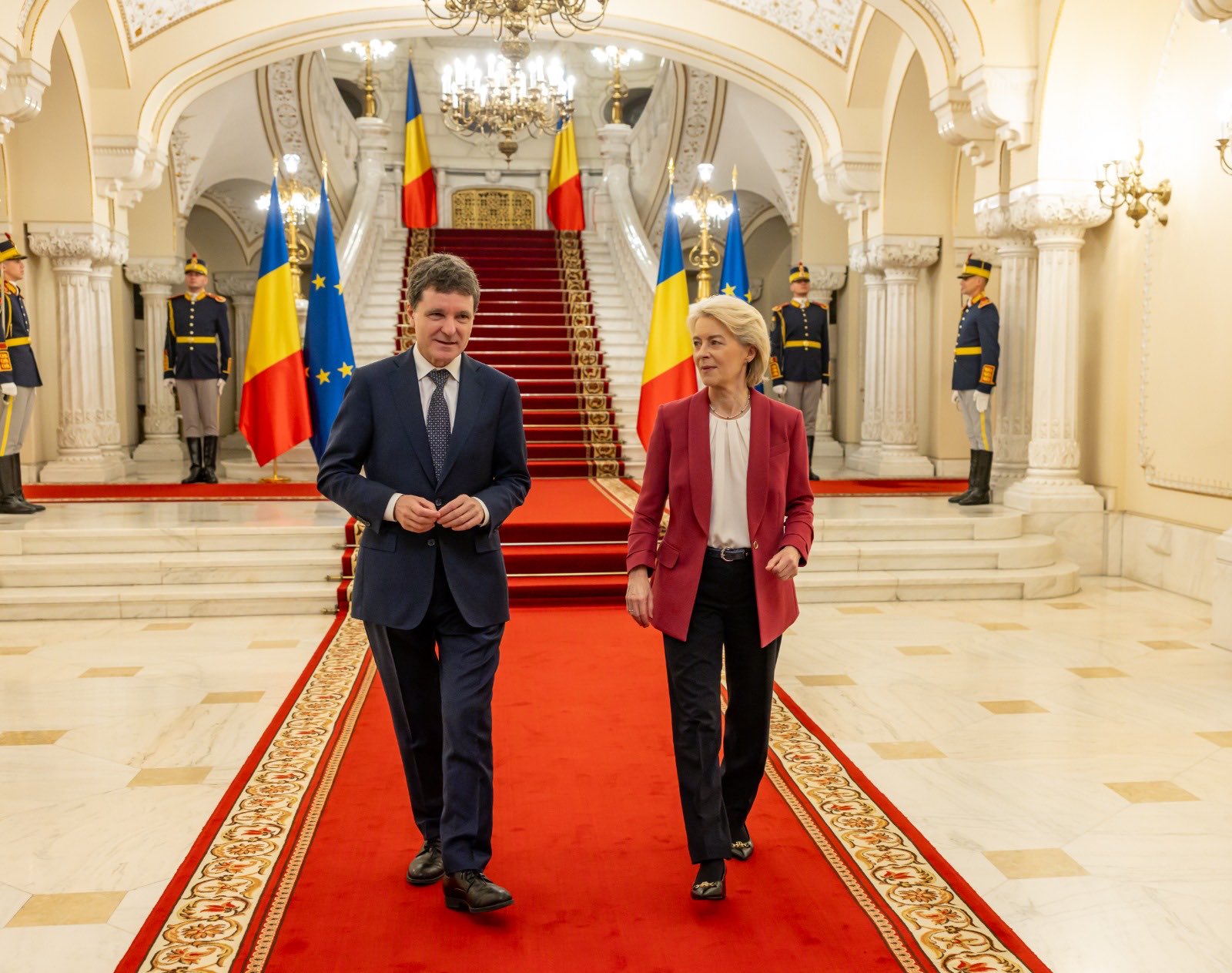
EU pledges €50 million for Black Sea maritime security in Romania and Bulgaria
Ursula von der Leyen pledges €50 million for a Black Sea security hub in Romania and Bulgaria as EU leaders warn of mounting attacks on ships. European Commission President Ursula von der Leyen has announced additional funding for Romania and the maritime security hub planned for Constanța and Varna, further emphasizing the importance of Black Sea security for Europe’s eastern flank. Speaking about Europe’s support for Romania, von der Leyen said the European Union stands in "full solidarity" with the country and that it can "count on a firm and united European response." She highlighted the immediate support that Europe can provide through satellite imagery from Copernicus. "We will now accelerate work on the Black Sea Maritime Security Hub, with a clear timeline for completion, and dedicated funding of 50 million euros," von der Leyen added. According to Euronews, the security hub could become operational in the first half of next year. The hub will have three main objectives: protecting critical infrastructure, sharing information between the two countries, and supporting trade, Euronews Romania correspondent Florentina Lazar explained. Following his meeting with von der Leyen, Romanian President Nicușor Dan stressed that the Black Sea is a key hub for global trade and Europe's energy security. He also underlined the importance of regional security for Ukraine. Dan said that a stable peace in Ukraine and an effective reconstruction process would not be possible without a secure Black Sea. "We have had numerous incidents in the Black Sea in recent times, a whole spectrum of hybrid warfare, in which, obviously, Russia is attempting to escalate the conflict it started five years ago in Ukraine and involve European countries in this conflict," the Romanian president said.
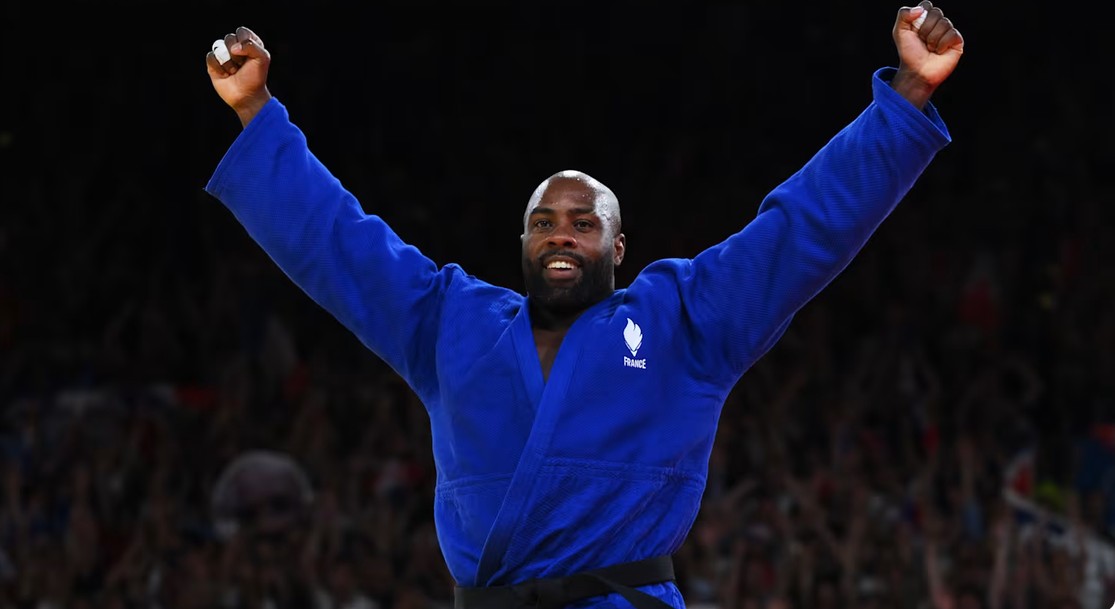
Judo star Teddy Riner announces a run for French president
France's five-time Olympic judo champion Teddy Riner announced on Monday, November 9, that he would run in next year's presidential election, after expressing concern about the "rise of the far right." The 37-year-old five-time Olympic champion made the announcement in a video on social media on Monday. In an interview with Le Parisien, Riner said he intended to continue his sports career alongside his presidential bid. If elected president, he said he planned to compete in the 2028 Los Angeles Olympics, "if the position allows me to, and if the French people allow me to." Riner said he intended to launch his campaign quickly, with financing coming from donations as well as his own funds. Riner won the heavyweight division at the 2012, 2016 and 2024 Olympics and mixed team gold at the 2020 and 2024 Games. He has also won 11 world titles. Another French star judoka, David Douillet, was elected to the French parliament in 2009 and served as sports minister from September 2011 to May 2012.
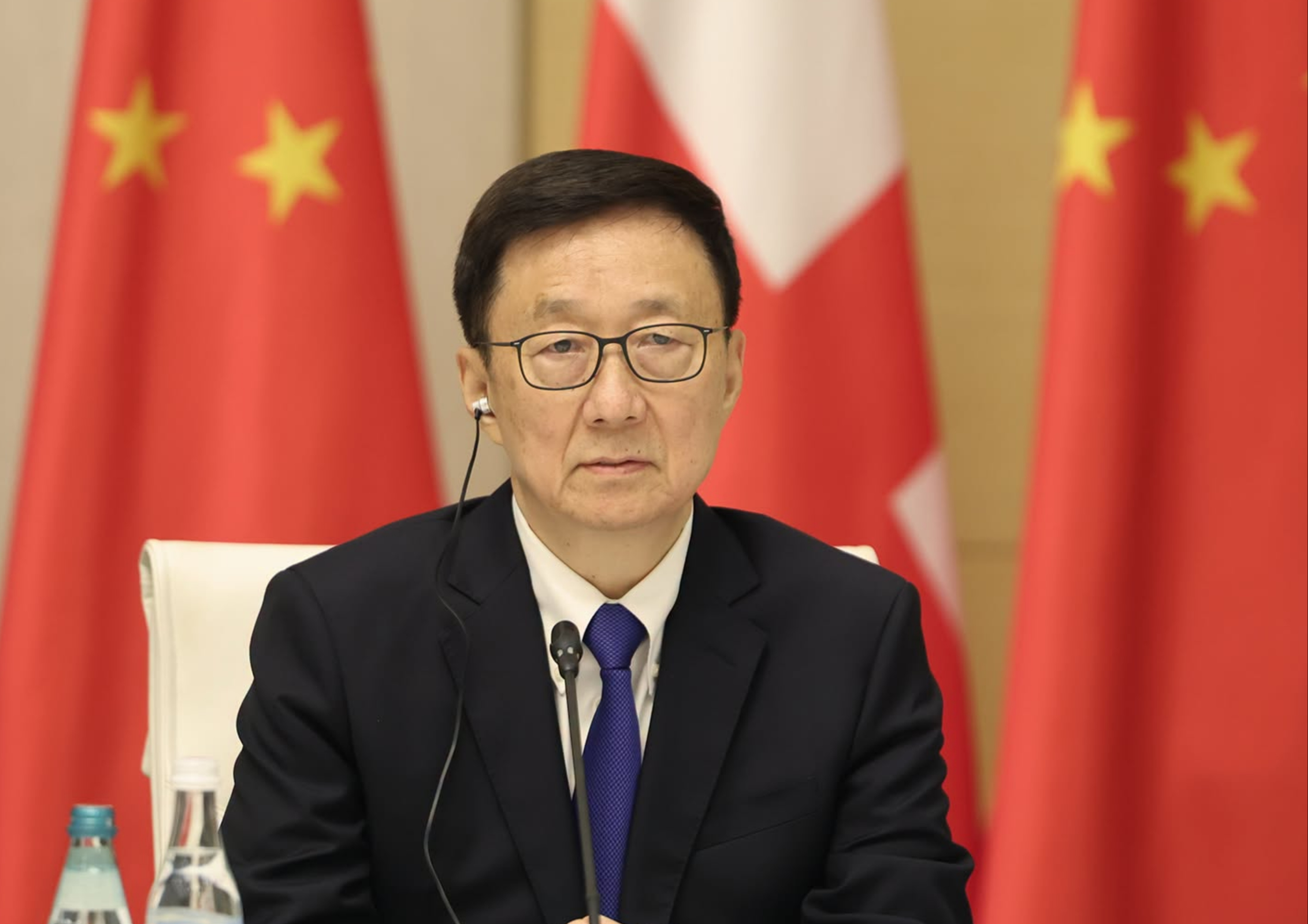
Vice President of China: Strategic relations with Georgia are growing ever stronger, and it is our desire to see them develop further
"Strategic relations are growing ever stronger, and it is our desire to see them develop further. We hope to continue our friendship, partnership, and cooperation with Georgia in the future," stated Han Zheng, Vice President of the People's Republic of China, during an expanded-format meeting with the Prime Minister of Georgia, Irakli Kobakhidze. He added that mutual support for developing bilateral relations is particularly important and a core principle of the comprehensive strategic partnership. Han Zheng thanked the Government of Georgia for its warm hospitality and expressed hope that his visit would further strengthen bilateral relations. "In recent years, the leaders of our countries have consistently supported the development of bilateral relations. In June, President Xi Jinping and President Kavelashvili met and made a statement on the Comprehensive Strategic Partnership. Next year, Georgia and China will celebrate the 35th anniversary of establishing diplomatic relations. Our strategic partnership continues to grow stronger, and we are committed to developing it further. We hope to continue strengthening our friendship, partnership and cooperation with Georgia in the years ahead. Mutual support for developing bilateral relations is particularly important and is a fundamental principle of our Comprehensive Strategic Partnership. Georgia has long upheld the One China principle, while China supports Georgia's sovereignty, security and national development interests. We support the development of mutually beneficial cooperation, including in the economic sphere. We have an economic development plan that will create new opportunities," stated Han Zheng. The expanded meeting at the Government Administration of Georgia was attended by members of both countries' governments. According to the Government Administration, the Prime Minister of Georgia emphasized the profound importance of the visit of a high-level Chinese delegation to Georgia and expressed his gratitude to the Vice President. "We attach profound importance to the partnership and friendship that have developed between our countries. We highly appreciate China's attitude towards Georgia and your visit is yet another demonstration of this relationship. Our diplomatic relations span 34 years, and we are pleased that the Agreement on Comprehensive Strategic Partnership between the People's Republic of China and Georgia was signed as we mark the 34th anniversary of our diplomatic relations. We are also pleased that this agreement is delivering concrete, tangible results. Several years ago, our countries established a strategic partnership and since then, we have made significant progress in various areas of bilateral relations. We attach great importance to deepening political cooperation between our countries. We are grateful for China's support for Georgia's sovereignty and territorial integrity and we once again reaffirm our unwavering commitment to the One China principle. Strengthening political cooperation is of paramount importance to us. We also place particular emphasis on developing economic cooperation between our countries and are pleased to see very positive trends and growing indicators in this regard. Trade and economic relations continue to expand year after year, and we are keen to deepen this cooperation even further in the future. We are pleased that, according to data for the current year, China has become Georgia's largest investor, demonstrating the strong confidence of Chinese businesses and the Chinese side in Georgia's economic environment. This meeting provides an opportunity to discuss ways to further develop bilateral cooperation. We are interested in deepening our partnership to the fullest extent possible, including within the framework of the Belt and Road Initiative," stated Irakli Kobakhidze. During the meeting, the Prime Minister also highlighted Georgia's strategic geographic location. "Georgia serves as a natural bridge between Europe and Asia, between the West and the East. From this perspective, we believe there are significant opportunities to further develop relations between our countries. We are also interested in expanding cooperation across a wide range of other sectors, including culture, education, science, sports, healthcare, agriculture and environmental protection. We are pleased to see very positive developments in these areas as well, with relations between our countries and their respective institutions continuing to strengthen. Our relationship with China is profoundly important to us. In today's world, China is the only peaceful superpower, fully committed to progress, modernization, advancement and development. Accordingly, we see a special bond between our countries based on shared values. Naturally, this common foundation gives us strong motivation to further develop our bilateral relations. Mr. Vice President, I am confident that your visit will give fresh impetus to the development of our bilateral relations. We stand ready to make every effort to deepen our cooperation," noted Irakli Kobakhidze. Han Zheng, Vice President of the People's Republic of China, arrived in Georgia for an official visit, accompanied by a delegation. Georgian President Mikheil Kavelashvili hosted Chinese Vice President Han Zheng at the expanded meeting in the Presidential Palace. According to the Presidential Administration, the parties reviewed issues to develop a strategic partnership between Georgia and China, emphasizing the significance of the Chinese Vice President’s first visit to Georgia. During the meeting, they paid particular attention to trade and economic cooperation. Discussions covered opportunities created by the free trade agreement, the growth of Chinese investments, and deepening cooperation across various economic sectors. They touched on expanding academic programs, student exchanges, and scientific ties. The Georgian President and Chinese Vice President discussed the potential of the Middle Corridor, the development of transport and logistics infrastructure, and plans to hold the 6th Silk Road Forum in Tbilisi.
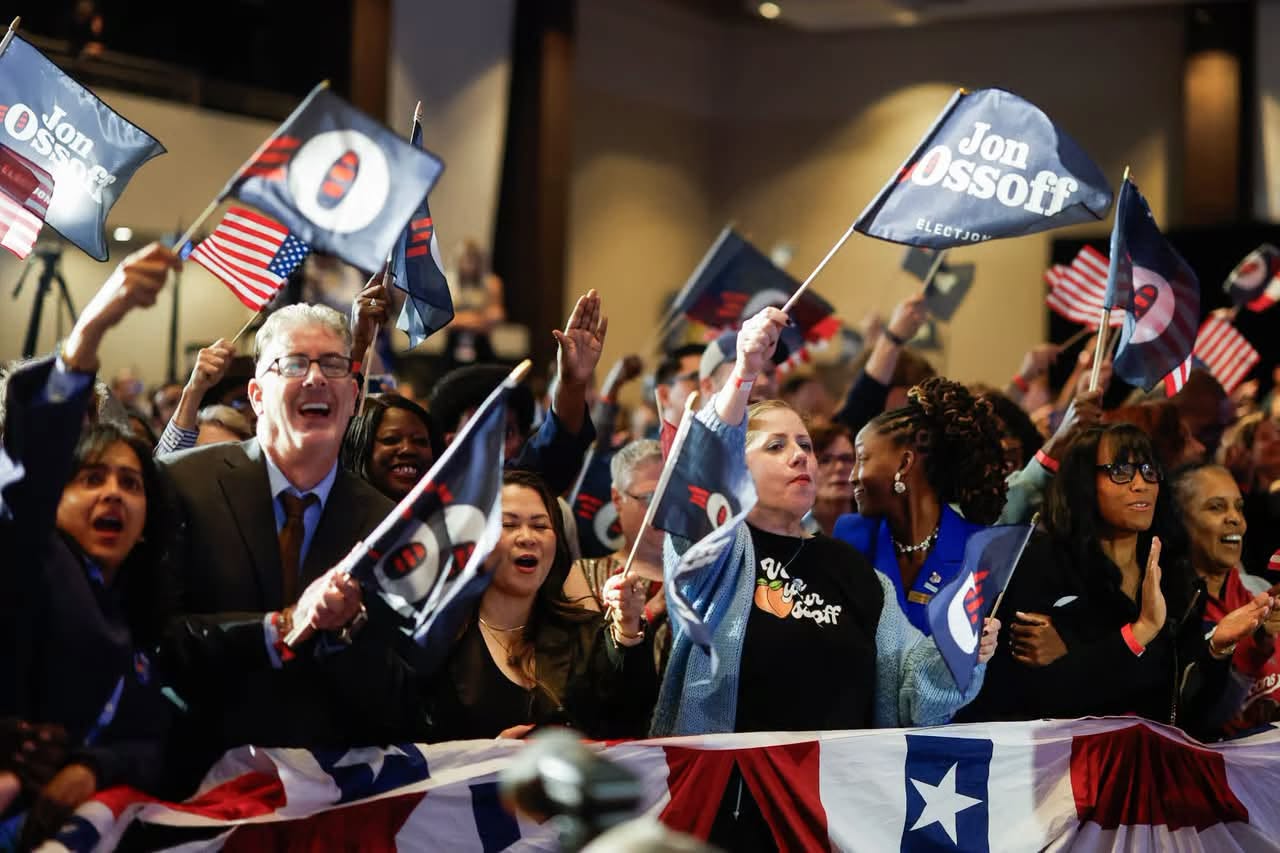
Democrats win the US House and Senate
In an important vote, the midterm elections, Donald Trump's Republican Party lost control of the two places where laws are made, the House and the Senate. The opposition party, the Democrats, won key states like Iowa, Texas, Ohio and Kansas, until now places where Republicans almost always win.There are still some votes to be announced, such as in Hawaii and Alaska, where voting has only just finished. Another big win was in Michigan, where Abdul El-Sayed has become America's first Muslim Senator.And former Paralympian, Democrat Josh Turek, is projected to be the next US Senator from Iowa and will flip the seat held by Republican Senator Joni Ernst.
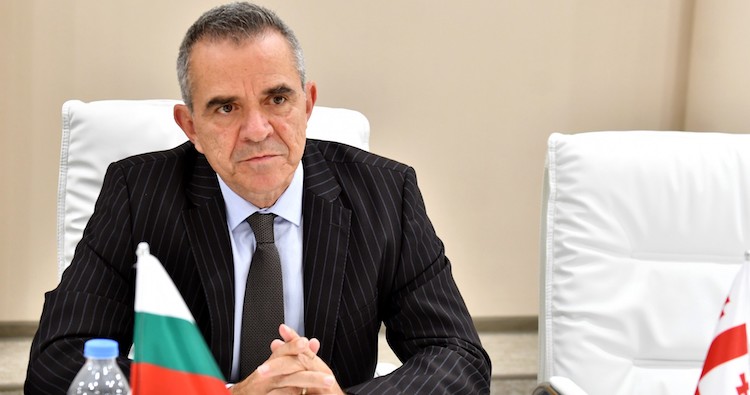
Bulgarian Ambassador: Once the agreement to resume ferry traffic is signed, more concrete and cooperative action is needed
Bulgaria is interested in expanding the infrastructure link between Europe and Asia, particularly by implementing projects of shared interest in energy, transportation, and communication, according to Veselin Valkanov, Bulgaria's ambassador to Georgia, in response to a question from Europetime. In light of this, the ambassador reacted to the agreement to resume ferry service between Georgia and Bulgaria, saying that more substantial action should follow once the agreement is signed. „Bulgaria is very keen on developing the infrastructure connectivity between Europe and Asia, especially in the implementation of projects of common interest in the fields of energy, transport, and communications. This very much coincides with our desire to raise our friendly relations and cooperation with Georgia, our neighbor across the Black Sea. The growing importance of this part of the world for our development and prosperity also demands action from us to make the best of the opportunities that are coming about with the Trans-Caspian International Route and the Middle Corridor. It is in the light of the above that I see the signing of the agreement on the restoration of ferry traffic on the Black Sea. Just a side note: there has been a ferry connection between Bulgaria and Georgia for more than 45 years. Maritime transport, when used efficiently, has numerous advantages. Trade flows are there waiting to be handled, and goods and cargo are to be delivered in a reliable, more environmentally friendly, and less costly way. The ferry traffic falls into this category, but for it to live up to expectations and be profitable, we need sufficient freight in both directions: west-west-east and east-west. Therefore, the signing of the said agreement needs to be followed by more concrete and cooperative action. All accumulated and available experience and know-how, e.g., from TRACECA, needs to be used efficiently. Coordination, logistics, and digitalisation of services, their simplification, modernisation, and speeding up will all contribute to better results and open a wider way for the trade flows coming from China and Central Asia to reach the EU. All countries along the route stand to gain from this and should make the necessary efforts to turn opportunities into real gains for their populations. The Bulgarian side is ready and willing to take this cooperation with Georgia and the other partners forward,” Vesselin Valkanov said. Some Background An agreement on the resumption of ferry traffic was signed between the Georgian Railway, the Bulgarian Railway and the Bulgarian shipping company. The Georgian Railway, the Bulgarian Railway, and the Bulgarian shipping company signed an agreement to resume ferry traffic and agreed on all conditions of cooperation to restore the proper functioning of the railway ferry. Ferry/railway services have been suspended for the past two years.
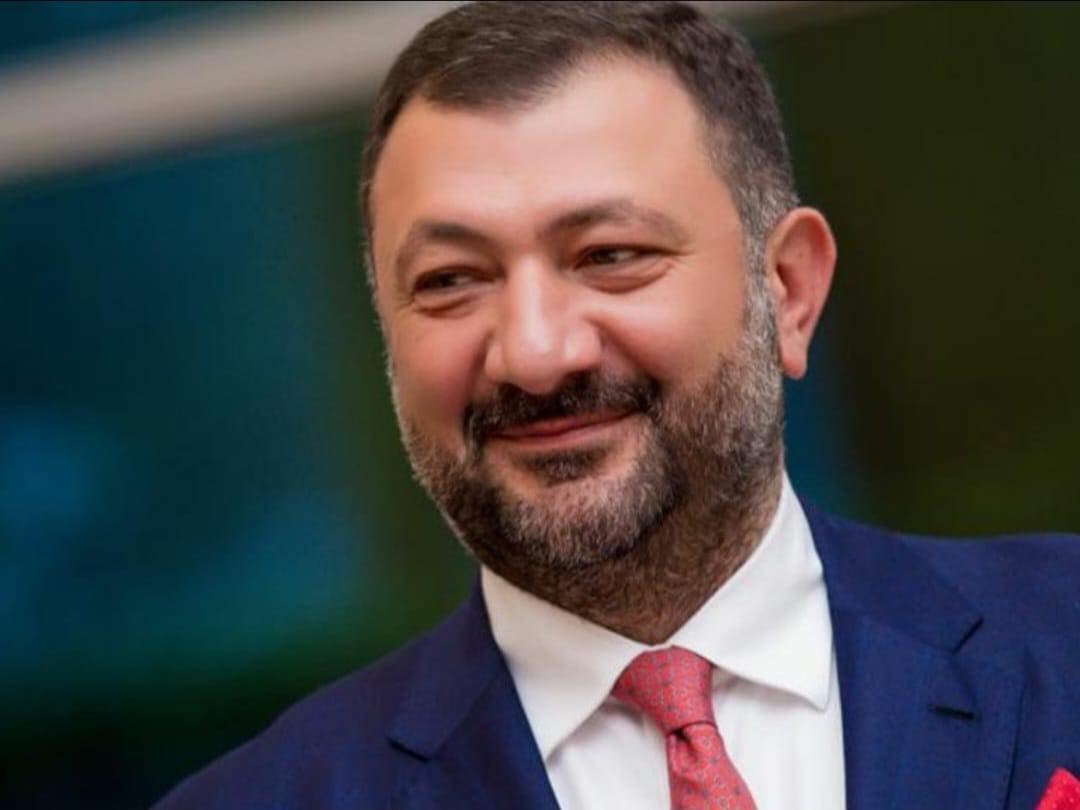
Batumi multimodal terminal - a new opportunity on the route connecting Europe and Asia
Well-known Kazakh media publications “Elitar.kz” and “Kazakh. Inform” published an interview with Mamuka Murjikneli, General Director of Batumi Multimodal Terminal, which refers to the development of the Middle Corridor. As the journalist notes, the Batumi Multimodal Terminal is one of the most important on the road connecting Asia and Europe and is considered a strategic factor, and the proof of this is cited by the visit of the Prime Minister of Uzbekistan to the Multimodal Terminal in Batumi, as well as the fact that the terminal was created and functions with the synergy of Asian-American-Georgian partnership and cooperation. The interview's translation is provided by Europetime. The new geopolitical conditions in the region have changed many things and made the role of transit countries even more prominent and important. In this context, the role of Kazakhstan is very important. During the visit of the Prime Minister of Kazakhstan Alikhan Ismailov to Georgia, one of the main topics was the importance and role of the Trans-Caspian international transport route. During a meeting with his colleague, the Prime Minister, the deepening of strategic cooperation between the two countries was emphasized, and especially the importance of the “Middle Corridor” initiative, which includes Azerbaijan, Georgia, Kazakhstan and which is aimed at increasing the attractiveness of this route for cargo transportation. The corridor will connect Central Asia, China and other Asian countries to Europe. A five-year road map has been developed outlining the responsibilities of each country until 2027. Considering all this, we think that our readers will be interested in an interview with Mr. Mamuka Murdzhiknel, General Director of the Batumi Multimodal Terminal in Georgia. Mr. Mamuka, if you can tell us a few words about the multimodal terminal, we know that the construction of the terminal did not stop even during the pandemic period and today it is already operating at full capacity. The necessity and purposefulness of these steps and the construction of the terminal as a whole, as can be seen from today’s point of view, was correctly seen, analyzed and assessed by your company. First of all, thank you for the interview and interest. Our company Wondernet Express Investment Group started the construction of the Batumi multimodal terminal in 2018, completed it in 2021, and today the terminal is operating at full capacity. The leading European design institutes and the world's largest suppliers of shipping and warehouse equipment took part in the development of the specified project. The terminal is fully automated and includes conveyor belt systems and a ship loader. It is equipped with modern equipment necessary for reloading mineral fertilizers, the latest filtration technology, and the terminal will be able to process up to 1,500,000 tons of fertilizers per year. Our partner is the American, largest trading corporation Trammo. We represent a symbiosis of Georgian-Uzbek-American investments and interests, which is very important and has strategic importance today. The main cargo we handle at this stage is urea, although our terminal's technical equipment and standards allow us to handle other mineral fertilizers as well. Receiving cargo at our terminal is carried out in a completely closed premises, as well as its storage and subsequent transfer to the vessel. We have a belt conveyor system, which means that we automatically transfer the cargo from the wagon to the warehouse and from there load it directly onto the ship in a closed premises. Mr. Mamuka, the importance of the Middle Corridor was emphasized in the interim report published by the EBRD, this factor and the importance of the Trans-Caspian International Transport Route were once again emphasized during the visit of the Prime Minister of Kazakhstan, Mr. Alikham Ismailov, to Georgia. And a few months ago, during the official visit of the Prime Minister of Uzbekistan to Georgia, he personally visited your multimodal terminal in Batumi. If possible, tell us a few words about this and your plans for the future. Thank you for this question, we are a private company, far from politics, but we think and understand our strategically important role and the role of companies like us. We feel and fully understand our function, so we constantly care and are focused on development. Here I mean everything, for example, infrastructure development, personnel training, as well as the idea of expanding the terminal itself. The visit of the prime minister of Uzbekistan to our terminal was really important and honorable for our company. This means that our hard work, responsibility and transparency do not go unnoticed, and we will definitely be considered one of the flagships when it comes to the middle corridor. I think that today's situation in the region has shown even more the need for cooperation between our countries, this mutual cooperation is now strategically important, Kazakhstan is the most important country in this regard, as well as Uzbekistan, Azerbaijan. There is extraordinary mutual respect and love among our people, as a former diplomat, or rather an ambassador who worked in Central Asia, I know this attitude well and am pleased with my current status and new opportunities that I can still be in touch with countries and people that are important and interesting to me, my Kazakhs, Uzbeks and Azerbaijanis. And together with our friends we can implement and develop important projects and plans in terms of logistics. In this regard, the Batumi multimodal terminal is a new window at the Transcaucasian logistics crossroads, which begins in Central Asia, including Kazakhstan. As I already told you, I had the honor to work and represent my country as an ambassador to Central Asia. Over these years, I have had many good friends in these countries, which I am especially happy about. Also, one of the founders of our company, businessman Mr. Dmitry Abdushelishvili, comes from a family of diplomats, his father was the first ambassador of independent Georgia to the Republic of Uzbekistan after the collapse of the Soviet Union, and later his brother. Thus, in addition to business activities, Central Asia is a bond of deep cultural, human relations and connections for us, and therefore, we are even more pleased with each step taken towards our mutual rapprochement and mutual cooperation.
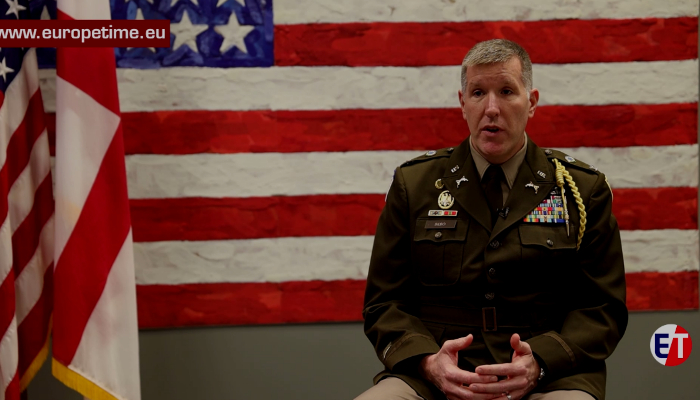
Exclusive interview on Europetime with the US Defense Attaché
EuropeTime provides an exclusive interview with the US Defense Attaché in Georgia, Colonel Joseph Bilbo. ET: How do you assess Georgia’s achievements since regaining independence as a function of USG assistance? Colonel Bilbo: I had the fortunate opportunity to come to Georgia for the first time in 2009, and since then, I've come back and forth to Georgia multiple times. Each time I saw development in Georgia, whether it was the development of the cities of Tbilisi or Batumi in terms of commerce or the products that were available, a lot of that was the result of the work of the Georgian people and the Georgian government. A lot of that comes as assistance from the United States. The United States has more than 30 offices and agencies here in the embassy that provide assistance to Georgia. But the assistance that used to be provided, the basic humanitarian type of assistance, is no longer part of what the Georgian people need because Georgia has developed beyond that. I think that one of the things that the Georgian people should be proud of is that the assistance that they receive now is a partnership through which we work together to build stronger markets, better and new access to markets, and stronger democratic principles like the rule of law, which invite greater economic development. ET: Do you think that rule of law is a problem in Georgia? Colonel Bilbo: I think rule of law is a challenge in many countries. Rule of law is a challenge because it's hard and it takes constant work. We all know that law is constantly being challenged in the United States, and the courts play an extremely important role in this regard. ET: The Georgia Defense and Deterrence Enhancement Initiative (GDDEI) is an important component of defense cooperation between the two countries. Against the background of the ongoing war in Ukraine and given the possible threats, as part of this initiative, are there any programs that have been adjusted or accelerated? Colonel Bilbo: "Jedi" is an evolution of the previous program, the Georgia Defense Readiness Program. It shows the continual development of the partnership in the Georgian Defense Forces. The program is focused on two aspects: many institutional changes at the ministerial level, including regulations and policies; and then engagement with the Defense Forces on building resilience and resistance capabilities within the Georgian Defense Forces and in Georgia's society. Unfortunately, what we see in Ukraine is that it remains a very relevant aspect of a national defense plan. I wouldn't say that anything has been pushed to go faster because it was already going quite fast. The adoption of these principles within Georgia, just in the last two years, has been quite impressive and continues today. ET: Everybody agrees that regional stability has rarely been in more danger or been more important than it is now. Should the issue of Ukraine be considered more broadly in the context of Russia's ambitions to influence the territories of other countries, including Georgia, and how do you see the role of the United States as Georgia's strategic partner from this point of view? Colonel Bilbo: I think Georgia is in a very difficult neighborhood, and it is not uncommon to see instability in this neighborhood. I don't think you have to go back that far; in fact, the nineties saw multiple wars in Georgia and the Karabakh War south of here. Despite being occupied by Russia for 20% of the time, there is some relative stability. A lot of that has to do with the development of deterrence capability. That's what the United States is partnering with the Georgian Defense Forces to do, which is to build a defensive capability that is a deterrent to any aggressor state. Unfortunately, we see in Ukraine Russia's continued willingness to use force to break international norms in an attempt to seize territory. It was blatant. They claimed territory in Ukraine much in the same way that Georgia’s territory was invaded and remains occupied. So, we are here to support Georgia’s defense and deterrence and ensure that it remains within its internationally recognized borders. I think Georgians know already that Russia is an occupier. Russia continues to keep troops on your territory, not because they were invited here but because they invaded. I think that Georgia understands that geography is not going to change, and Georgia is not interested in, nor does the US support, any type of aggressive activity to resolve that conflict. The U.S. participates in the Geneva International Discussions to try to resolve the conflict and force Russia to comply with the ceasefire agreement, but I think Georgians are very aware of the reality of Russian intentions inside of Georgia. ET: The war against Ukraine has led to increased of attention towards the Black Sea security. The Black Sea region is one of the most strategically important regions for the United States. How important is a coordinated US strategy for the Black Sea region now? Colonel Bilbo: Strategy inherently needs to be coordinated to be effective. You're absolutely right that the Black Sea has continued to grow in importance. There's much talk among many countries about the development of a middle corridor. The United States absolutely supports this idea with our European allies. I believe that now, when you look at the Black Sea, when you have a conflict in a contained territory like the Black Sea, coordinating a strategy to ensure freedom of navigation, safe passage for cargo ships, and the continuation of commerce is critical, especially given the number of sea mines that have been placed as a result of the war. ET: During the conference in Tbilisi, you said that the exchange of information and challenges so often seen in the intelligence community are among the issues the US is working on with its Georgian counterparts, and that the war in Ukraine only showed the need to increase this cooperation. What can you tell us more about it? Colonel Bilbo: One of the main ways that NATO is engaged with the Georgian Defense Forces is through a program called the Substantial NATO Georgia Package. One of the efforts within that package is called Secure Communications and Intelligence Sharing. It's actually led by the Czech Republic, but many of the NATO allies participate in working with Georgia to continue to increase Georgia's interoperability with NATO, and part of that is our ability to share information with one another. We believe that we have shared interests, such as commerce in the Black Sea, from which I think Georgia can benefit a lot. In order to ensure safety and security, we often have to share information that's quite sensitive. ET: A few days ago, Ambassador Degnan spoke to the media about the importance of the port of Anaklia; she also noted that several qualified operators were interested in the mentioned project. What do you think is the strategic importance of this port, apart from economic benefits and investments? How important is this project for Black Sea security? In your opinion, does this project fit into the Black Sea security concept? Georgia has an important transit opportunity; it will be possible to transport various cargoes from Central Asia to Europe when, due to Russian sanctions, financial institutions are looking for alternative transit corridors. Colonel Bilbo: Expanding deep-water ports is part of the development of commerce and trade that will occur on the Black Sea. A deep-water port or extra port availability in Georgia should bring economic development to the country.From a security standpoint, it increases the opportunity to host ships from allied and partner nations. Georgia used to host quite a few visits by U.S. ships and other NATO ships. Unfortunately, that's been constrained due to the war, but we very much look forward to our naval assets visiting Georgia again when the sea is returned to a stable state. ET: How do you assess 2022 for the U.S.-Georgian partnership?Colonel Bilbo: The pandemic caused us all to pause, and then we had to figure out how to resume. 2022 did a lot for our relationship as well, where we were connecting, albeit often virtually. We've been able to reconnect now, face to face, which has strengthened and reinvigorated our cooperation and partnership, providing the opportunity to bring troops in to train with the Georgian Defense Forces, and the opportunity for Georgia to host international conferences, which helps highlight the challenges that Georgia faces and, I think, will continue to bring stronger and greater partnership with NATO allies and the United States.
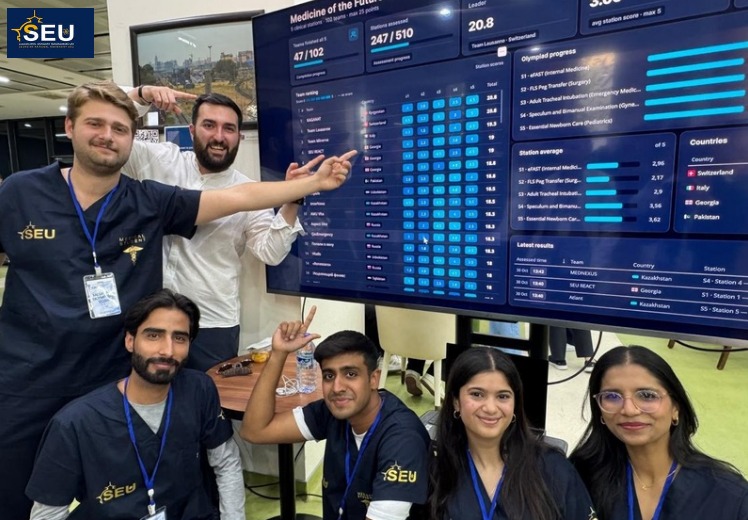
Georgian National University and its Rector, Gia Kavtelisvhili, have received a letter of appreciation from Central Asian University following their successful participation in the International Medical Olympiad
Georgian National University (SEU) and its Rector, Gia Kavtelisvhili, have received a letter of appreciation from Central Asian University following their successful participation in the International Medical Olympiad. The letter recognizes SEU students’ achievements in the 3rd International Medical Olympiad, held from October 29 through November 1, 2026. The Olympiad was held for the third time this year, with 102 teams from around the world. Georgia was represented by SEU React, a team from Georgian National University SEU. Switzerland, Italy, and Georgia secured the top three positions in the overall country rankings. In his letter, the Central Asian University rector emphasizes the SEU delegation's outstanding knowledge and clinical skills, demonstrating the University's exeptional educational standards. The Central Asian University also expresses its readiness to advance academic ties between the two universities. Notably, the SEU team secured fourth place at the International Medical Olympiad, earning Georgia third place in the overall country rankings. According to SEU, this international recognition further highlights SEU students' professional training, the university’s educational efforts, and Georgia’s successful participation in the international academic arena.
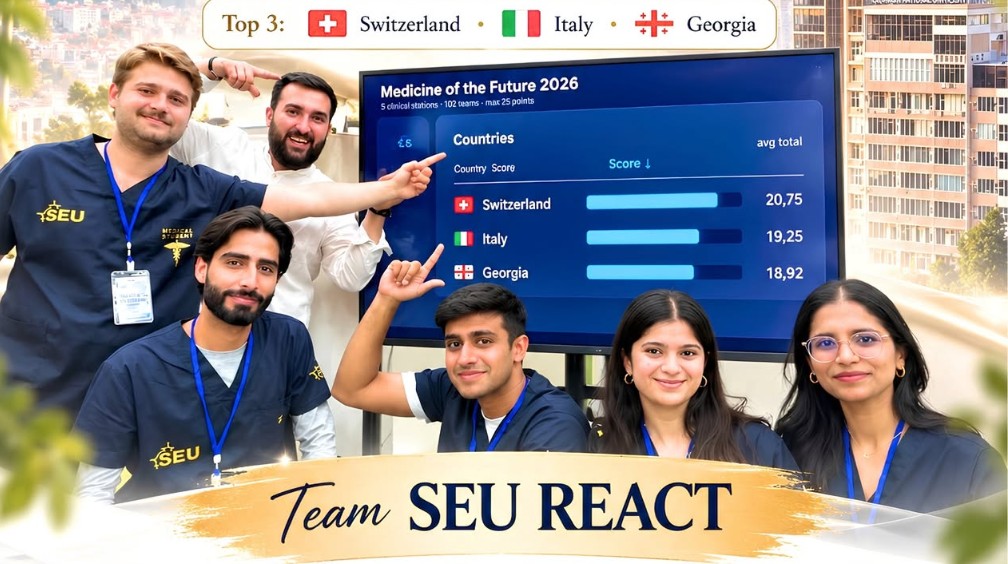
SEU University Medical Students Secure Third Place for Georgia at International Olympiad
Georgia ranks third among nations at Medicine of the Future 2026, the 3rd International Medical Olympiad. The Olympiad was held for the third time this year, with 102 teams from around the world. Georgia was represented by SEU React, a team from Georgian National University SEU comprising five students: Riyaa Mehta, Pranjal Patil, Shane Christian, Faisal Altaf, and Tengiz Maisuradze. Switzerland, Italy, and Georgia secured the top three positions in the overall country rankings. Participants tested their practical clinical skills in five areas: ultrasound imaging, minimally invasive surgical procedures, endotracheal intubation, gynecological examination, and newborn care. According to the university, the SEU team's achievement once again highlights the importance of its international student environment and practice-oriented medical education. The success of students competing under the Georgian flag, including Indian students, is another significant example of educational cooperation between Georgia and India.
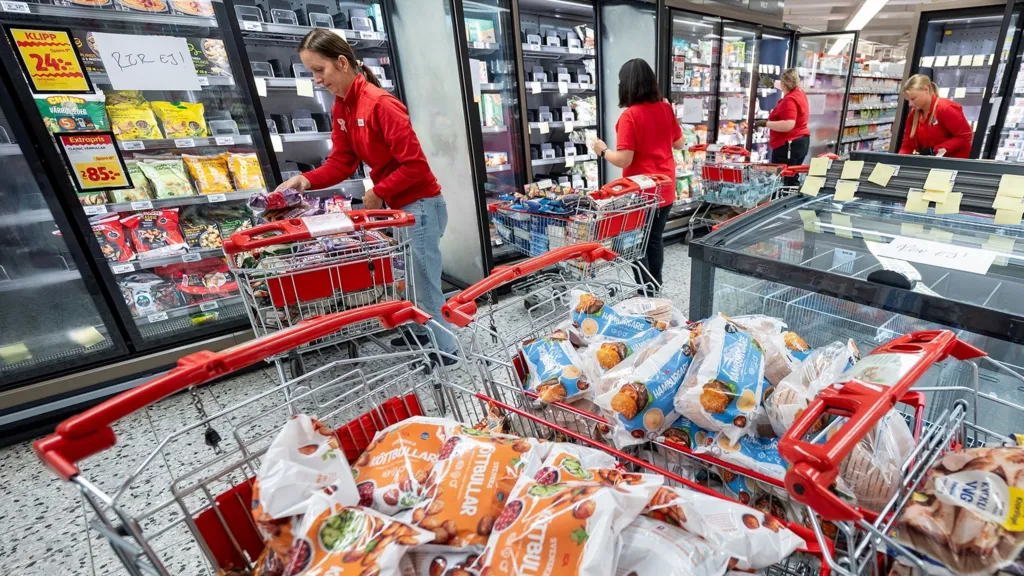
Dozens of supermarkets across seven European countries have been hit by a cyber-attack
Dozens of supermarkets across seven European countries have been hit by a cyber-attack affecting their refrigerators and freezers. Around 40 Delhaize supermarkets in Belgium and Luxembourg were affected, while a smaller number of shops were hit in Sweden, Ireland, the Netherlands, Estonia and Finland. Sabcobel, a Belgian company that manufactures some of the affected refrigerators, said the units' evaporators were switched to defrost mode, causing them to warm up, in what is believed to be the same method used in last month's incident that hit hundreds of French supermarkets. Millions of euros worth of food had to be thrown away in October, local media reported at the time. It is unclear who is behind the latest apparent attack. In the US, authorities are investigating what caused refrigeration malfunctions at a number of American military bases in August and working together with French officials to examine whether the incidents could be linked. Both Belgium and Sweden's national cyber-security agencies said they were monitoring the incident. The UK's National Cyber Security Centre said it was working with international partners and industry to "fully understand details of an incident". No incidents have been reported in the UK. In Flanders, northern Belgium, a Delhaize branch in Hoeilaart told news website Het Laatste Nieuws it had lost €100,000 (£83,500) worth of produce. The manager said that estimate did not even take into account further losses that would result from closing the shop. BBC
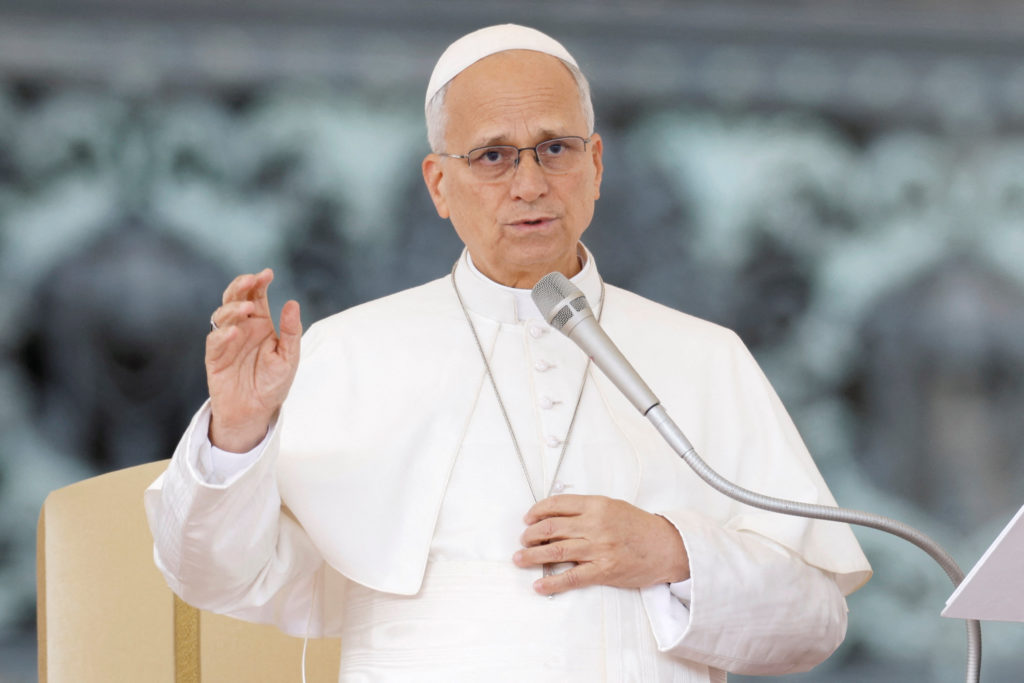
Pope Leo XIV becomes first pontiff to vote in a US election
Pope Leo XIV submitted his mail-in ballot in Illinois for the midterm elections, becoming the first pope ever to vote in a U.S. election. "The Holy Father expresses his belief in the right and the duty of citizens to participate in democratic processes," the Holy See Press Office said in a statement. The Chicago-born pontiff is the first US citizen to hold the Vatican's highest seat, after his selection in May 2025. Since then, he has clashed with the Trump administration over various issues, including immigration enforcement and the US-Israel war with Iran. "Pope Leo XIV has exercised his right to vote as a United States citizen whenever he was eligible to do so," the press office said, including during his years in Peru. The US midterm elections will determine which political party controls Congress and have a significant impact on the final years of Donald Trump's presidency. Elections will be held nationwide on 3 November, but early voting has begun in most states. According to NBC News, the Pope requested his mail-in ballot from the Will County Clerk's Office on 3 October.
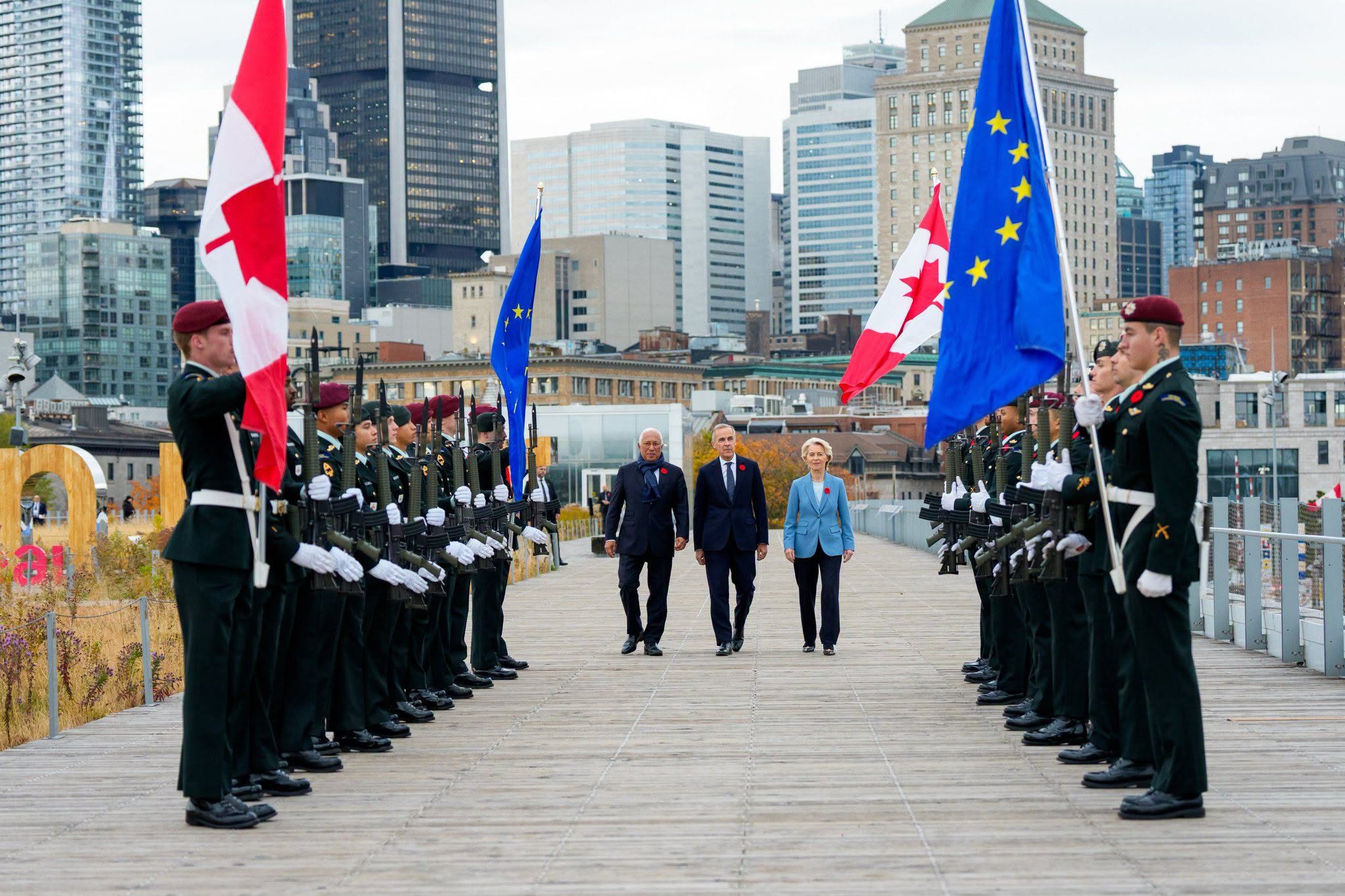
Canada aims to become EU's first 'associate member' by June 2027, Carney says
Mark Carney has set June 2027 as the deadline to make Canada the European Union's first-ever "associate member". The category, which has no precedent, has been fiercely opposed by Germany. Canada and the European Union aim to conclude negotiations on the country's potential "associate membership" of the bloc by June 2027, Canadian Prime Minister Mark Carney said on Friday, following a bilateral summit in Montréal. "We are working towards the deepest possible partnership short of accession, because of our geography, with Canada becoming the European Union's first associate member," Carney said at the closing press conference. "In the coming months, we will determine the full substance, scale and scope of this new form of membership," he added. António Costa, President of the European Council, and Ursula von der Leyen, President of the European Commission, represented the EU at the 21st EU-Canada summit, which took place in Montreal on 29 and 30 October 2026. Prime Minister Mark Carney represented Canada. The summit marked a major milestone in EU-Canada relations, paving the way for an even broader and deeper political partnership. Leaders took stock of progress made since the previous EU-Canada summit and issued a joint statement launching an Alliance for the Future. Building on their longstanding strategic partnership, the alliance aims to deepen cooperation and create a common prosperity and economic security space.
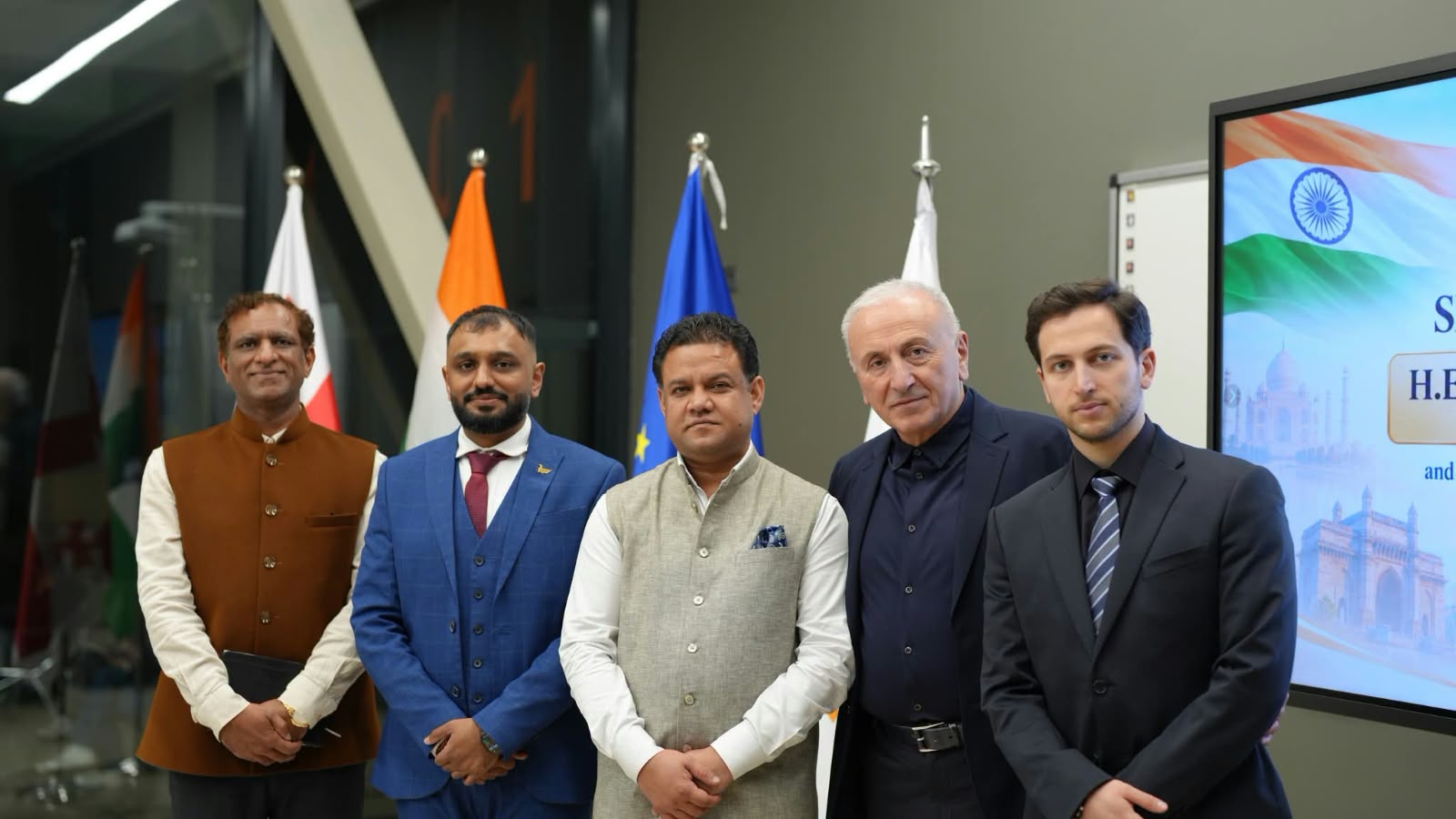
Ambassador of the Republic of India Visits Georgian National University (SEU) — New Opportunities for Deepening International Cooperation
Georgian National University SEU welcomed His Excellency Amit Kumar Mishra, Ambassador of the Republic of India to Georgia, accompanied by Mr. Anil Yadav, Attaché. As part of the visit, a meeting was held with SEU’s Rector, Vice-Rectors, and academic staff. The meeting focused on the importance of international academic relations, the exchange of experience, and strengthening educational ties between Georgia and India. For SEU, developing international relations and maintaining close ties with partners are an important part of the university’s internationalization. Such visits promote intercultural dialogue, deepen international cooperation, and contribute to the development of a diverse academic environment. As part of the visit, the Ambassador of India and Mr. Anil Yadav, Attaché, also met with Indian students from SEU’s Faculties of Medicine and Business. The meeting was dedicated to direct communication with students and sharing their university experiences. SEU continues to work toward creating a supportive and diverse academic environment for international students, where representatives of different cultures have the opportunity to fully engage in university life.
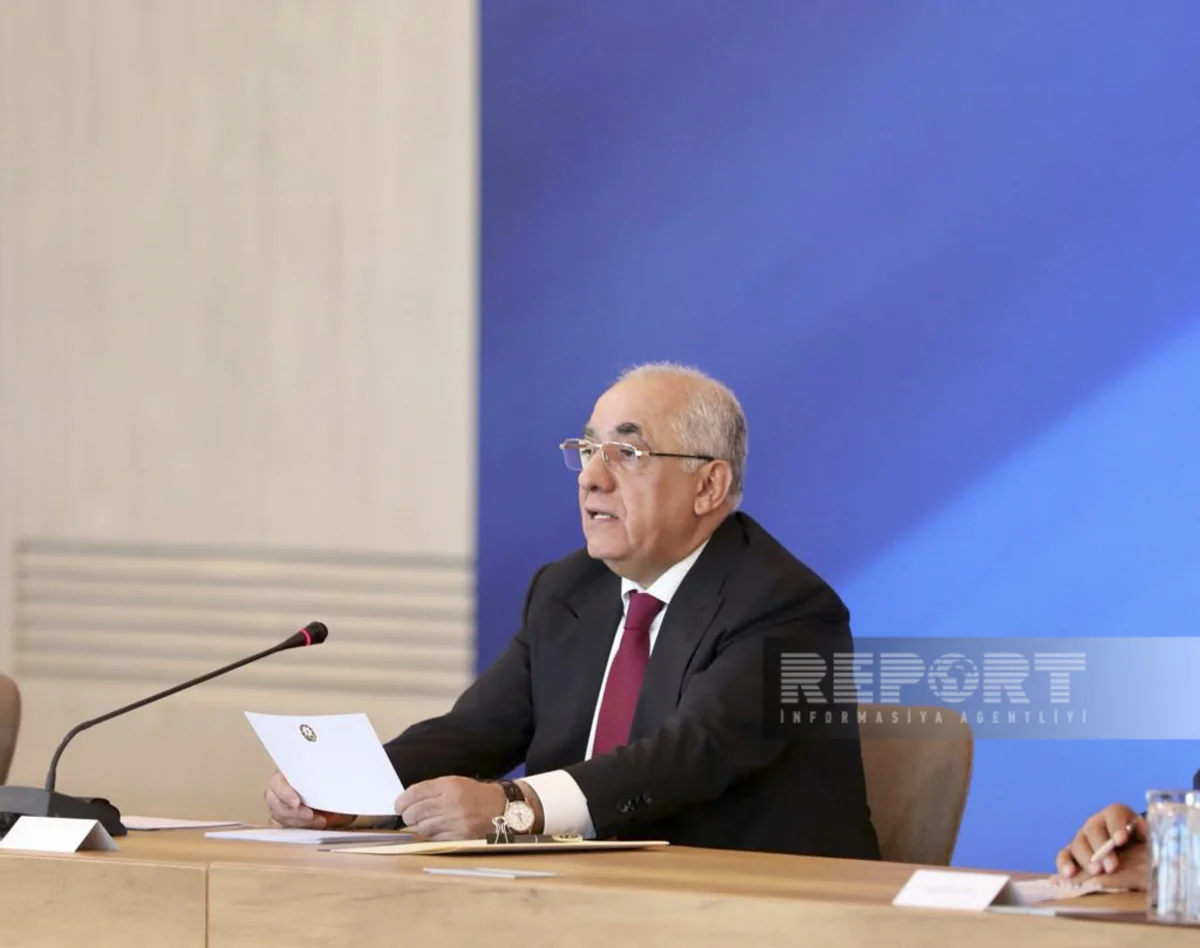
Asadov: Ties with Georgia are a foreign policy priority for Azerbaijan
Developing relations with Georgia is one of Azerbaijan's foreign policy priorities, Prime Minister Ali Asadov said. „Report“ informs that he made the remarks at the 11th meeting of the Azerbaijan–Georgia Intergovernmental Commission on Economic Cooperation in Sighnaghi. Asadov noted that the peoples of Azerbaijan and Georgia had lived in friendship and good-neighborly relations for centuries. "Our strategic partnership has reached a qualitatively new stage. The momentum of high-level political dialogue plays a leading role in strengthening our cooperation," he said. He highlighted the significance of President Ilham Aliyev's state visit to Georgia in April and Georgian Prime Minister Irakli Kobakhidze's visit to Azerbaijan in May for WUF13. "These visits and the agreements reached once again confirmed the strategic nature of our relations and provided further impetus for deeper cooperation across various sectors. We have always supported each other within international organizations. I would particularly like to emphasize our mutual support on territorial integrity and sovereignty," Asadov said.
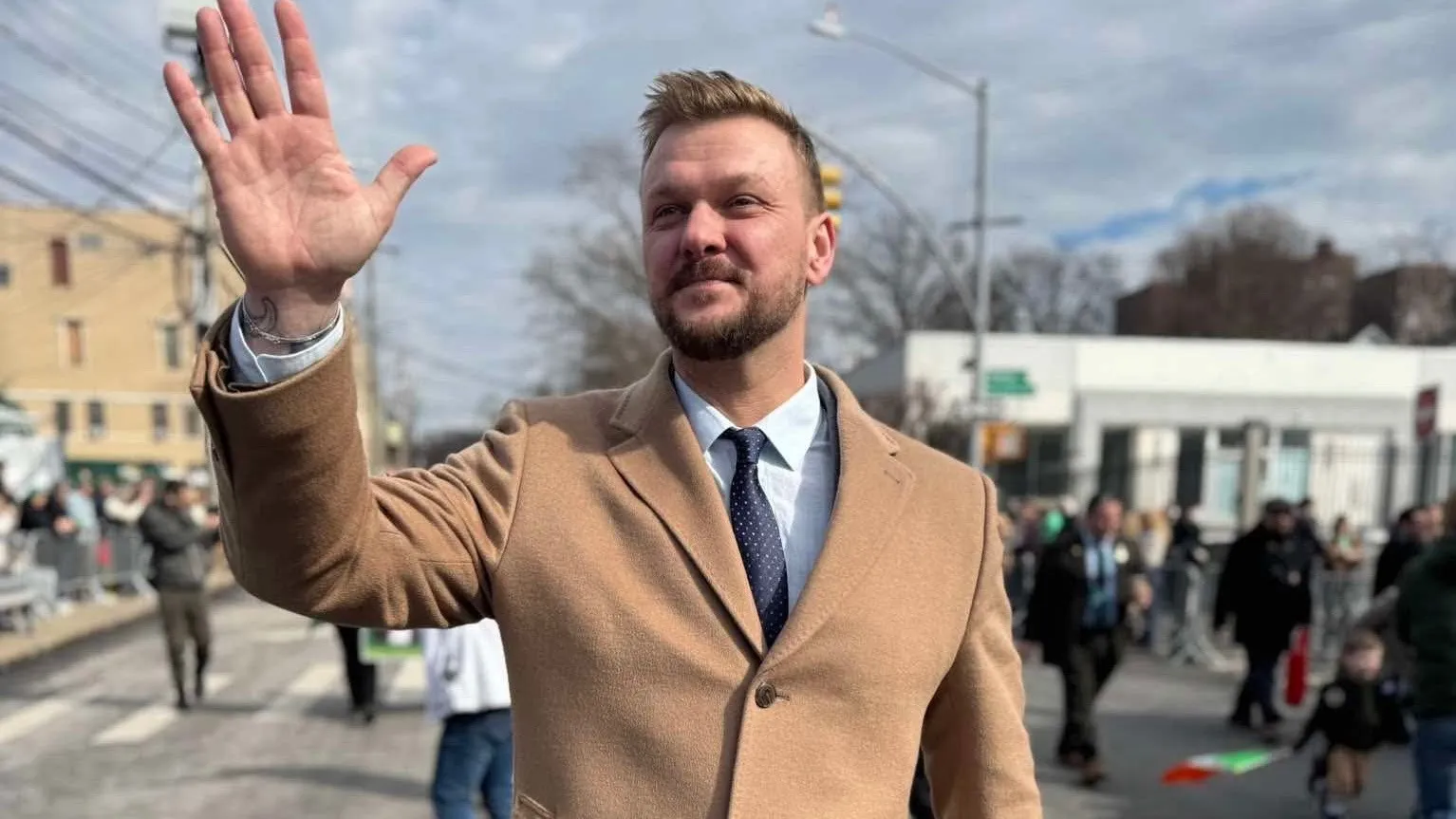
Inside the Race for Senate District 23: A Conversation with Ruslan Shamal
The Republican candidate discusses property tax reform, public safety, development, healthcare, education and transportation - and the challenge of advancing his agenda in a Democratic-controlled State Senate. As New Yorkers prepare for the 2026 elections, affordability, public safety, housing and development, healthcare, education, and transportation remain central issues in communities across Staten Island and Southern Brooklyn. Ruslan Shamal, the Republican candidate for New York State Senate District 23, is seeking to represent a district that includes parts of Staten Island and Southern Brooklyn. The seat is currently held by Democratic State Senator Jessica Scarcella-Spanton. In an interview with The Gazette New York, Shamal discusses the policies he would pursue if elected, from property tax reform and public safety legislation to healthcare, education, transportation, and development. He also addresses the practical challenge of advancing legislation as a Republican in a Senate currently controlled by Democrats and identifies what he sees as the most urgent issue facing residents of the district. Q: You have identified lower taxes and public safety as two of your top priorities. If elected, what specific legislation would you seek to introduce or support in Albany to address those issues? A: On taxes, I'd start with bills already written and already stalled. S.587 and S.3914 exempt tips and overtime from the state income tax. That's money in the pocket of every waitress and every guy pulling a double shift in this district. S.8461-A returns roughly a billion dollars in unspent climate-account funds to ratepayers, and S.8463 gives a one-year holiday from the taxes and surcharges buried in everyone's utility bill. On public safety, the PROTECT Act, S.2282-A, would finally let a judge weigh whether a defendant is dangerous. It was killed in the Codes Committee this May, four votes to eight. I'd also back Senator Lanza's S.7241, which makes repeat car theft a felony and closes the Family Court loophole for 16- and 17-year-olds. Grand larceny auto is up 35 percent in the 120th Precinct. Q: You have spoken about what you describe as an inequity in the taxation of co-ops. Why do you believe this issue has remained unresolved, and what specific changes would you propose? A: Read the statute. Real Property Tax Law 1805 gives a one-to-three-family house a hard cap: assessments can't rise more than 6 percent a year or 20 percent over five years. A co-op with eleven or more units gets no cap at all. And Section 581 forbids the City from valuing a co-op on what the apartments actually sell for. It has to pretend the building is a rental. The City Comptroller calls that mandate "inherently regressive." It's unresolved because fixing it creates losers in wealthier neighborhoods, and Albany doesn't like losers. Last year the Adams administration couldn't find a single legislator willing to sponsor a reform bill. I'd support S.3213, which ends the comparable-rental mandate, and S.9416, which extends the assessment cap to co-ops under 35 units. Q: You have said that residents of Staten Island and Southern Brooklyn are increasingly concerned about overdevelopment. Given that many zoning and land-use decisions are made at the city level, what specifically can a state senator do to influence development in the district? A: More than people think. The 12.0 density cap that limited every residential building in this city wasn't a city rule. It sat in the state Multiple Dwelling Law, and Albany repealed it in the 2024 budget. That vote is what made City of Yes possible. This May, Albany exempted housing projects up to 250 units, 500 in denser districts, from environmental review entirely. So the next fight is in Albany, not City Hall. I'd vote no on the REVIVE Act, S.9423, which forces by-right approval with automatic sign-off if a city misses a deadline, and no on S.3397-B, which lets developers override local zoning on religious-institution property. And I'd use the state's own leverage. That environmental exemption is conditioned on adequate sewer capacity. We don't have it. Fund it first. Q: You have also highlighted the financial pressure facing seniors living on fixed incomes. What specific tax relief, assistance program, or other policy would you advocate for, particularly given the state's budget constraints? A: Here's a number every senior should hear. New York's property tax circuit breaker, the credit meant to protect people whose taxes outrun their income, cuts off at $18,000 of income and a home worth $85,000, and pays a maximum of $375. Those thresholds haven't moved in forty years. Claims fell from 517,000 in 1996 to 172,000 by 2017. There is not one house in this district worth $85,000. Fix that first. It costs a fraction of what the state spends, and it reaches exactly the people who need it. Then raise the senior homeowners' exemption, which Senator Lanza's S.7209 takes to $70,000, and raise the private pension exclusion, frozen at $20,000 since I was new to this country. S.7211 does that. Q: Beyond taxes, public safety, and development, what are your priorities on healthcare, education, and transportation? Are there specific policies or legislative proposals you would pursue in these areas? A: Healthcare: Richmond University Medical Center lost $27 million in 2024 and is openly looking for a merger partner. Across two rounds of the state's Safety Net Transformation Program, more than $2.6 billion in all, Staten Island received nothing. I'd fight for that money, and pass S.9388, requiring notice and community hearings before a hospital or a maternity unit closes. The Governor vetoed the earlier version in December after it passed the Senate 56 to 5. Education: protect the Hecht-Calandra Act. S.5957 would scrap the specialized high school exam for "multiple measures." I'd oppose it, and support free universal test prep and more specialized seats instead. Transportation: the North Shore Bus Rapid Transit finished environmental review in January 2024 and is still sitting in "planning" with about $34 million out of a $68.4 billion capital plan. Q: Is there an existing New York State law or program that you believe is not working and that you would make it a priority to reform or repeal if elected? A: The real property tax circuit breaker. It is, on paper, New York's promise that no one gets taxed out of their home. In practice, it's a dead letter: $18,000 income limit, $85,000 property value limit, $375 maximum credit, none of it adjusted since the 1980s. The program has quietly shed two-thirds of its claimants because the rules stopped describing anyone who actually exists. That's worse than a bad law. It's a law that lets Albany say it's helping while helping almost no one. I'd rewrite the thresholds to track real incomes and real home values in New York City, and index them so we don't repeat this in another forty years. Senator Weik's S.3303 and Senator Gounardes's S.1147 are both starting points, and one is a Republican bill and one is a Democratic bill. Q: If elected, you would serve as a Republican in a Senate currently controlled by Democrats. How would you build the bipartisan support necessary to move your legislative priorities forward and turn your proposals into law? A: By reading the roll calls. The things that actually pass that chamber pass big. The hospital closure notice bill went 56 to 4. The class size extension went 60 to nothing. That tells you the majority isn't monolithic. It's cautious. And on the issues I care about, Democrats are already out ahead of their own leadership. Senator Addabbo introduced a bill this April, S.10104, to make assault, menacing, and reckless endangerment bail-eligible, co-sponsored by Sam Sutton, who represents part of southern Brooklyn. My own opponent co-sponsored a retail theft bill that's gone nowhere. So my job isn't to give speeches. It's to be the twelfth vote those bills need, and to be somebody a Brooklyn or Queens Democrat can work with without paying a price for it. Q: Aside from the partisan balance in Albany, what do you see as the biggest practical obstacle to implementing your agenda, and how would you address it? A: The process itself. Almost nothing reaches the floor. Bills die in committee without a public vote. The dangerousness standard died in Codes. The Verrazzano toll exemption has been introduced three sessions running and has never left the Transportation Committee. And the real decisions get made in a room with three people and dropped into budget bills at two in the morning. This year's budget was 57 days late and passed on a message of necessity. You can't fix that from the minority with a press release. What you can do is use the one moment of leverage everyone has, the budget, and refuse to trade your vote for nothing. And you can force the record: demand committee votes, so constituents can see who buried what. Q: Of all the challenges currently facing Senate District 23, what do you consider the single most urgent problem, and why? A: That the people who built these neighborhoods can no longer afford to stay in them. And I don't mean that as a slogan. There's a deadline on it. The co-op and condo property tax abatement, worth between 17 and 28 percent of the bill for roughly 30,000 apartments in and around this district, expires June 30, 2027. As of today, no one in Albany has introduced a bill to extend it. Separately, about 450,000 New Yorkers lost Essential Plan eligibility this July, and this district has a lot of them. So a tax increase and a health insurance loss are both arriving by default, not by anyone's decision. That's what urgency looks like: not a debate we're having, but a bill coming due while nobody's watching.
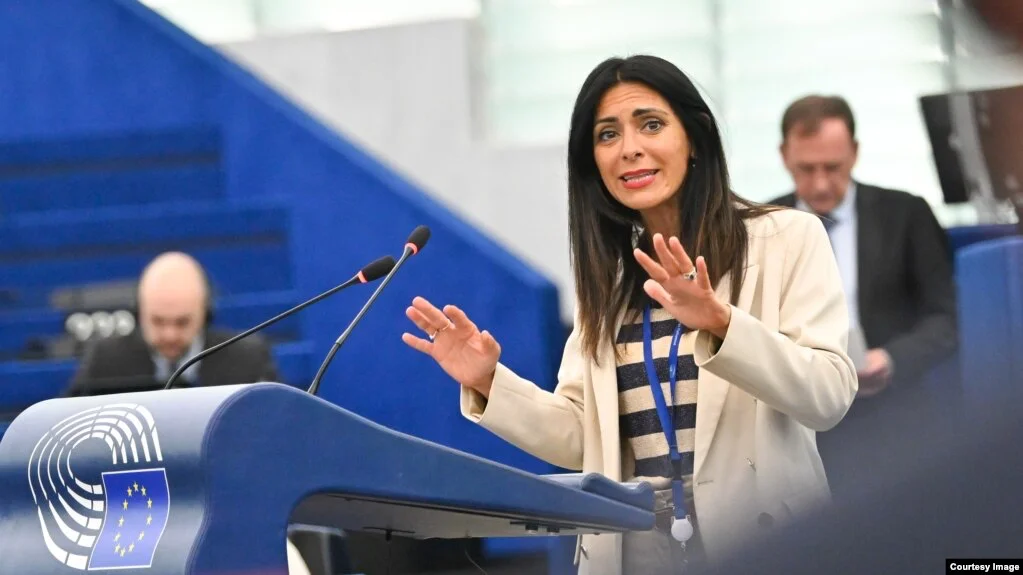
Vice President of the European Parliament announces hunger strike in support of Oleshky in Ukraine
On 21 October, European Parliament Vice-President Pina Picierno announced a hunger strike to draw international attention to the emergency situation in Oleshky, Ukraine, where “thousands of people are trapped in territory occupied by the Russian army, without regular access to food and medicine.” According to Picierno, mined areas outside Oleshky are extremely dangerous: “Those who stay risk dying of hunger, those who try to leave risk their lives.” Picierno added that “this battle” cannot be hers alone. She called on associations, citizens, and national and local institutions to join her nonviolent action: “We must demand an immediate humanitarian truce, the entry of food and medicines, and the possibility of safely evacuating civilians who wish to leave the city.” Picierno posted on X that with this mobilisation, she wants to support the efforts of Pope Leo XIV and of all those who, in this moment, are doing “everything possible to avert a humanitarian tragedy of enormous proportions.” “The people of Oleshky cannot be abandoned. It is time to act together, so that diplomacy delivers concrete results and no one is left to die in silence,” Picierno concluded her post.
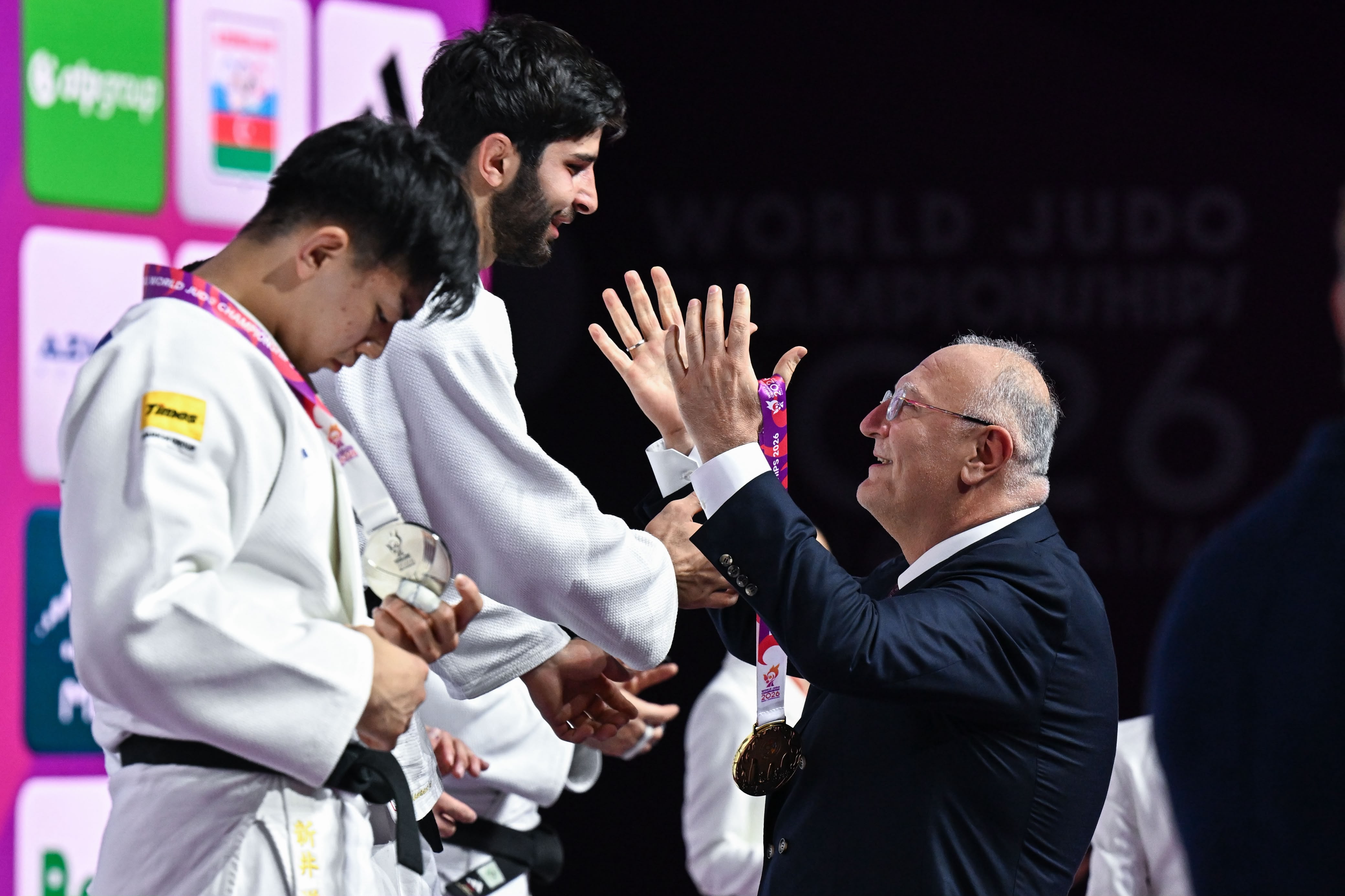
Dimitri Abdushelishvili Presented Medals to Ilia Sulamanidze and Other Medalists at the World Championships in Baku
Dimitri Abdushelishvili, President of the Georgian National Aquatic Sports Federation, presented the gold medal to Ilia Sulamanidze, winner of the men’s -100 kg category, and silver and bronze medals to the other medalists at the 2026 World Judo Championships in Baku. He personally congratulated the Georgian athletes on their significant achievements. Ilia Sulamanidze became Georgia’s tenth individual world champion after defeating Japan’s Dota Arai in the -100 kg final at the World Judo Championships in Baku with a dramatic golden score victory. Following Tato Grigalashvili’s earlier triumph, Sulamanidze’s victory brought Georgia another gold medal. Georgian judoka Eter Liparteliani won a silver medal at the 2026 World Judo Championships in Baku, Azerbaijan. On the opening day of the competition, Giorgi Sardalashvili won bronze in the men’s 60 kg category.
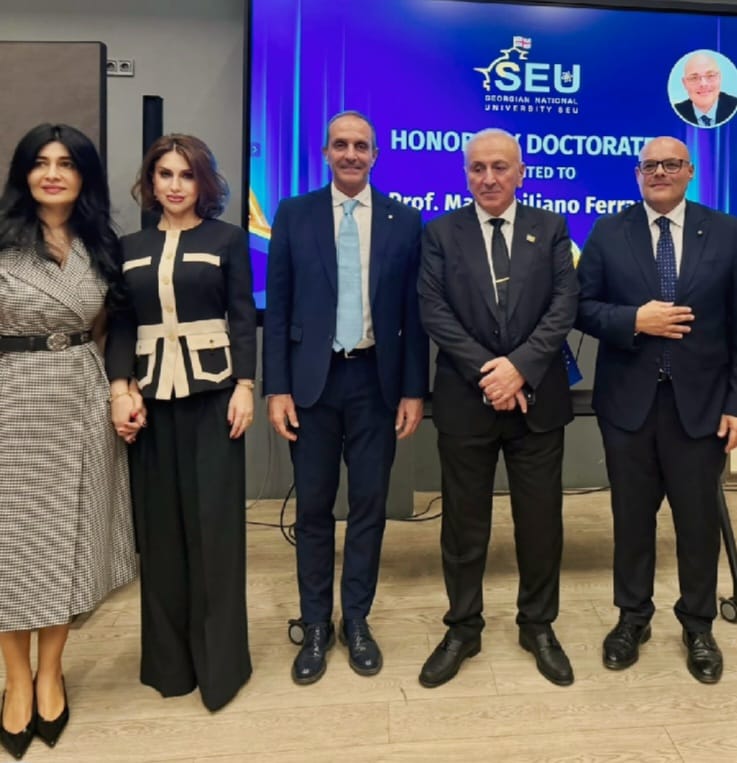
Mediterranea University and International Agreements with International Black Sea University and Georgian National University
An Italian delegation from the Mediterranea University (Università Mediterranea) visited Tbilisi, led by the University’s Rector, Giuseppe Zimbalatti. The delegation also included Professor Massimiliano Ferrara, Director of the University’s international scientific Decisions LAB, whose visit was marked by a significant academic distinction — the awarding of an Honorary Doctorate (Dottorato honoris causa) in Computer Science. During the visit, Mediterranea University signed strategic cooperation agreements with two leading Georgian universities — Georgian National University SEU and the International Black Sea University (IBSU). Two Strategic Cooperation Agreements The Memorandum of Understanding signed with SEU provides for student and faculty exchanges, the development of joint courses and academic programmes, dual-degree programmes, joint research projects, and participation in international calls and grant programmes. The agreement signed with the International Black Sea University opens new opportunities for students and researchers in the fields of education, scientific research and international academic mobility, while also creating a framework for joint projects and initiatives. The meetings and cooperation activities were attended by Dr. Gia Kavtelishvili, Rector of SEU, Luka Kavtelishvili, Rector of the International Black Sea University, the Vice-Rectors and representatives of both universities, including Vice-Rector Dr. Nina Elisabedashvili and Dr. Nina Maziashvili, with whom Mediterranea University’s Decisions LAB is collaborating within the framework of a joint project. The visit to Tbilisi and the agreements signed represent an important step towards strengthening academic, scientific and international cooperation between Georgian and Italian universities.
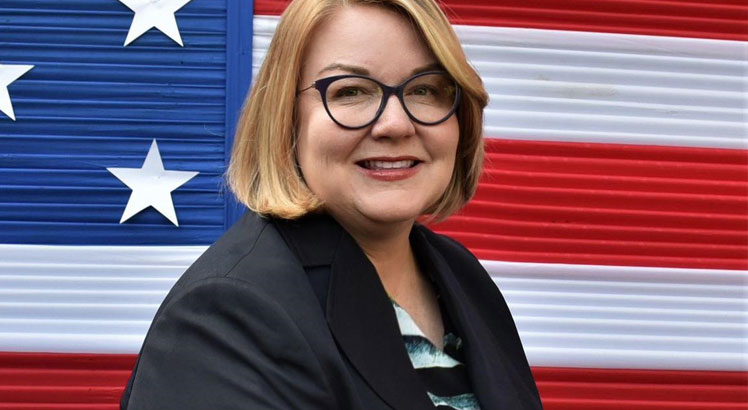
Amy W. Diaz Assumes U.S. Chargé d’Affaires Role in Georgia
The U.S. Embassy announced on July 30 that Amy W. Diaz has assumed the position of Chargé d’Affaires in Georgia, becoming the embassy’s top diplomatic representative as Washington has yet to appoint a new ambassador to Tbilisi. She replaces Alan Purcell, who has served as Chargé d’Affaires and acting U.S. ambassador to Georgia since Ambassador Robin Dunnigan retired from the diplomatic service and departed the country in July 2025. A career member of the Senior Foreign Service, Diaz previously served as Chargé d’Affaires and Deputy Chief of Mission at the U.S. Embassy in Lilongwe, Malawi; Deputy Director of the Department of State’s Office of Policy and Global Issues for Europe; Consular Section Chief at the U.S. Embassy in Harare, Zimbabwe; and head of U.S. Embassy Kabul’s Counternarcotics Team. “Other postings include Rule of Law Advisor and Coordinator for the Summit of the Americas at U.S. Embassy Panama City; Internal Political Unit Chief at U.S. Embassy Tbilisi; Vice Consul at the U.S. Embassy Harare; and Vice Consul at the U.S. Consulate General in Monterrey, Mexico,” the U.S. Embassy said. Diaz joined the U.S. State Department in 2002 as a Presidential Management Fellow and entered the Foreign Service in 2005. She is graduate of St. John’s College in Annapolis, Maryland, and received her Juris Doctor from University of Arizona.